News of the Fall of Constantinople Reaches Europe
Historical Overview
Weeks after the actual collapse of the Byzantine capital, confirmed news of the Fall of Constantinople reached the Republic of Venice via escaping Venetian mariners, rapidly spreading like shockwaves across Western Christendom. The primary strategic and psychological crisis for the Christian powers was the loss of the centuries-old eastern bulwark against Islamic expansion and the permanent consolidation of the Ottoman Empire on European soil. The catastrophic news triggered profound religious existential dread and widespread panic over an impending Ottoman invasion; it prompted Pope Nicholas V to issue a crusade bull and cemented the event in European historiography as the definitive epochal transition from the Middle Ages to the Early Modern era.
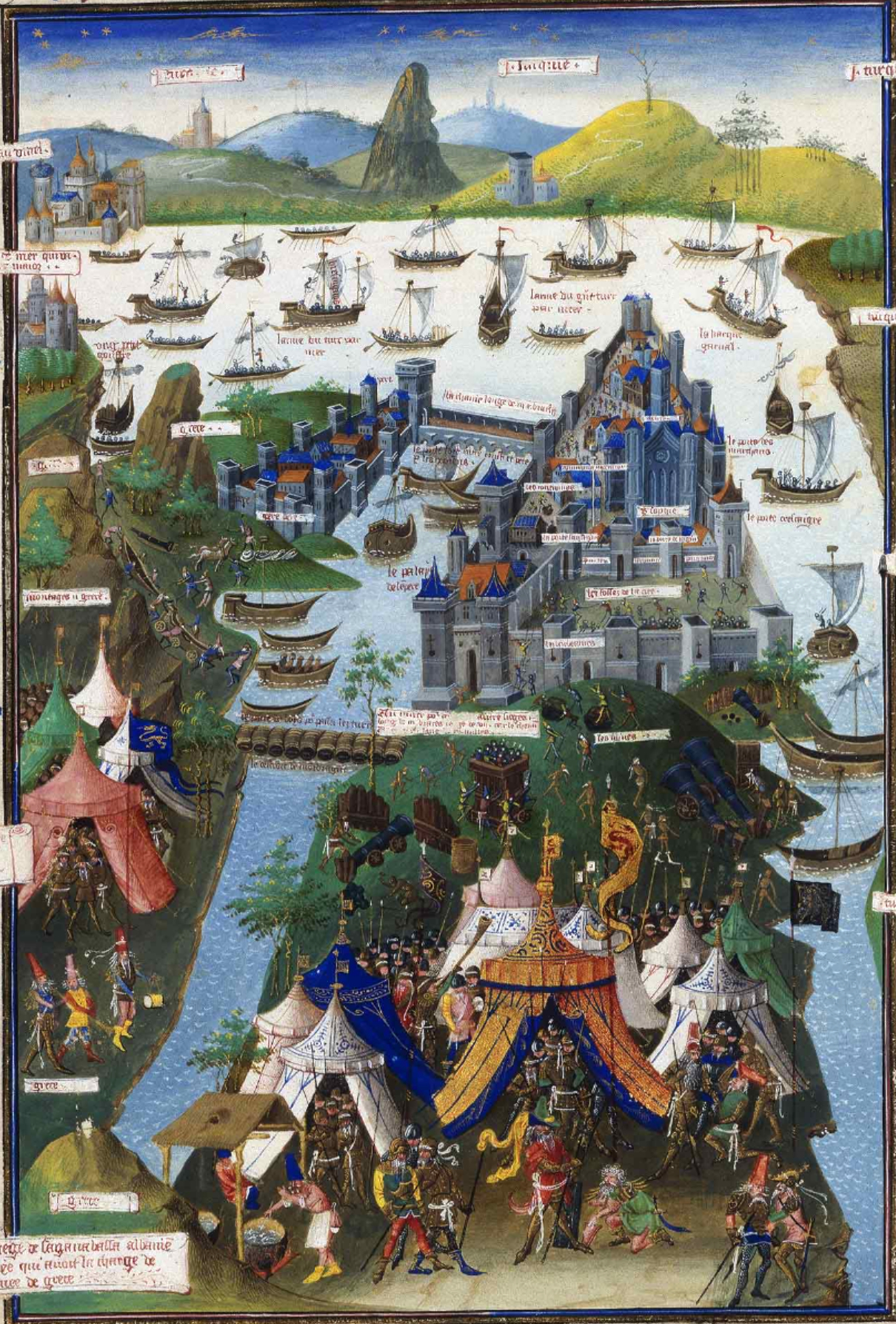
Le siège de Constantinople (1453) by Jean Le Tavernier after 1455

Ordre de bataille lors du siège de Constantinople de 1453.
Bibliography: p. [232]-239 Subjects: Constantinus XI Dragases, emperor of the East, d. 1453; Byzantine Empire -- History Constantine XI Dragases, 1448-1453; Istanbul (Turkey) -- History Siege, 1453

A konstantinápolyi nagy császárnak nevezett kővető mozsár, amelyet II. Mehmed Nándorfehérvárnál használt. A leírások szerint a nagyobb mozsarak hosszmérete a nyolc métert is elérte.

Model of the 1453 Siege of Constantinople, Istanbul Military Museum, view from Galata

This is the Photograph of the Inscription of Ulubatlı Hasan's Destroyed Mosque. The picture was in possession of Turkey's General Directorate of Foundations. And it is first published by Historian Hakan Yilmaz
Taking of Constantinople by Mehmed II (1453)