Fall of Constantinople
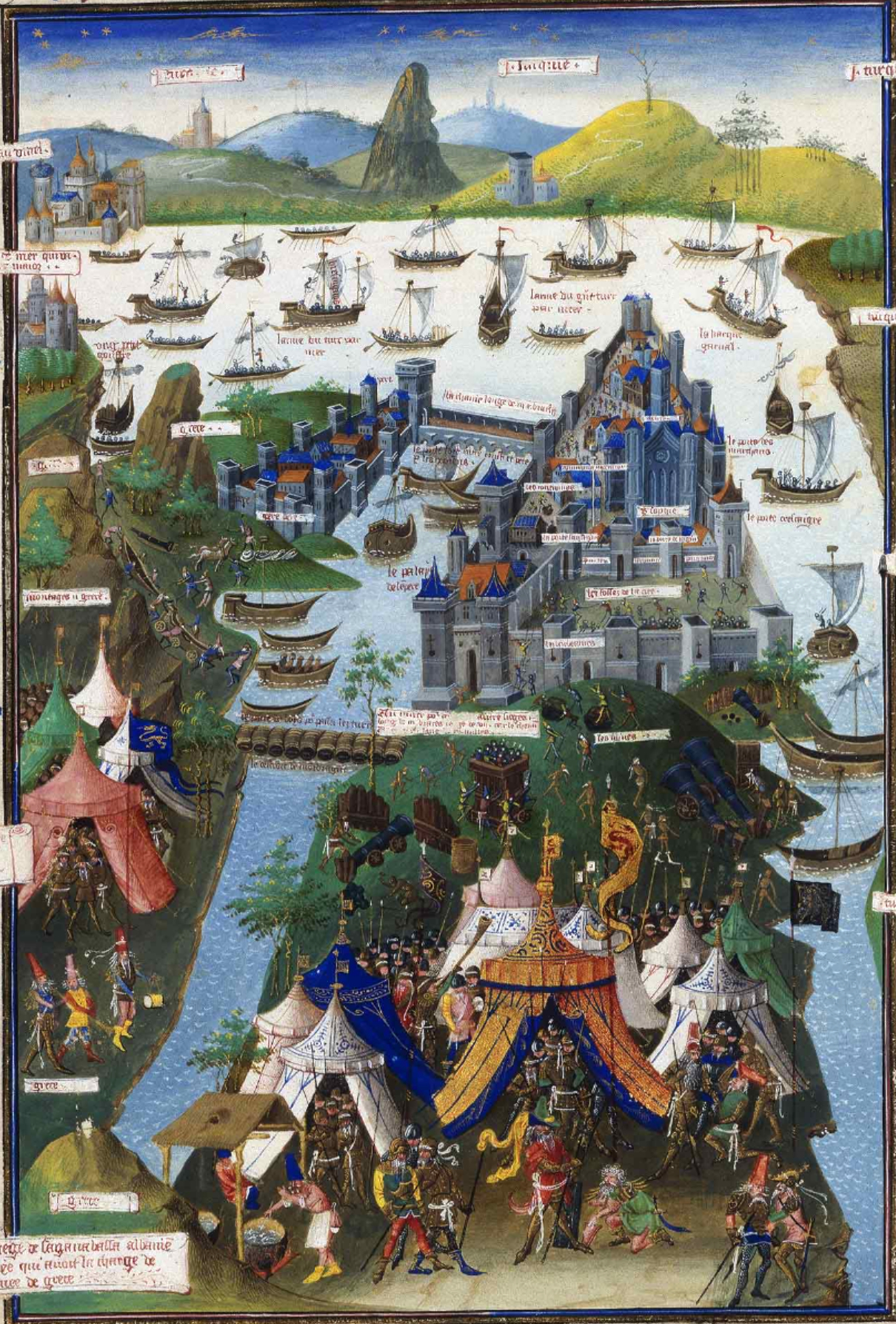
Le siège de Constantinople (1453) by Jean Le Tavernier after 1455

Ordre de bataille lors du siège de Constantinople de 1453.
Bibliography: p. [232]-239 Subjects: Constantinus XI Dragases, emperor of the East, d. 1453; Byzantine Empire -- History Constantine XI Dragases, 1448-1453; Istanbul (Turkey) -- History Siege, 1453

A konstantinápolyi nagy császárnak nevezett kővető mozsár, amelyet II. Mehmed Nándorfehérvárnál használt. A leírások szerint a nagyobb mozsarak hosszmérete a nyolc métert is elérte.

Model of the 1453 Siege of Constantinople, Istanbul Military Museum, view from Galata

This is the Photograph of the Inscription of Ulubatlı Hasan's Destroyed Mosque. The picture was in possession of Turkey's General Directorate of Foundations. And it is first published by Historian Hakan Yilmaz
Taking of Constantinople by Mehmed II (1453)
Historical Overview
The Fall of Constantinople, also known as the Conquest of Constantinople, was the capture of Constantinople, the capital city of the Byzantine Empire, by the Ottoman Empire. The city was captured on 29 May 1453 as part of the culmination of a 53-day siege which had begun on 6 April.
Quick Facts
Ottoman Empire
- Commander: Mehmed II. (Der Eroberer)
- Strength: ca. 80.000 - 100.000
- Casualties: Hoch
Byzantine Empire
- Commander: Konstantin XI. †
- Strength: ca. 7.000 - 9.000
- Casualties: Nahezu 100%
Strategic Context
Eliminating the last Christian enclave in the heart of the Ottoman Empire.
Conflict / War
Byzantine-Ottoman Wars
Related Literature

Der Bauernkrieg: Deutschlands großer Volksaufstand

Lexikon der Renaissance
Historical Locations
Interactive map requires third-party cookie consent.