Napoleonic Wars

1815 horizontal papal bicolour that was put ontop of Castel Sant’Angelo

Archcliffe fort from an 1844 map of Dover
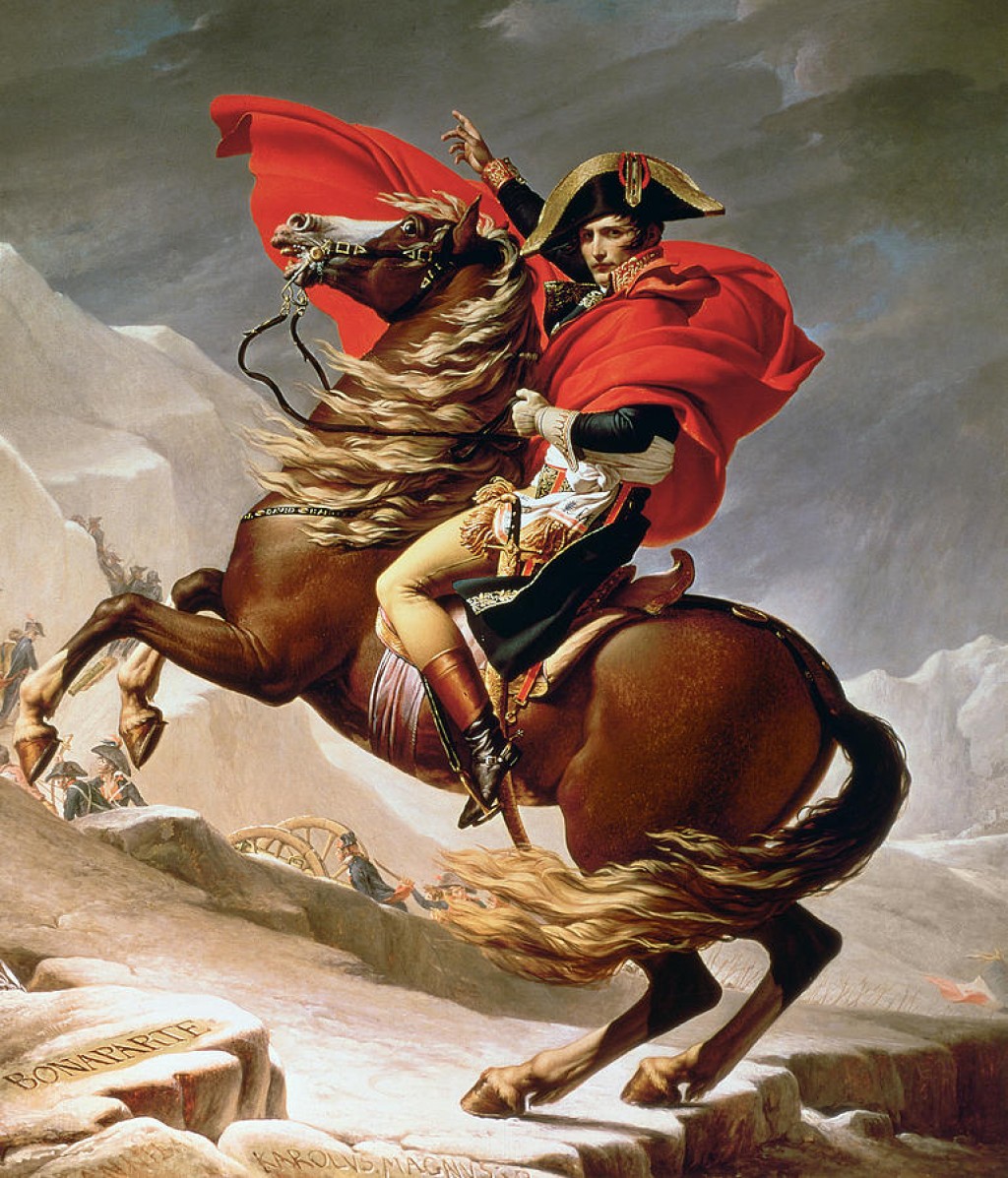
Napoleon in a red cloak mounted on a chestnut horse. The tack is simpler than in the original version, lacking the martingale, and the girth is grey-blue. There are traces of snow on the ground. Napoleon's features are sunken with the faint hint of a smile.

19th century Napoleonic Prisoner of War graffiti, Crawick Glen, Sanquhar, Scotland

Saxony, German State, 3 Mark 1913 Silver Coin Monument to the Battle of the Nations 1813 - 1913, Battle of Leipzig Centennial. 16.69 g Ag 0.900 The monument to the Battle of the Nations, curved above: "18. OKTOBER *1813 = 1913*". Mint mark E below for Saxony./ Crowned Imperial Eagle, around: "*DEUTSCHES REICH date * DREI MARK *". Edge lettering: "GOTT MIT UNS". KM 1275. Medallist: Friedrich Wilhelm Hörnlein, Dresden 1873 - 1945 Dresden Condition: Almost UNCIRCULATED
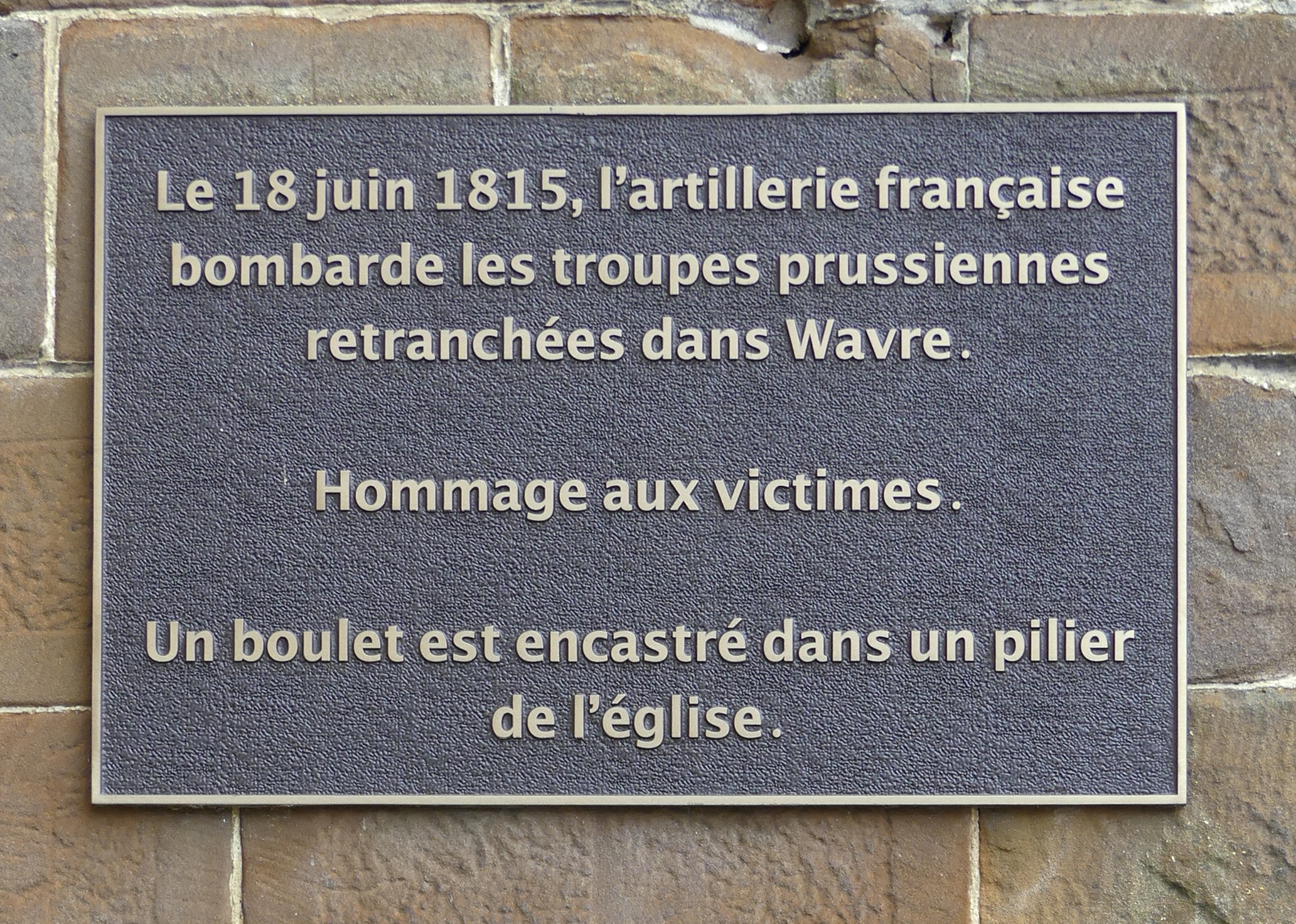
Plaque affixed on the façade of Saint-Jean-Baptiste's church of Wavre, Belgium, on the right of the entrance. The plaque reads : Le 18 juin 1815, l'artillerie française bombarde les troupes prussiennes retranchées dans Wavre. Hommage aux victimes. Un boulet est encastré dans un pilier de l'église. Translation On June 18, 1815, the French artillery bombarded the Prussian troops entrenched in Wavre. Tribute to the victims. A ball is embedded in a pillar of the church. Although Napoleone Buonaparte had already fled the main battlefield before dark on that memorable 18 June 1815, without bothering to concede defeat for fear of the treatment he knew he would receive from Feldmarschall Blücher, the fight went on to the South and East of Waterloo, like here in and around Wavre where the Prussian army was stationned since their arrival by mid-June. The remains of the French army still in fighting order bombarded the town and its inhabitants, before being repelled by Lieutenant-General Johann von Thielmann (1765-1824) and driven back to France. Rare are the thoughts spared for the civilian victims of the napoléonic régime, all over Europe. Equally rare are the thoughts spared for the helpless troops too commonly used as ammunition.

Plaque affixed at the entrance of the parish church of Braine-l'Alleud. (FR) Cette église servit d'hopital au lendemain de la bataille du 18 juin 1815. Charitablement les Brainois vinrent en aide aux blessés. (EN) This church served as a hospital the day after the battle of June 18, 1815. Charitably, the people of Braine-l'Alleud came to the aid of the wounded. (DE) Diese Kirche diente am Tag nach der Schlacht vom 18. Juni 1815 als Krankenhaus. Wohltätig kam das Volk von Braine-l'Alleud den Verwundeten zu Hilfe. Excerpt of Cotton, Edward, A Voice from Waterloo (...), 5th edit., 1854, Chapter IX, 137. The field of battle, after the victory, presented a frightful and most distressing spectacle. (...) Solicitude for the wounded prompted the Duke to ride back to Brussels immediately after the sanguinary contest. The assistance of the town authorities was requested, in collecting and removing the wounded from the field, burying the dead, etc., as well as to restore confidence amongst the population, and allay the extreme excitement which prevailed throughout Belgium. Right nobly did the inhabitants of Brussels repond to his appeal. The clergy, as might have been expected, were foremost in their exertions to relieve the dreadful agonies of so many gallant and innocent sufferers : the highest in rank rivalled the hardier classes in performing the most trying offices for the mangled heroes that filled the hospitals, and encumbered even many private dwellings. (...)

Plaque related to the Dutch Memorial to the Victims of Napoleone Buonaparte fallen at the Battle of Waterloo on 18 June 1815 erected in the Rotunda of Saint Joseph's of Waterloo, which reads : Auspice Illustrissimo Principe // FREDERICO NASSOVIO // In Perpetuam Memoriam // Insignis Victoriæ // Anno MDCCCXV Die Juni XVIII // Relatæ // Waterl. Sodal. Ære Et Cura // Hoc Monumentum Est Erectum Translation : “Under the patronage of the illustrious Prince Frederic of Nassau, in eternal memory of the glorious victory achieved at Waterloo on June 18th 1815, this monument was erected and funded by his companions-in-arms”.

Flag of the papal states from 763 until 1808

1812-1813 Наполеон һуғышында башҡорт атлы полкының байрағы. Юрматы йыйыны 2017, Ишембай районы, Торатау, Башҡортостан

Cachot de la tour n°13. Un prisonnier anglais a gravé un dessin de son bateau sur un mur, pendant les guerres napoléoniennes.

Polandball comic on en:Anglo-Swedish War (1810–1812)

Fragment uit het manuscript "Gedenkschriften over Napoleon's veldtochten, meegemaakt als soldaat bij het 2e regiment carabiniers te paard". Geschreven door Joseph Abbeel, 1805-1815.

Uniface oval cast medallion 54 x 68 mm. Francis II, Holy Roman Emperor 1792-1806; Emperor of Austria 1804-1834; King of Hungary and Croatia, King of Bohemia, King of Lombardy–Venetia 1792-1835 Head l. Julius -; Forrer VIII, p- 240. This portrait medal of the wars of liberation was modelled on the occasion of the passage of the 3 monarchs Alexander I of Russia, Francis II, and Frederick William III of Prussia over the Basel Rhine bridge on 13 January 1814 by the medallist: Philipp Jakob Treu, 1761 Basel - 1825 Basel, Switzerland Condition: VERY FINE.

Uniface oval cast medallion 54 x 68 mm. Francis II, Holy Roman Emperor 1792-1806; Emperor of Austria 1804-1834; King of Hungary and Croatia, King of Bohemia, King of Lombardy–Venetia 1792-1835 Head l. Julius -; Forrer VIII, p- 240. This portrait medal of the wars of liberation was modelled on the occasion of the passage of the 3 monarchs Alexander I of Russia, Francis II, and Frederick William III of Prussia over the Basel Rhine bridge on 13 January 1814 by the medallist: Philipp Jakob Treu, 1761 Basel - 1825 Basel, Switzerland Condition: VERY FINE.

The Village of Czarnowo 2015

Pomiechowo church and the river Wkra. Friants river crossing place at 2015

https://www.oblivion-art.de/index.php/porzellan/unterkategorie-porzellan/porzellanfabrik-nathusius-althaldensleben/tassen

Coat of arms of Joachim Murat, grand cross with collar of the order of Légion d'Honneur, Marshall of France, Grand admiral of the Empire, as grand-duke of Cleves and Berg. Sources: Thaler issued during his reign. British museum portrait Blazon : Berg impaled with Clèves, with the the anchor of the grand admiralship in augmentation, overall an inescutcheon of Napoleon.

Hirschbach ( Upper Austria ). Museum for folk painted furniture: Cupboard painted with scenes of the Napoleonic wars.
In triple columns Printed ephemera Filmed from a copy of the original publication held by the McLennan Library, McGill University, Montreal 43 Subjects: Napoleonic Wars, 1800-1814; Guerres napoléoniennes, 1800-1814

This collage was derived from: File:Les coalises evacuent Toulon en decembre 1793.jpg, File:La Bataille du Pont d'Arcole.jpg, File:Baron Antoine-Jean Gros-Battle Pyramids 1810.jpg, File:Lejeune - Bataille de Marengo.jpg, File:Battle of Trafalgar, 21 October 1805.png, File:La bataille d'Austerlitz. 2 decembre 1805 (François Gérard).jpg, File:Charles Meynier - Entrée de Napoléon à Berlin. 27 octobre 1806.jpg, File:Wagram-Napoleon and Bessières.jpg, File:Napoleon.Leipzig.jpg, File:Russparis.jpg, File:Battle of Waterloo 1815.PNG

Fighting between the insurgents of Saint-Domingue and the French troops sent by Napoleon Bonaparte (1802-1803). Engraving by Jean-Jacques Frilley, after Auguste Raffet, 19th century.
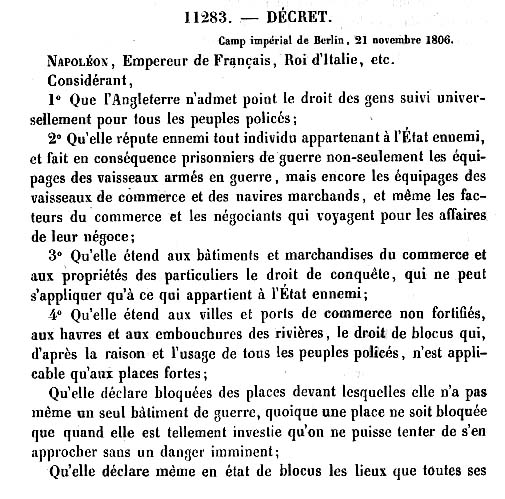
Treaty of Berlin, signed 21 November 1806. Page 1 of 3.

Treaty of Berlin, signed 21 November 1806. Pages 2 and 3 of 3.

Slagfältet vid Dennewitz, våren 1996. Fotograferad av Harri Blomberg
Historical Overview
The Napoleonic Wars (1803–1815) were a global series of conflicts fought by a fluctuating array of European coalitions against the French First Republic (1803–1804) under the First Consul followed by the First French Empire (1804–1815) under the Emperor of the French, Napoleon I. The wars originated in political forces arising from the French Revolution (1789–1799) and from the French Revolutionary Wars (1792–1802) and produced a period of French domination over Continental Europe. The wars are categorised as seven conflicts, five named after the coalitions that fought Napoleon, plus two named for their respective theatres: the War of the Third Coalition, War of the Fourth Coalition, War of the Fifth Coalition, War of the Sixth Coalition, War of the Seventh Coalition, the Peninsular War, and the French invasion of Russia.