Vistula–Oder Offensive
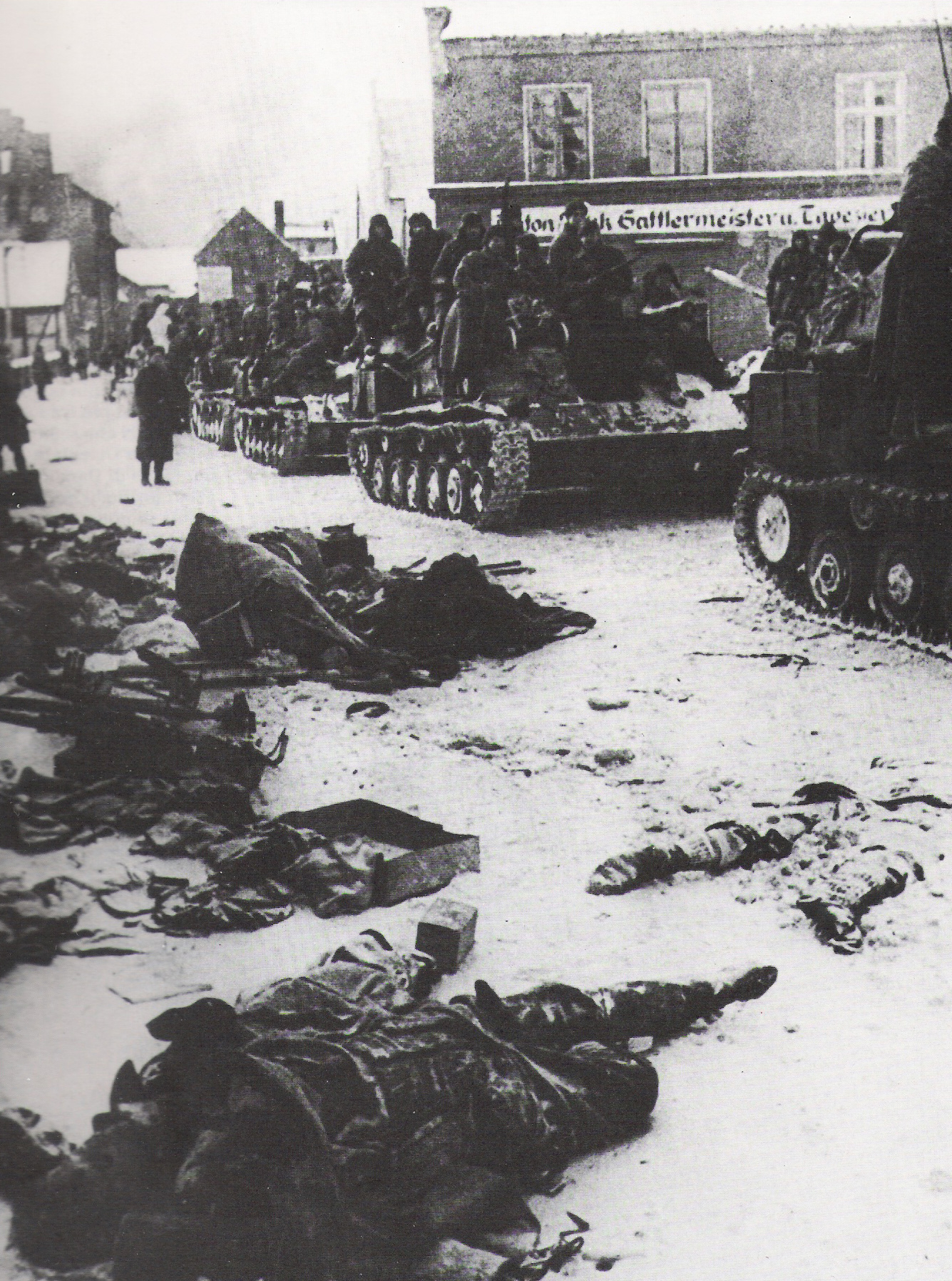
![Residents of Lodz greet the Soviet tankists entering the city in 1945.
Original description in Russian (http://armor.kiev.ua) : ИСУ-122. Лодзь, 1945 г. (ISU-122, Lodz, 1945)
Source: from http://armor.kiev.ua/Tanks/WWII/SU152/
pre-1954 image, unknown author
also see: [1] at the State Archive of the Russian Federation with caption: "Residents of Lodz greet Soviet tankists entering the city"](https://upload.wikimedia.org/wikipedia/commons/2/2b/Lodz_liberation2.jpg)
Residents of Lodz greet the Soviet tankists entering the city in 1945. Original description in Russian (http://armor.kiev.ua) : ИСУ-122. Лодзь, 1945 г. (ISU-122, Lodz, 1945) Source: from http://armor.kiev.ua/Tanks/WWII/SU152/ pre-1954 image, unknown author also see: [1] at the State Archive of the Russian Federation with caption: "Residents of Lodz greet Soviet tankists entering the city"

Map of the Eastern Front (WWII), 1945-01-01 to 1945-05-07

The vistula-oder offensive - progression of the soviet army between 12 January and 2 February 1945
Soviet troops during the Vistula-Oder offensive

Путь к Победе. Висло-Одерская наступательная операция.

Studzianki Pancerne - tablica informacyjna in situ.

Studzianki Pancerne - tablica informacyjna in situ. T-34 217 w Studziankach w styczniu 1945.

Soviet tanks during the Oder offensive (1945)

Vistula–Oder Offensive

Слева в кадре — подорванный и брошенный экипажем немецкий танк «Тигр» (Pz.Kpfw. VI «Tiger I») из 501-го тяжелого танкового батальона.

Жители освобожденного польского города Ченстохова осматривают сгоревший немецкий автомобиль «Фиат 1100А» (Fiat 1100A).

Обстрел немецкой группировки войсками Первого Белорусского Фронта. Залп гвардейских минометов "Катюша" 1-го Белорусского фронта.

Советские самоходные орудия СУ-76 движутся по площади Бронислава Перацкого (ныне площадь В. Беганьского) в городе Ченстохов (Częstochowa). 1-й Украинский фронт.

Советский танк ИС-2 и грузовики с солдатами переправляются через реку Одер.
Historical Overview
The Vistula–Oder offensive was a Red Army operation on the Eastern Front in the European theatre of World War II in January 1945. The army made a major advance into German-held territory, capturing Kraków, Warsaw, and Poznań. The Red Army had built up their strength around a number of key bridgeheads, with two fronts commanded by Marshal Georgy Zhukov and Marshal Ivan Konev. Against them, the German Army Group A, led by Colonel-General Josef Harpe, was outnumbered five to one. Within days, German commandants evacuated the concentration camps, sending the prisoners on their death marches to the west, where ethnic Germans also started fleeing. In a little over two weeks, the Red Army had advanced 480 kilometres (300 mi) from the Vistula to the Oder, only 69 kilometres (43 mi) from Berlin, which was undefended. However, Zhukov called a halt, owing to continued German resistance on his northern flank (Pomerania), and the advance on Berlin had to be delayed until April.
Quick Facts
Red Army
- Commander: Georgi Schukow
- Strength: 2200000
- Casualties: 43000
German Army
- Commander: Josef Harpe
- Strength: 450000
- Casualties: 290000
Strategic Context
Threatening Berlin.
Related Literature


Der Gulag

Die Schlacht um Berlin und das Ende des Dritten Reichs 1945

Hunde, wollt ihr ewig leben: ein Stalingrad-Roman

Roter Hunger: Stalins Krieg gegen die Ukraine

So weit die Füße tragen

Söldner ohne Sold: Die deutschen Freikorps 1918–1923

Vom Massensturm zur Stoßtrupptaktik: Die deutsche Landkriegtaktik im Spiegel von Dienstvorschriften und Publizistik 1906 bis 1918

Wir Wehr-Wölfe: Erinnerungen eines Freikorps-Führers

Zweiter Weltkrieg Erlebnisbericht Apokalypse Stalingrad: Untergang der 6. Armee 1942-1943
Walter Mönch
Rise And Fall Of The Third Reich
William Shirer
Historical Locations
Exact location not recorded in historical records