Battle of Talana Hill
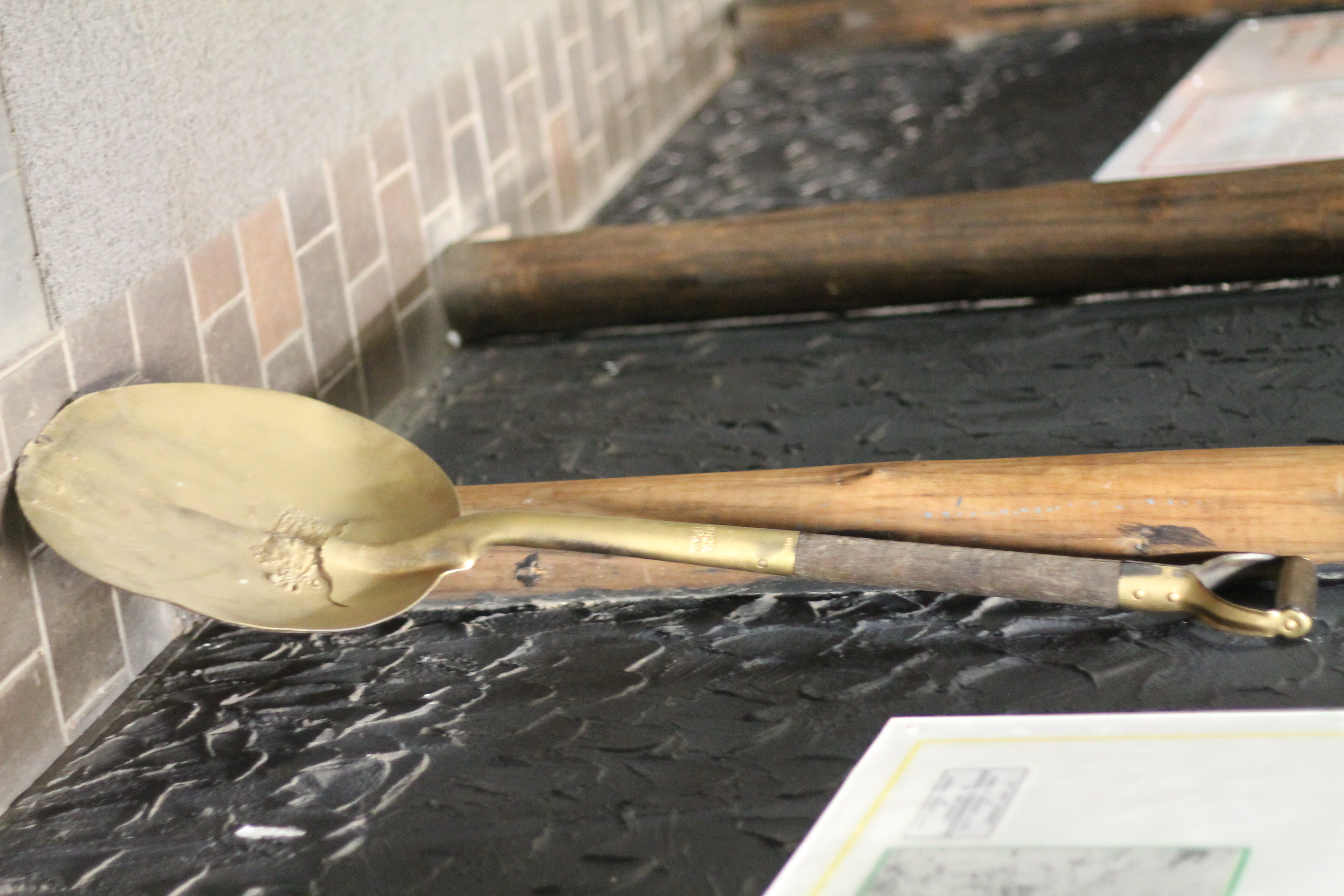
The museum houses Historical artifacts, Mining history and a graveyard at the rear of the site

Talana museum houses Historical artifacts, Mining history and a graveyard at the rear of the site

Boers troops atop of Talana Hill
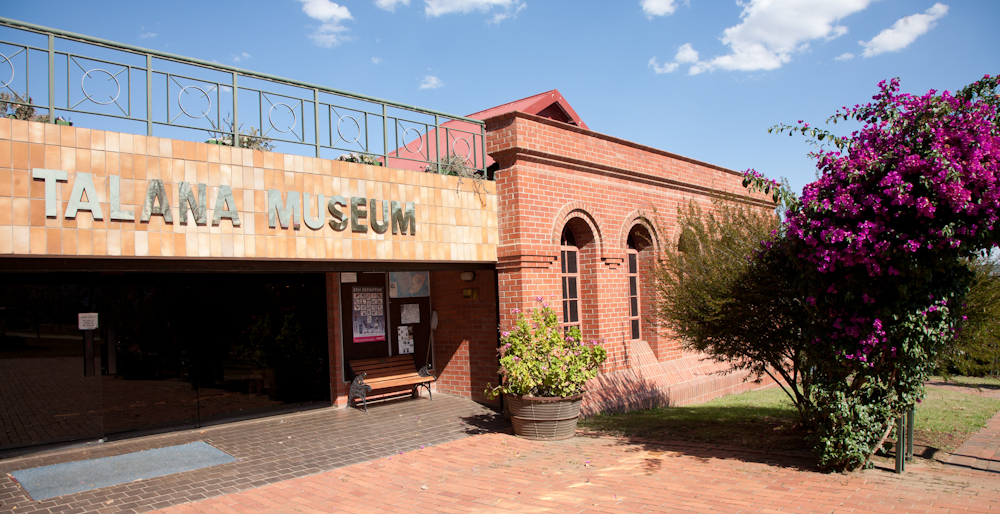
Talana Museum
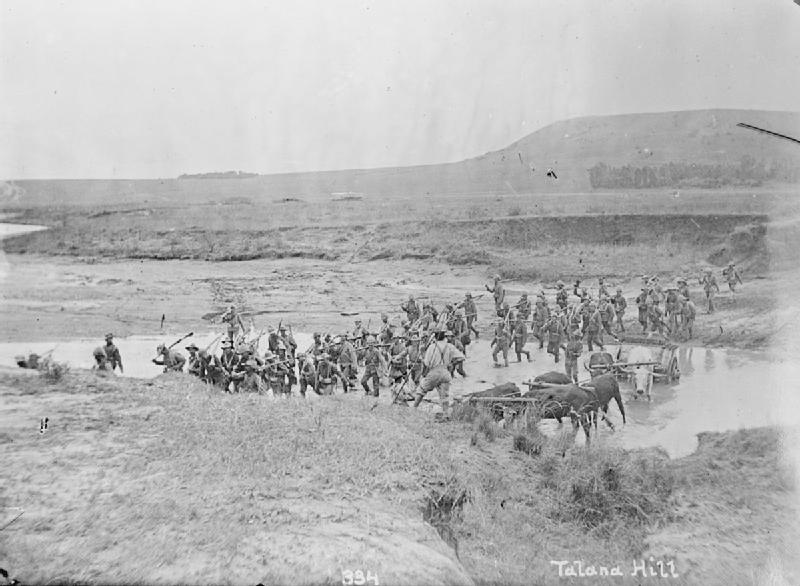
THE SECOND BOER WAR, 1899-1902. British troops crossing a river near Talana Hill, Natal Province (site of the Battle of Dundee, 1899).

Map showing positions at the Battle of Glencoe (Battle of Talana Hill) 20 October 1899.
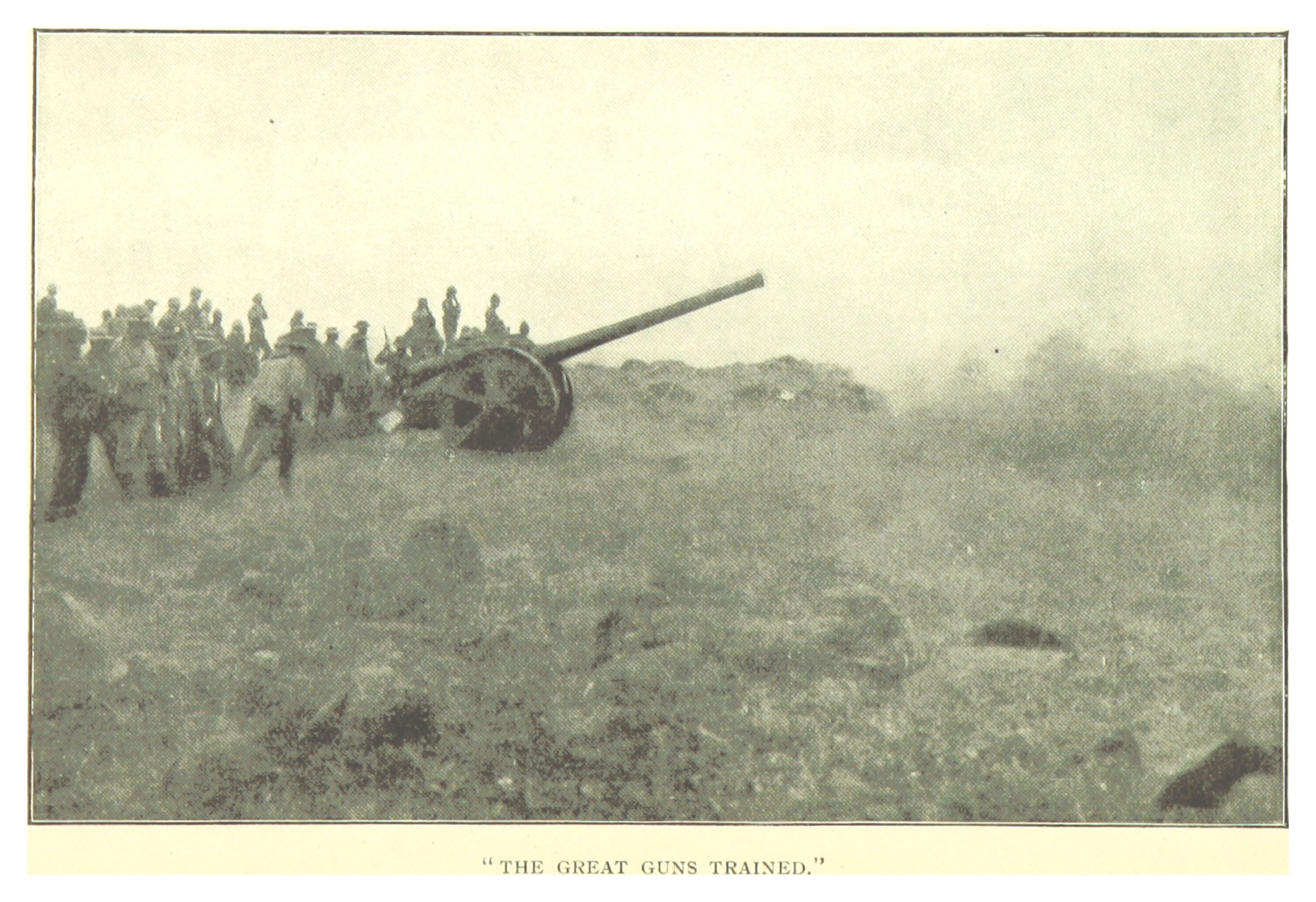
BENNET(1900) p016 The Great Guns

The Battle of Talana took place on 20 October 1899. The museum houses Historical artifacts, Mining history and a graveyard at the rear of the site

A Depiction of the Battle of Talana Hill by G W Bacon & Co London in Bacon's South Africa War Prints, this is the edition where the British are wearing period-accurate Khaki Uniforms.

A Depiction of the Battle of Talana Hill by G W Bacon & Co London in Bacon's South Africa War Prints, this is the edition where the British are wearing their blue and red dress uniforms, which were not present at the actual battle.
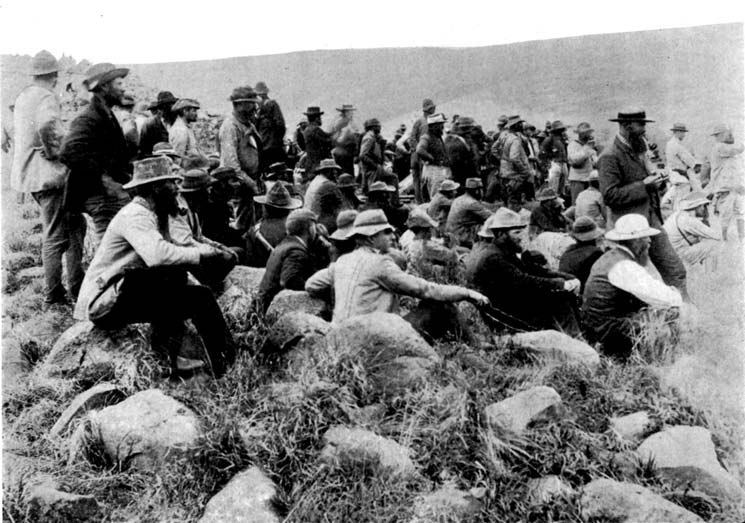
Boers watch the fight at Dundee, KwaZulu-Natal, 1899 - Project Gutenberg eText 16462.

A Plaque commemorating the Battle at Talana in October 1899

Memorial to Gen Sir William Penn Symons mortally wounded in the battle of Talana 20 October 1899

The Battle of Talana, which took place on 20 October 1899. The museum houses Historical artifacts, Mining history and a graveyard at the rear of the site.

The museum houses Historical artifacts, Mining history and a graveyard at the rear of the site.

The Second Boer War, 1899-1902 British troops crossing a river near Talana Hill, Natal Province (site of the Battle of Dundee, 1899).
The Times issue for October 21, 1899, detailing the unfolding events of the Second Boer War and other affairs.
![The Wide, Wide Veldt (Bradlev, The Navy and Army Illustrated, 25th Jan. 1902, p. 477)
Jan, 25th, 1902.] The Navy and Army Illustrated
THE WIDE, WIDE VELDT
[By a War Correspondent]
The captures of Erasmus and Wolmarans have been lauded in some quarters as important. The names are catch-penny, for the owners of them, as belligerents, are hardly worth of notice, except that we owe Erasmus a great debt of gratitude for the share he failed to take in the battle of Talana. A well-educated Boer, with whom I have acquaintance, told me that at Talana Hill he "played Nelson at 13-stone," in so much as he refused to see that which he did not want to see. Without going into details with regard to Joubert's strategy, it is a generally-accepted theory that Erasmus was to co-operate with Lukas Meyer at Talana. My friend, who was on Erasmus's staff, tells me that Erasmus's men were in position on Impati al right, and that, in spite of the mist, they could easily see the shrapnel bursting over Lennox Hill. Erasmus, who suddenly began to experience pains in his body, called for his field-glasses. After a prolonged survey of the batlefield he said: "No, that is only a British trap. I can see it all quite clearly. They are bursting rockets in the air to make us believe that there is a fight in progress–outspan!"
Erasmus belongs to a very "old port" Dutch family, and, like old port, a very "tawny" family as well. There is a big dash of the Hottentot in the family. They seem to have existed as eminent citizens by toadying upon Kruger. It was Erasmus who presented the State coach to the late President–which State coach, I believe, has never been paid for. Major Wolmarans was the fat ceremonial commandant of the Staats Artillerie. He was without military value, and was not the man, as some papers have stated, who was tried by court-martial for the loss of the Lombard Kop guns.
I remember that quite recently an ill-natured Australian–he had not taken part in the war, be it said–wrote a letter to the Times, in which he accused the British soldier of not being able to fend for himself when "on trek." It is easy enough to write letters, but it seems more difficult to speak the truth. My experience of the British soldier is that he is uncommonly handy in looking after "No 1." As to the Australian having his "billee" going as soon as he is in cap, it sounds very well, but the company cooks have a "flander's kettle"–a gallon–of tea going just as soon as any Australian. If you could see, as I have seen, a regiment going into action with about a ton of firewood distributed through the ranks-not to be relinquished even in the face of the enemy–you would not countenance companrisons which malign the simple soldier. As to the smaller matter of "supplementing the larder," the poor "foot-sloger" has but few opportunities of foraging for himself. He only gets to a farm after the mounted men have been through it. But there are column commanders who correct this unfairness, and allow their infantry three days a week. Mounted men caught foraging on infantry days are severely punished.
"ALL TOGETHER, BOYS-PUSH!" Field hospital waggons crossing a drift.
A WELCOME BIT OF NEWS. Sorting the English mails on the veldt.
IN NEED OF REPAIR. A bit of railway line in the Free State after a raid.](https://upload.wikimedia.org/wikipedia/commons/b/b7/The_Wide%2C_Wide_Veldt_%28Bradlev%2C_The_Navy_and_Army_Illustrated%2C_25th_Jan._1902%2C_p._477%29.jpg)
The Wide, Wide Veldt (Bradlev, The Navy and Army Illustrated, 25th Jan. 1902, p. 477) Jan, 25th, 1902.] The Navy and Army Illustrated THE WIDE, WIDE VELDT [By a War Correspondent] The captures of Erasmus and Wolmarans have been lauded in some quarters as important. The names are catch-penny, for the owners of them, as belligerents, are hardly worth of notice, except that we owe Erasmus a great debt of gratitude for the share he failed to take in the battle of Talana. A well-educated Boer, with whom I have acquaintance, told me that at Talana Hill he "played Nelson at 13-stone," in so much as he refused to see that which he did not want to see. Without going into details with regard to Joubert's strategy, it is a generally-accepted theory that Erasmus was to co-operate with Lukas Meyer at Talana. My friend, who was on Erasmus's staff, tells me that Erasmus's men were in position on Impati al right, and that, in spite of the mist, they could easily see the shrapnel bursting over Lennox Hill. Erasmus, who suddenly began to experience pains in his body, called for his field-glasses. After a prolonged survey of the batlefield he said: "No, that is only a British trap. I can see it all quite clearly. They are bursting rockets in the air to make us believe that there is a fight in progress–outspan!" Erasmus belongs to a very "old port" Dutch family, and, like old port, a very "tawny" family as well. There is a big dash of the Hottentot in the family. They seem to have existed as eminent citizens by toadying upon Kruger. It was Erasmus who presented the State coach to the late President–which State coach, I believe, has never been paid for. Major Wolmarans was the fat ceremonial commandant of the Staats Artillerie. He was without military value, and was not the man, as some papers have stated, who was tried by court-martial for the loss of the Lombard Kop guns. I remember that quite recently an ill-natured Australian–he had not taken part in the war, be it said–wrote a letter to the Times, in which he accused the British soldier of not being able to fend for himself when "on trek." It is easy enough to write letters, but it seems more difficult to speak the truth. My experience of the British soldier is that he is uncommonly handy in looking after "No 1." As to the Australian having his "billee" going as soon as he is in cap, it sounds very well, but the company cooks have a "flander's kettle"–a gallon–of tea going just as soon as any Australian. If you could see, as I have seen, a regiment going into action with about a ton of firewood distributed through the ranks-not to be relinquished even in the face of the enemy–you would not countenance companrisons which malign the simple soldier. As to the smaller matter of "supplementing the larder," the poor "foot-sloger" has but few opportunities of foraging for himself. He only gets to a farm after the mounted men have been through it. But there are column commanders who correct this unfairness, and allow their infantry three days a week. Mounted men caught foraging on infantry days are severely punished. "ALL TOGETHER, BOYS-PUSH!" Field hospital waggons crossing a drift. A WELCOME BIT OF NEWS. Sorting the English mails on the veldt. IN NEED OF REPAIR. A bit of railway line in the Free State after a raid.
Historical Overview
The Battle of Talana Hill, also known as the Battle of Glencoe, was the first major clash of the Second Boer War. A frontal attack by British infantry supported by artillery drove the Boers from a hilltop position, but the British suffered heavy casualties in the process, including their commanding general, Sir William Penn Symons, being mortally wounded.
Quick Facts
Kingdom of Great Britain
- Commander: Penn Symons †
- Strength: ca. 4.000
- Casualties: ca. 450
Boer Republics
- Commander: Lukas Meyer
- Strength: ca. 3.000
- Casualties: ca. 150
Strategic Context
British attempt to drive Boers from the coal mines near Dundee.
Related Literature


Frühling der Revolution: Europa 1848/49 und der Kampf für eine neue Welt
Christopher Clark

Risorgimento! Italiens Kampf um die Einheit im 19. Jahrhundert
Historical Locations
Interactive map requires third-party cookie consent.