All Battles

Battle of Shanghai

1937 Shanghai Stadtkampf

China. Picture from the archive of Mission Covenant Church of Sweden.

China. Picture from the archive of Mission Covenant Church of Sweden.

Author: Unknown authorUnknown authorLicense:CC0
Source
Fire at Pootung. By courtesy of Malcom Rosholt. China. Picture from the archive of Mission Covenant Church of Sweden.

Fire at Pootung. By courtesy of Malcom Rosholt. China. Picture from the archive of Mission Covenant Church of Sweden.

Author: Unknown authorUnknown authorLicense:CC0
Source
China. Picture from the archive of Mission Covenant Church of Sweden.

China. Picture from the archive of Mission Covenant Church of Sweden.

Author: Unknown authorUnknown authorLicense:CC0
Source
Chinese, retreating in junks, fire a bridge. Making desperate efforts to harry the advancing Japanese, Chinese troops retreating in junks from Shanghai and fired a bridge across the Zah Hwei Creek. Picture from the archive of Mission Covenant Church of Sweden.
Chinese, retreating in junks, fire a bridge. Making desperate efforts to harry the advancing Japanese, Chinese troops retreating in junks from Shanghai and fired a bridge across the Zah Hwei Creek. Picture from the archive of Mission Covenant Church of Sweden.

Author: Unknown authorUnknown authorLicense:CC0
Source
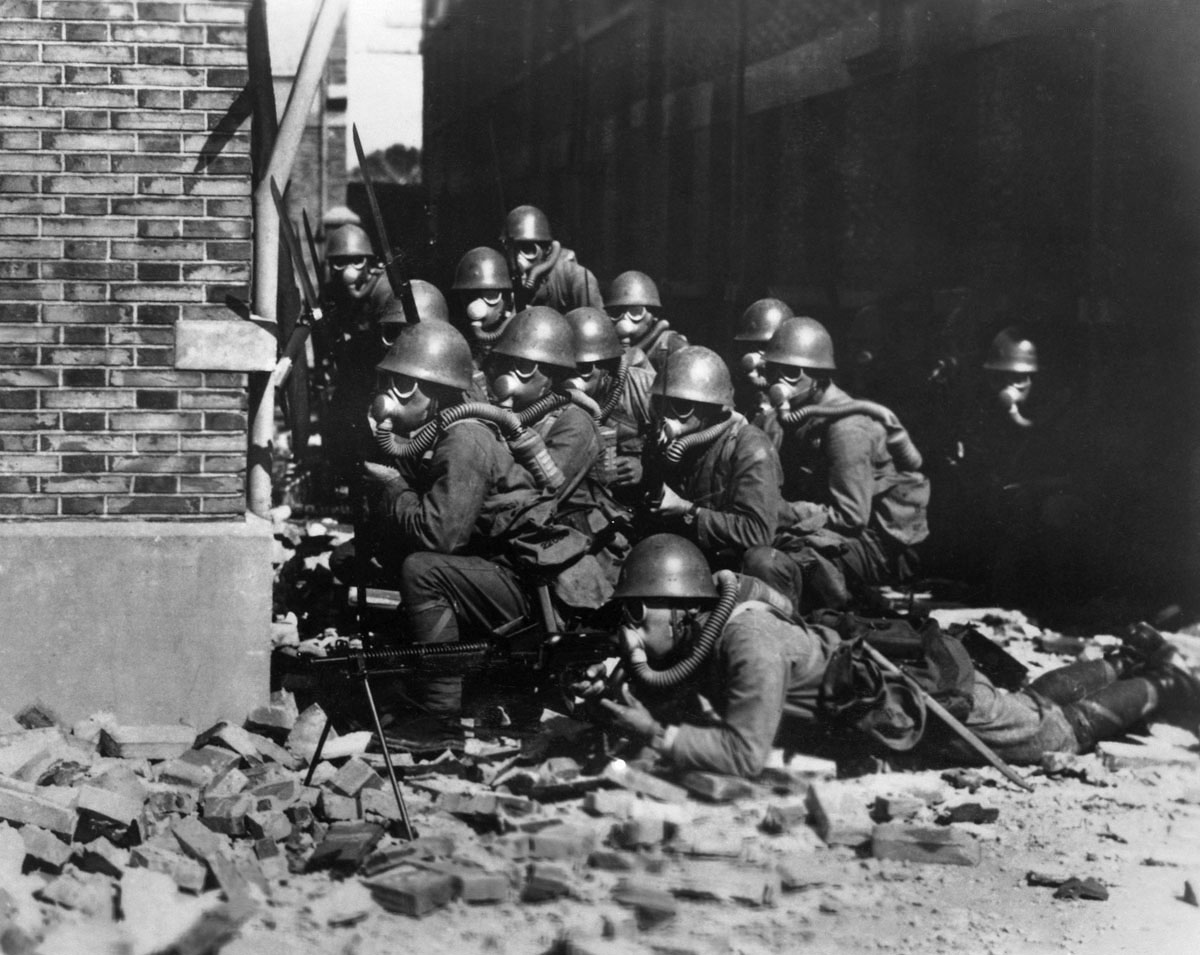
The Imperial Japanese Navy (IJN) Special Naval Landing Forces troops in gas masks prepare for an advance in the rubble of Shanghai, China.

The Imperial Japanese Navy (IJN) Special Naval Landing Forces troops in gas masks prepare for an advance in the rubble of Shanghai, China.

Author: Unknown photographer, Ministry of the NavyLicense:PD
Source
China. Picture from the archive of Mission Covenant Church of Sweden.

China. Picture from the archive of Mission Covenant Church of Sweden.

Author: Unknown authorUnknown authorLicense:CC0
Source
English: Chinese bombers were apparently trying to bomb the Japanese cruiser Izumo (Idzumo), when two bombs fell between the Cathay and Palace Hotels in Nanking Road. Approximately 400 people were killed or wounded. Known as “Bloody Saturday”. China. Picture from the archive of Mission Covenant Church of Sweden.

English: Chinese bombers were apparently trying to bomb the Japanese cruiser Izumo (Idzumo), when two bombs fell between the Cathay and Palace Hotels in Nanking Road. Approximately 400 people were killed or wounded. Known as “Bloody Saturday”. China. Picture from the archive of Mission Covenant Church of Sweden.

Author: Unknown authorUnknown authorLicense:CC0
Source
Smoke from burning cotton mills on Pootung, Shanghai with World War I victory memorial on left, USS Augusta (CA-31) center and bow of cruiser HMS Danae at right. Picture from the archive of Mission Covenant Church of Sweden.

Smoke from burning cotton mills on Pootung, Shanghai with World War I victory memorial on left, USS Augusta (CA-31) center and bow of cruiser HMS Danae at right. Picture from the archive of Mission Covenant Church of Sweden.

Author: Unknown authorUnknown authorLicense:CC0
Source
China. Picture from the archive of Mission Covenant Church of Sweden.

China. Picture from the archive of Mission Covenant Church of Sweden.

Author: Unknown authorUnknown authorLicense:CC0
Source
1937 Japan navy flagship in Shanghai. 上海沖の海防艦「出雲」(1937年撮影):日本海軍の第3艦隊(1937年10月以降は支那方面艦隊)旗艦で,排水量1万トン、主砲は20.3cm砲 連装2基4門の旧式艦。上海の日本人居留民保護を目的に,上海の中国軍を砲撃した。

1937 Japan navy flagship in Shanghai. 上海沖の海防艦「出雲」(1937年撮影):日本海軍の第3艦隊(1937年10月以降は支那方面艦隊)旗艦で,排水量1万トン、主砲は20.3cm砲 連装2基4門の旧式艦。上海の日本人居留民保護を目的に,上海の中国軍を砲撃した。

Author: Unknown authorUnknown authorLicense:PD
Source
A newspaper article on a Chinese poison gas attack during the Battle of Shanghai. Attack under poison gas shells - men and horses advanced wearing masks., 18 October, Correspondent Yoshio Hamano

A newspaper article on a Chinese poison gas attack during the Battle of Shanghai. Attack under poison gas shells - men and horses advanced wearing masks., 18 October, Correspondent Yoshio Hamano

Author: Tokyo Asahi ShimbunLicense:PD
Source
Japanese troops attack Shanghai (September 1937)

Japanese troops attack Shanghai (September 1937)

Author: UFALicense:CC-BY-SA-4.0
Source
A Japanese soldier slashes the throat of a Chinese prisoner during the Battle of Shanghai, several more bodies are visible. Late October.
A Japanese soldier slashes the throat of a Chinese prisoner during the Battle of Shanghai, several more bodies are visible. Late October.

Author: Unknown authorUnknown authorLicense:PD
Source
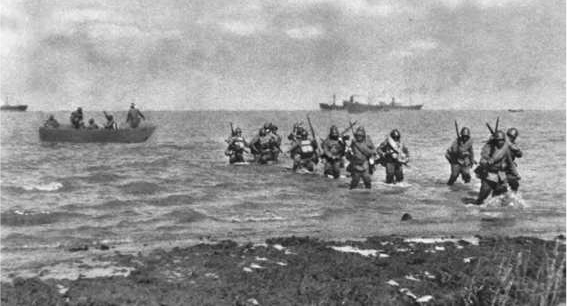
The 16th Division of the Imperial Japanese Army lands at Baimaokou, north of Shanghai, in November 1937.

The 16th Division of the Imperial Japanese Army lands at Baimaokou, north of Shanghai, in November 1937.

Author: Unknown authorLicense:PD
Source
A series of annotated frames illustrating the first Japanese attacks on Sihang Warehouse, October 27

A series of annotated frames illustrating the first Japanese attacks on Sihang Warehouse, October 27

Author: Unknown authorUnknown authorLicense:PD
Source
Photographs captured by Japanese forces positioned north of Sihang Warehouse; the Chinese flag is visible

Photographs captured by Japanese forces positioned north of Sihang Warehouse; the Chinese flag is visible

Author: Unknown authorUnknown authorLicense:PD
Source
Japanese naval infantry occupy the Sihang Warehouse, still smoking after the final artillery barrage

Japanese naval infantry occupy the Sihang Warehouse, still smoking after the final artillery barrage

Author: Unknown authorUnknown authorLicense:PD
Source
Japanese SNLF patrol outside on the North end of Sihang Warehouse

Japanese SNLF patrol outside on the North end of Sihang Warehouse

Author: Unknown authorUnknown authorLicense:PD
Source
Devastation at the Cathay Hotel, Shanghai after a Chinese bomb hit at 4:27pm, 14 August 1937
Devastation at the Cathay Hotel, Shanghai after a Chinese bomb hit at 4:27pm, 14 August 1937

Author: Naval History and Heritage Command NH 77792 courtesy of Vice Admiral Morton L. Deyo, USN (retired)License:PD
Source
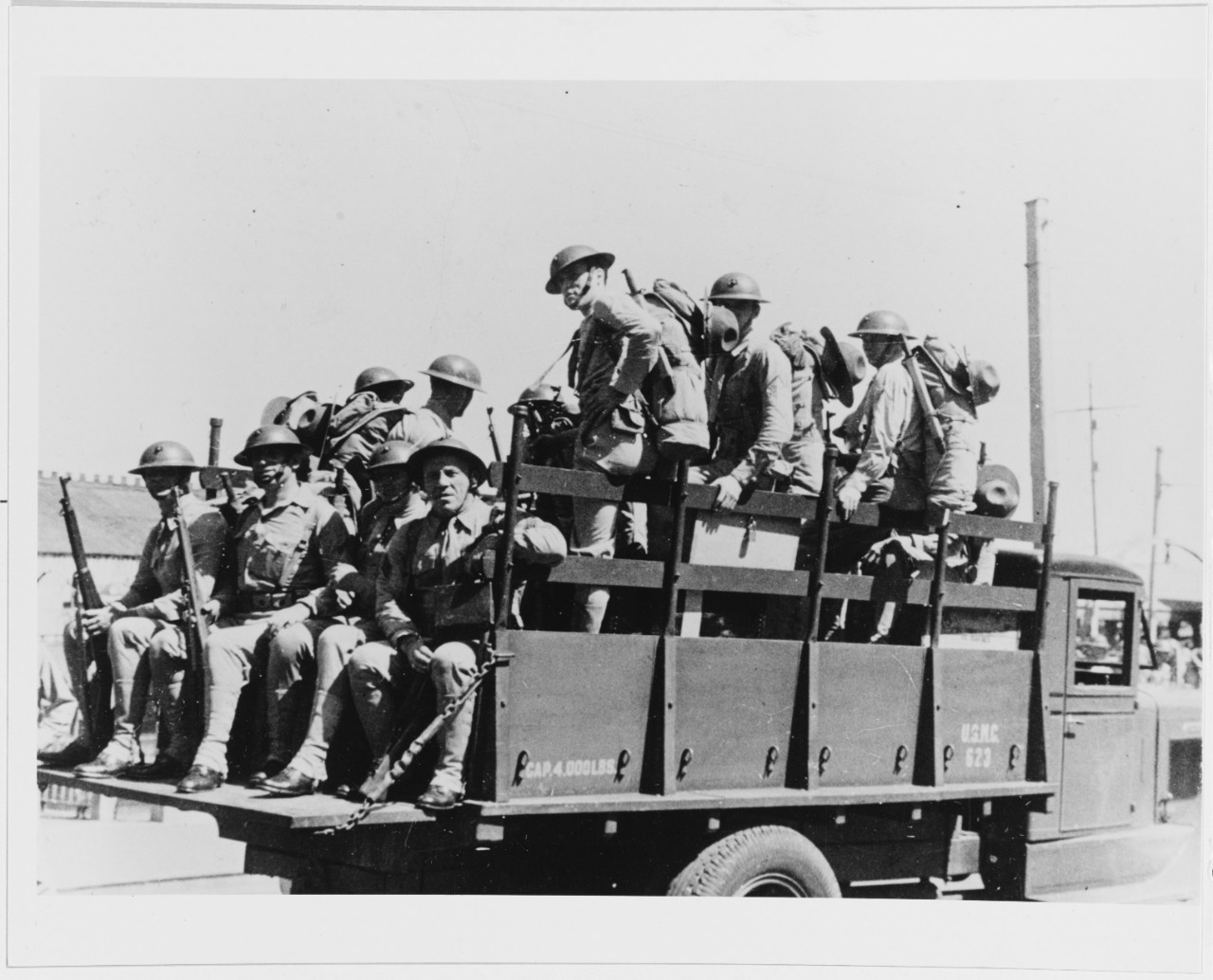
U.S. Marines from U.S. Marine Corps Detachment Cavite embark on trucks after arriving in Shanghai on 20 August 1937 after arriving from Manila on SS President Hoover. These troops were the first U.S. reinforcements in large numbers for the 4th Marine Regiment which had the task of defending the U.S. ("C") Sector of the International Settlement from possible harm during the Sino-Japanese fighting there in the summer of 1937.

U.S. Marines from U.S. Marine Corps Detachment Cavite embark on trucks after arriving in Shanghai on 20 August 1937 after arriving from Manila on SS President Hoover. These troops were the first U.S. reinforcements in large numbers for the 4th Marine Regiment which had the task of defending the U.S. ("C") Sector of the International Settlement from possible harm during the Sino-Japanese fighting there in the summer of 1937.

Author: Naval History and Heritage Command NH 77800 courtesy of Vice Admiral Morton L. Deyo, USN (retired)License:PD
Source
Smoke from burning cotton mills on Pootung, Shanghai with World War I victory memorial on left, USS Augusta (CA-31) center and bow of cruiser HMS Danae at right
Smoke from burning cotton mills on Pootung, Shanghai with World War I victory memorial on left, USS Augusta (CA-31) center and bow of cruiser HMS Danae at right

Author: Naval History and Heritage Command NH 78376 courtesy of Capt. Pat Henry., USN (RET), 1973License:PD
Source
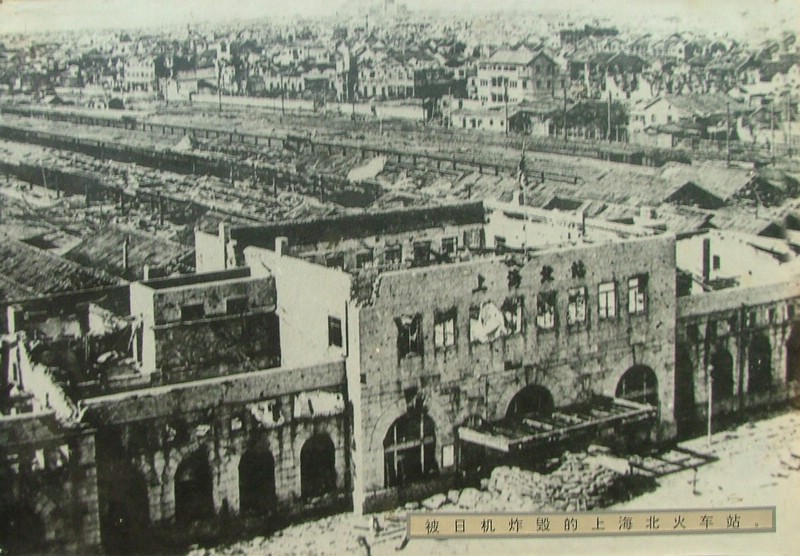
The Shanghai North Railway Station, after months of fighting and bombing in 1937.

The Shanghai North Railway Station, after months of fighting and bombing in 1937.

Author: AnonymousUnknown authorLicense:PD
Source
Zhabei on fire in downtown Shanghai.

Zhabei on fire in downtown Shanghai.

Author: Unknown authorUnknown authorLicense:PD
Source
The Sihang Warehouse following its capture by the Haji and Hayasaka Naval Landing Force Units

The Sihang Warehouse following its capture by the Haji and Hayasaka Naval Landing Force Units

Author: 支那事変記念海軍写真帖刊行会License:CC-BY-SA-4.0
Source
Nine men and officers of the Sihang Warehouse defenders who escaped to Chongqing via Nanjing, 1943

Nine men and officers of the Sihang Warehouse defenders who escaped to Chongqing via Nanjing, 1943

Author: Unknown authorUnknown authorLicense:PD
Source

Historical Overview

Bloody urban combat; "Stalingrad on the Yangtze".

Quick Facts

Outcome:Jap. victory.

Japanese Navy

  • Commander: Iwane Matsui
  • Strength: ca. 300.000
  • Casualties: ca. 40.000

Rep. of China

  • Commander: Chiang Kai-shek
  • Strength: ca. 700.000
  • Casualties: ca. 180.000

Strategic Context

Japan's attempt to force a quick surrender.

Related Literature

Cover of Berlin: The Downfall 1945

Berlin: The Downfall 1945

Antony Beevor

Non-fictionWW2WW2 Eastern Front

English
World Wars Era
Cover of Gulag: A History

Gulag: A History

Non-fiction20th CenturySoviet Union

English
World Wars Era
Cover of Red Famine: Stalin's War on Ukraine

Red Famine: Stalin's War on Ukraine

Non-fiction20th CenturySoviet Union

English
World Wars Era
Cover of Stalingrad

Stalingrad

Antony Beevor

WW2ReportWW2 Eastern Front

English
World Wars Era
Cover of The Gulag Archipelago

The Gulag Archipelago

Non-fiction20th CenturySoviet Union

English
World Wars Era
Cover of Der Gulag

Der Gulag

Non-fiction20th CenturySoviet Union

German
World Wars Era
Cover of Die Schlacht um Berlin und das Ende des Dritten Reichs 1945

Die Schlacht um Berlin und das Ende des Dritten Reichs 1945

Non-fictionWW2WW2 Eastern Front

German
World Wars Era
Cover of Hunde, wollt ihr ewig leben: ein Stalingrad-Roman

Hunde, wollt ihr ewig leben: ein Stalingrad-Roman

WW2WW2 Eastern FrontHistorical Noval

German
World Wars Era
Cover of Roter Hunger: Stalins Krieg gegen die Ukraine

Roter Hunger: Stalins Krieg gegen die Ukraine

Non-fiction20th CenturySoviet Union

German
World Wars Era
Cover of So weit die Füße tragen

So weit die Füße tragen

20th CenturySoviet UnionGulag

German
World Wars Era
Cover of Söldner ohne Sold: Die deutschen Freikorps 1918–1923

Söldner ohne Sold: Die deutschen Freikorps 1918–1923

Report20th CenturyGerman History

German
World Wars Era
Cover of Vom Massensturm zur Stoßtrupptaktik: Die deutsche Landkriegtaktik im Spiegel von Dienstvorschriften und Publizistik 1906 bis 1918

Vom Massensturm zur Stoßtrupptaktik: Die deutsche Landkriegtaktik im Spiegel von Dienstvorschriften und Publizistik 1906 bis 1918

Non-fiction20th CenturyGerman History

German
World Wars Era
Cover of Wir Wehr-Wölfe: Erinnerungen eines Freikorps-Führers

Wir Wehr-Wölfe: Erinnerungen eines Freikorps-Führers

Report20th CenturyGerman History

German
World Wars Era
Cover of Zweiter Weltkrieg Erlebnisbericht Apokalypse Stalingrad: Untergang der 6. Armee 1942-1943

Zweiter Weltkrieg Erlebnisbericht Apokalypse Stalingrad: Untergang der 6. Armee 1942-1943

Walter Mönch

Non-fictionWW2WW2 Eastern Front

German
World Wars Era
Rise And Fall Of The Third Reich

Rise And Fall Of The Third Reich

William Shirer

20th CenturyGerman HistoryNational Socialism

World Wars Era

Historical Locations

Exact location not recorded in historical records