Battle of Lützen

Preußisches Füsilier-Bataillon des „1. Garderegiment zu Fuß“ in der Schlacht bei Großgörschen am 2.5.1813

Battle of Lutzen (1813). French troops storm the positions of russians and prussians. Napoleon on his white horse, seen from behind, looks at the battlefield. Hand-coloured from Pennington Catalogue p. 3007.

Battle of Lutzen (1813). Napoleon in front of his troops.
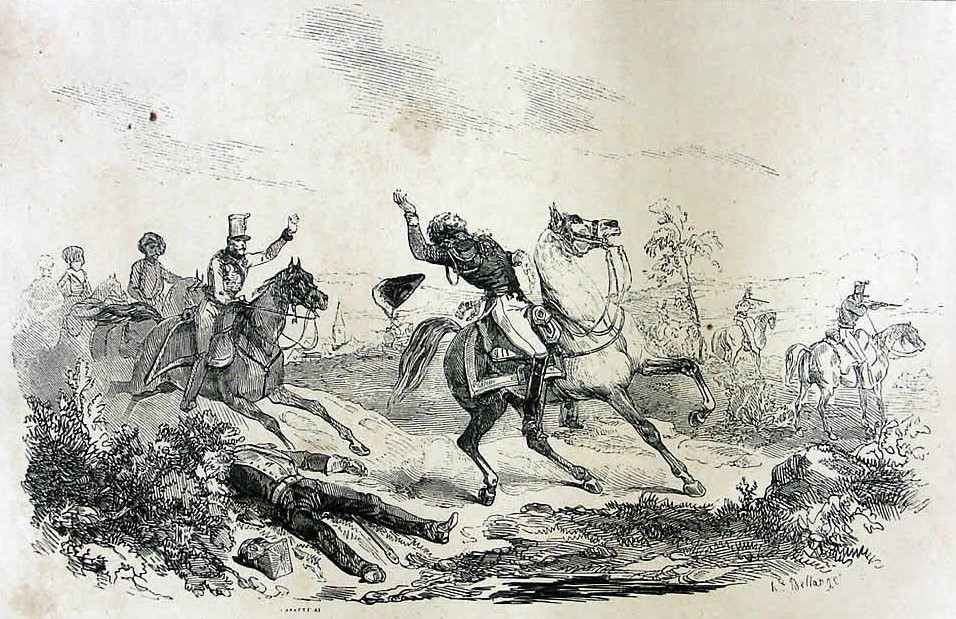
Mort du maréchal Bessières à Rippach, près de Weissenfels, le 1er mai 1813.

Le général Gerhard von Scharnhorst, blessé lors des combats pour la possession du village de Großgörschen dans le cadre de la bataille de Lützen, le 2 mai 1813, est évacué sur une civière par ses soldats. Il succombe à ses blessures le 21 juin 1813.

Battle of Lutzen (1813). Napoleon on his white horse looks at the battlefield. Hand-coloured engraving from Pennington Catalogue p. 1327.

Death of Marshal of the Empire Jean-Baptiste Bessieres, struck by a cannonball on 1 May 1813, near Rippach, Lutzen, Saxony. Illustration published in the book of Emile-Marc ('Marco') Saint-Hilaire (1793-1887) entitled 'Histoire de la Garde Imperiale', published in 1830.

Denkmal zur Erinnerung an die Schlacht bei Großgörschen in Starsiedel Diesem Objekt der Liste der Kulturdenkmale in Lützen ist vom Landesamt für Denkmalpflege und Archäologie im Denkmalinformationssystem die ID 09415247 zugeordnet.

French Military Hospital at Marienburg. Etching by F. Schroerder, 1807, after A.E.G. Roehn after Loeilott. Detail shows an injured soldier with a backpack and bandaged foot on the ground with a woman wearing a headdress with large ruffles. She is holding a flask and offering it to the soldier while looking off into a different direction. Behind them is another injured man on a stretcher on the ground. Iconographic Collections Keywords: Loeillot; Adolphe Roehn; Hospitals; INSTITUTIONS; Friedrich Schroerder
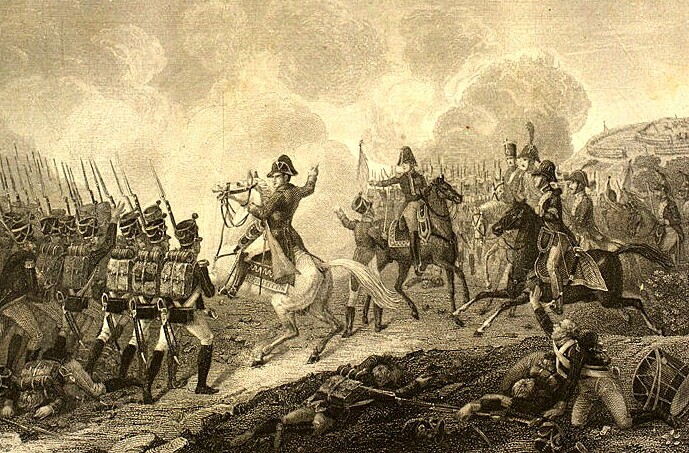
Lutzen, Battle of (1813). Napoléon with his troops.
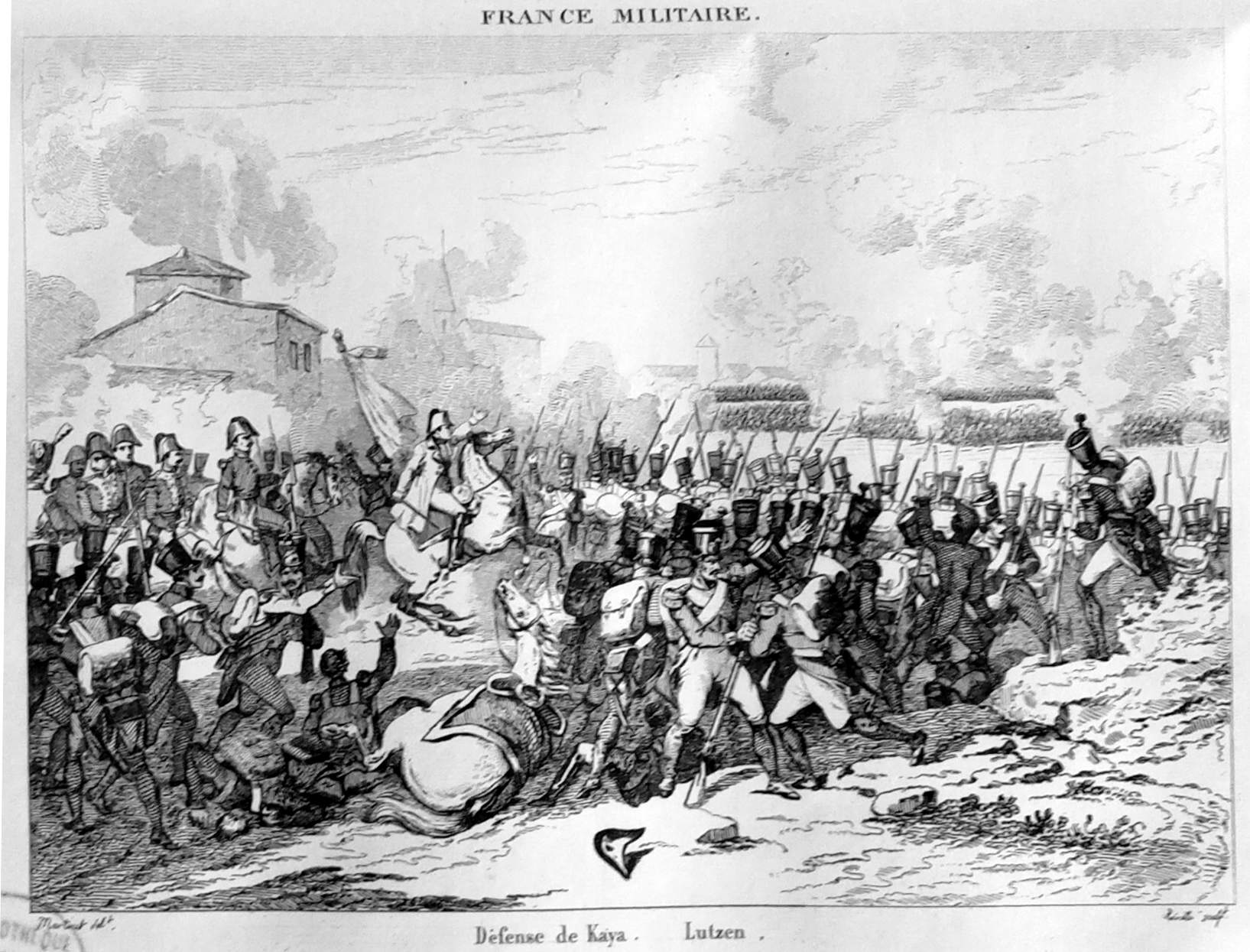
issu de la bibliothèque municipale de Reims. livre "la France militaire histoire des armées françaises..."

French Military Hospital at Marienburg. Etching by F. Schroerder, 1807, after A.E.G. Roehn after Loeilott. Iconographic Collections Keywords: Loeillot; Adolphe Roehn; Hospitals; INSTITUTIONS; Friedrich Schroerder

Gefechte in und um Ballendorf 4. Mai 1813

enskribo je la domo Zum schwarzen Löwen (Erfurto, Anger 11)

Memorial to the Battle of Lutzen (1813) in Kaja (Lützen, district of Burgenlankreis, Saxony-Anhalt)

Detail vom Triumphbogen in Paris: Moscow, Lutzen und Bautzen, drei der dreißig Schilde mit den Namen von Kriegsschauplätzen der Koalitionskriege.

The wounded dying Marshal Bessières being carried off the battlefield, Gross Görschen, 1813. Wood engraving by E. Boutigny. Iconographic Collections Keywords: E. Boutigny

The 1813 conscripts at the battle of Weissenfels. Wanting to impose battle upon Russia's General Wittgenstein, Napoleon Bonaparte sent two reinforced corps to try to force his hand near Lutzen. Under Marshals Bessieres and Ney, the French advanced across horse-friendly terrain and presented a tempting target to General Winzingerode's cavalry. The Russians attacked but the French troops, who included many inexperienced conscripts, did themselves proud as they fought off the cavalry. Bessieres was killed when struck in the chest by a cannonball.
Historical Overview
The Battle of Lützen, fought on 2 May 1813 near the town of Lützen in Saxony, was a major engagement during the War of the Sixth Coalition. It pitted Napoleon Bonaparte's French forces against a coalition army of Prussian and Russian troops commanded by Generals Wittgenstein and Blücher. The battle marked Napoleon's attempt to reassert dominance in Central Europe following his disastrous retreat from Russia in 1812. Although the Allies initially gained ground and inflicted significant damage on the French forces, Napoleon's tactical brilliance and use of concentrated reserves allowed him to turn the tide of the battle. The French ultimately secured a costly victory, forcing the Allies to retreat.
Quick Facts
Grande Armée
- Commander: Napoleon Bonaparte
- Strength: ca. 120.000
- Casualties: ca. 20.000
Prussia & Russia
- Commander: Wittgenstein / Blücher
- Strength: ca. 95.000
- Casualties: ca. 12.000
Strategic Context
Napoleon's return to Germany to regain the initiative.
Related Literature


Die Schlacht: Waterloo 1815
Historical Locations
Interactive map requires third-party cookie consent.