Battle of Chinkiang
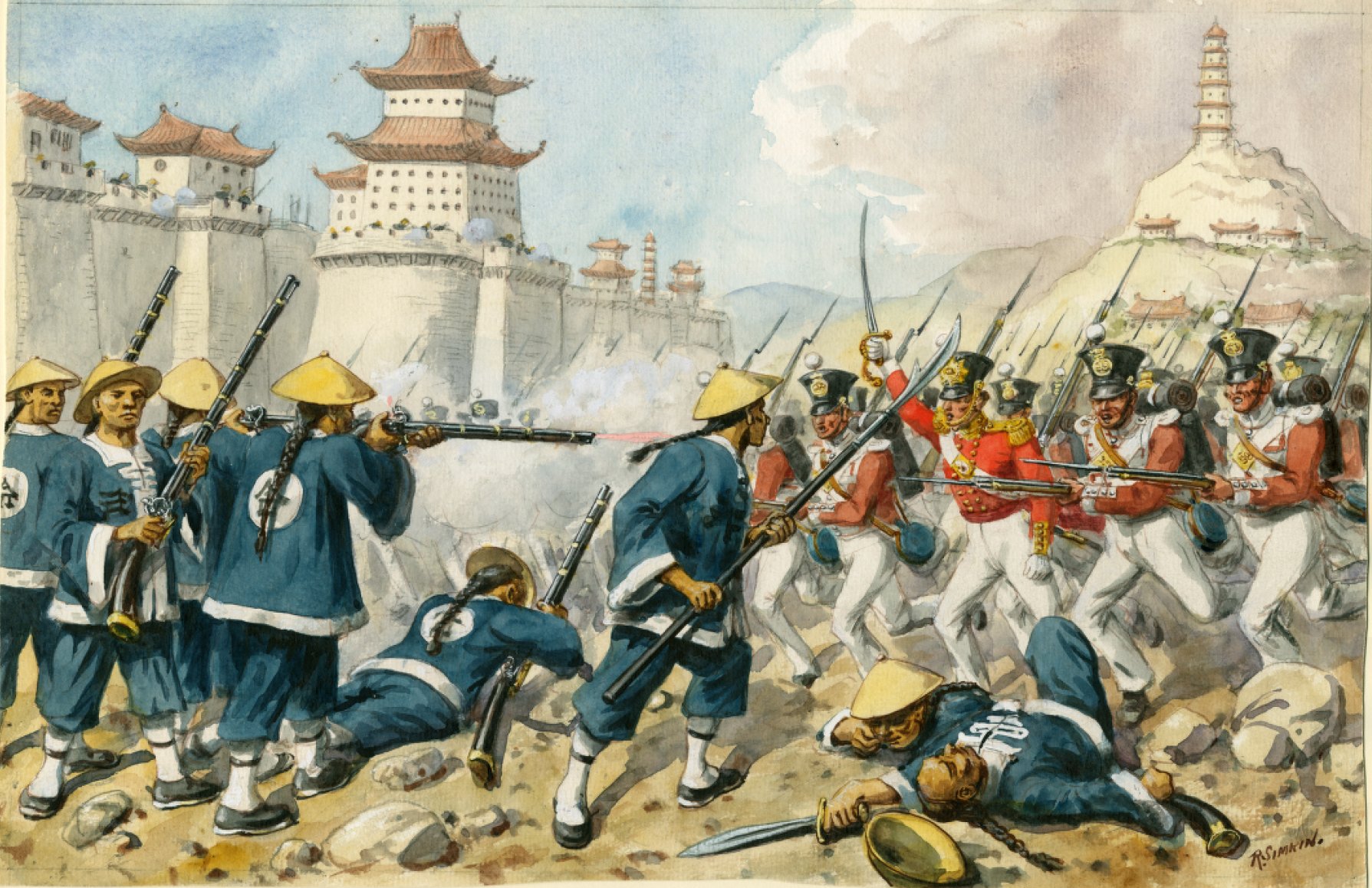
The 98th Regiment of Foot at the attack on Chin-Kiang-Foo, 21 July 1842.
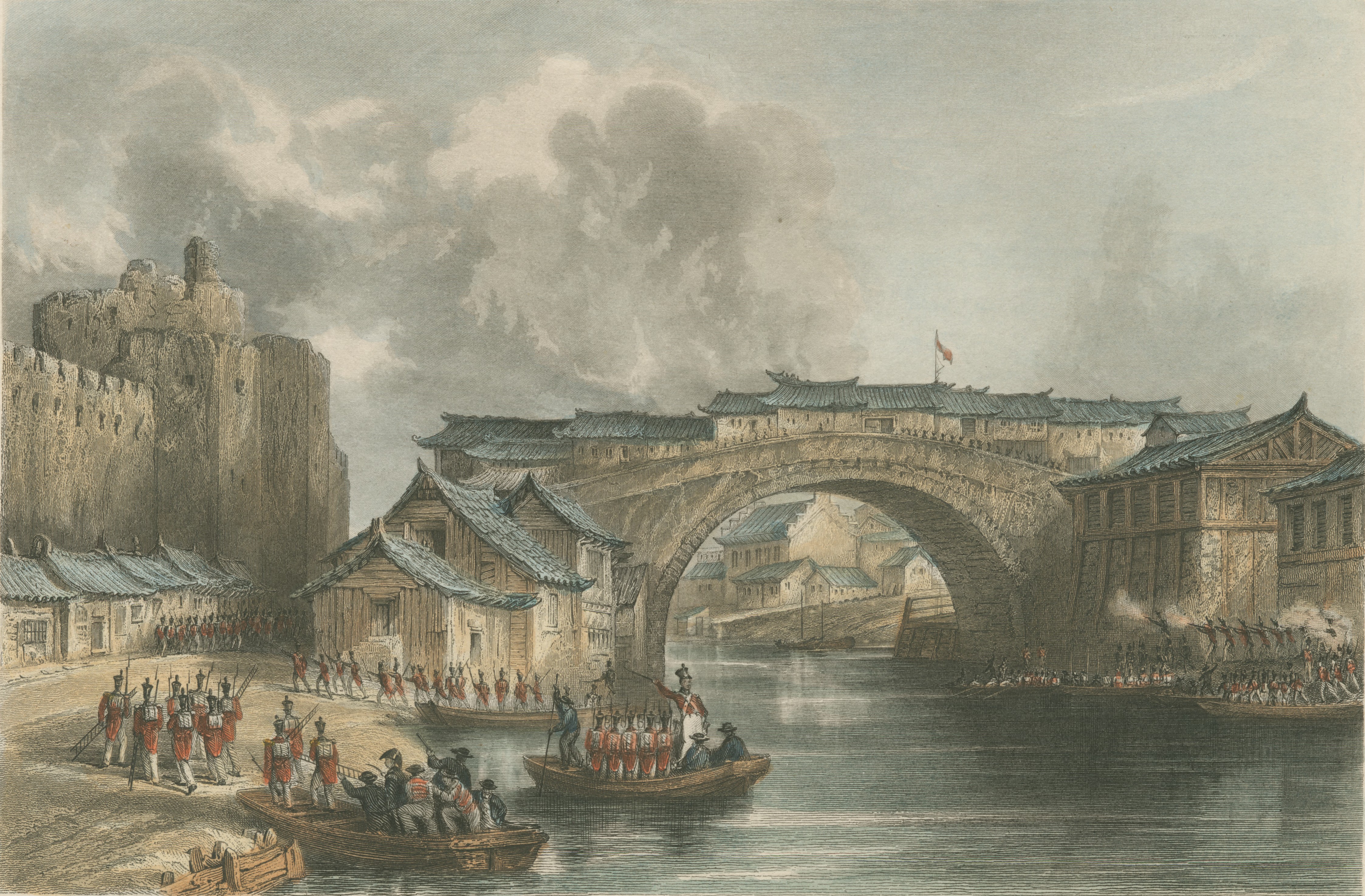
West gate of Ching-Keang-Foo, 21 July 1842.

Battle of Chinkiang Memorial at the St. George's Cathedral, Madras
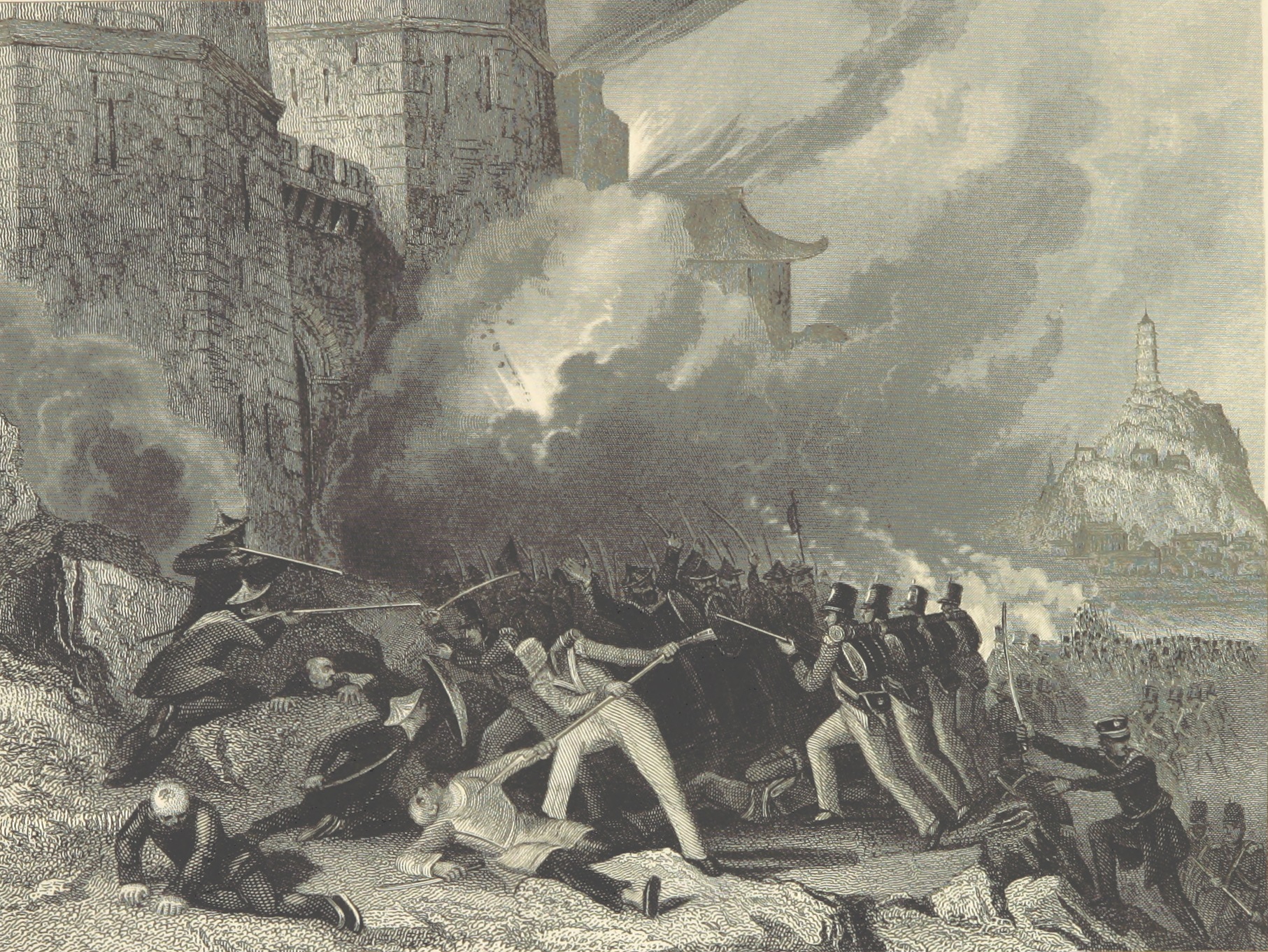
British troops capture Chin-Keang-Foo.
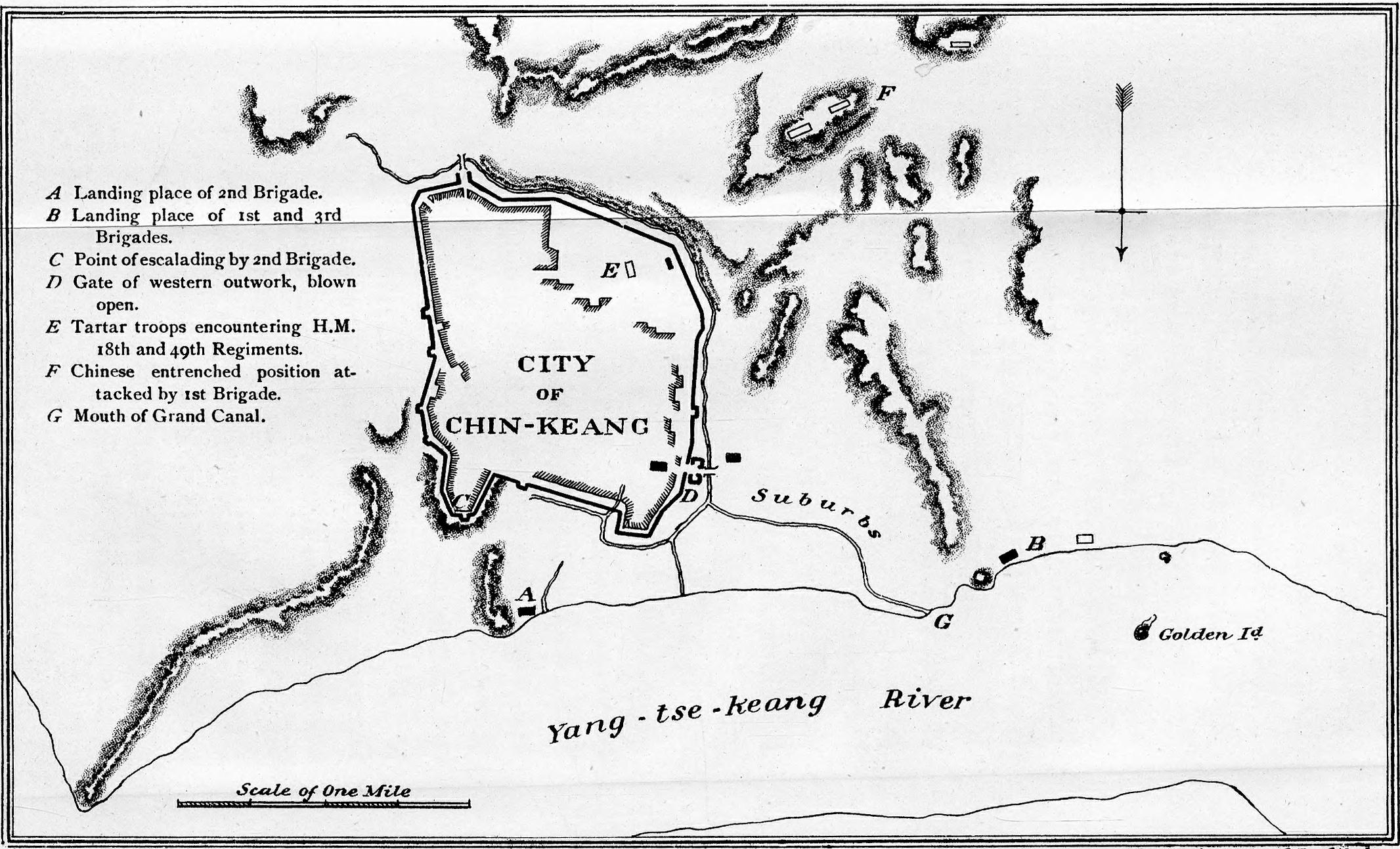
Map of the capture of Chinkeangfoo

Position of the Chinese forces near Chin-keang-foo.

Escalade of Chin-keang-foo.

Blowing open the gates of Chin-keang-foo.
![Portrait drawing of General Hai ling (?-1842) Manchu Bannerman the unhinged defender of Zhenjiang against the British attack in spring 1842 (First Opium War). (From the "The Opium War: Drugs, Dreams, and the Making of Modern China" by Julia Lovell].](https://upload.wikimedia.org/wikipedia/commons/3/34/Hailing.jpg)
Portrait drawing of General Hai ling (?-1842) Manchu Bannerman the unhinged defender of Zhenjiang against the British attack in spring 1842 (First Opium War). (From the "The Opium War: Drugs, Dreams, and the Making of Modern China" by Julia Lovell].

Sketch of the operations in Chin-keang-foo.

Rallying of the Tartars at Chin-keang-foo.

West gate of Ching-Keang-Foo. British troops land at Ching-Keang-Foo (Chin-kiang) during the First Opium War.

West gate of Ching-Keang-Foo.
Historical Overview
The Battle of Chinkiang was fought between British and Chinese forces in Zhenjiang (Chinkiang), Jiangsu province, China, on 21 July 1842 during the First Opium War. It was the last major battle of the war. The Chinese force consisted of a garrison of Manchu and Mongol Bannermen. In command of the British forces was Sir Hugh Gough. Leading one brigade was future British field marshal Sir Colin Campbell. The British capture of this stronghold allowed them to proceed to Nanjing. Fought near the confluence of the Grand Canal and Yangtze River, the battle effectively blocked operation of the Caoyun system, a transport network vital for the movement of grain throughout the empire. As a result, the Daoguang Emperor decided to sue for peace and agreed to sign the Treaty of Nanking, which brought hostilities to an end. Mass suicide was committed by the Manchu Bannermen who were defending the city.
Quick Facts
Kingdom of Great Britain
- Commander: Hugh Gough
- Strength: ca. 7.000
- Casualties: ca. 35
Qing Dynasty
- Commander: Hailiang †
- Strength: ca. 3.000
- Casualties: ca. 500 (Massenselbstm.)
Strategic Context
Blocking the Grand Canal to cut off grain supply to Beijing.
Related Literature


Frühling der Revolution: Europa 1848/49 und der Kampf für eine neue Welt
Christopher Clark

Risorgimento! Italiens Kampf um die Einheit im 19. Jahrhundert
Historical Locations
Exact location not recorded in historical records