Battle of Arcole

Napoleon s praporem se vrhá na arcolský most.
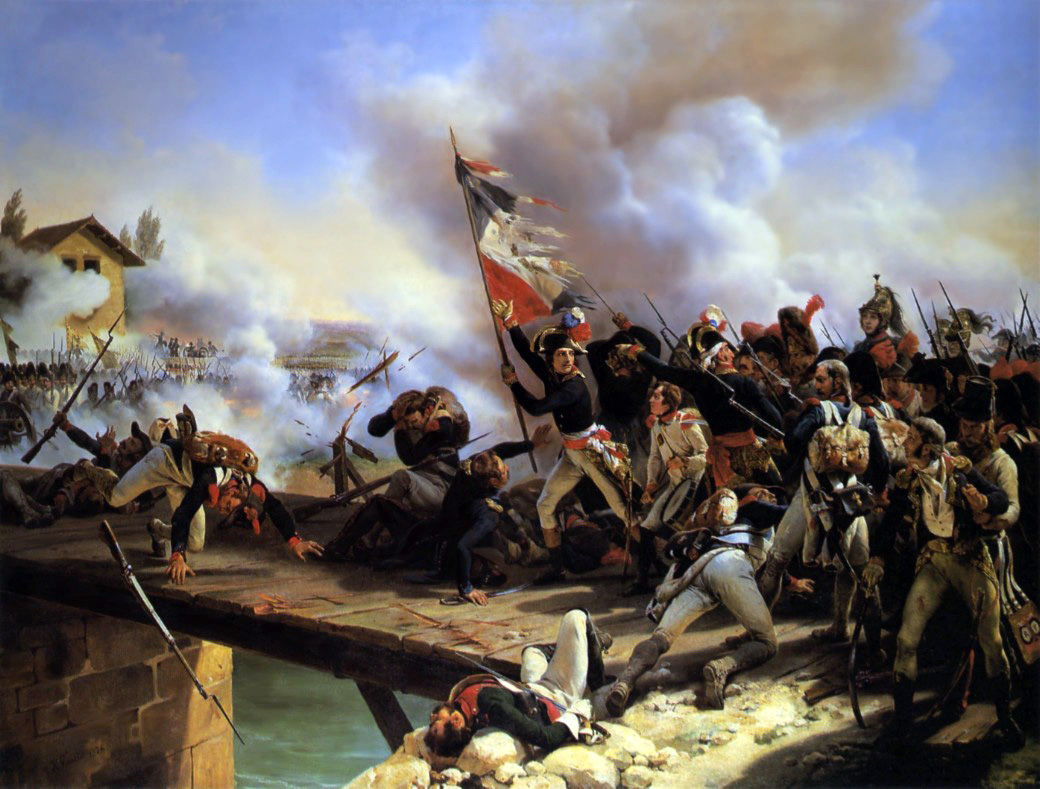
Napoleon Bonaparte leading his troops over the bridge of Arcole, by Horace Vernet.
![Adres wydawniczy: [Edinburgh ; London] : [William Blackwood and Son], [1850]Współtwórcy: Alison, Archibald (1757-1839) OpracowanieOpis fizyczny: 1 atlas (108 kart, [1] tablica) : litografia ; 23x28 cm](https://upload.wikimedia.org/wikipedia/commons/a/ac/Alison%27s_history_of_Europe_atlas_1850_%2892101372%29.jpg)
Adres wydawniczy: [Edinburgh ; London] : [William Blackwood and Son], [1850]Współtwórcy: Alison, Archibald (1757-1839) OpracowanieOpis fizyczny: 1 atlas (108 kart, [1] tablica) : litografia ; 23x28 cm

Cippo a memoria della battaglia napoleonica di Arcole
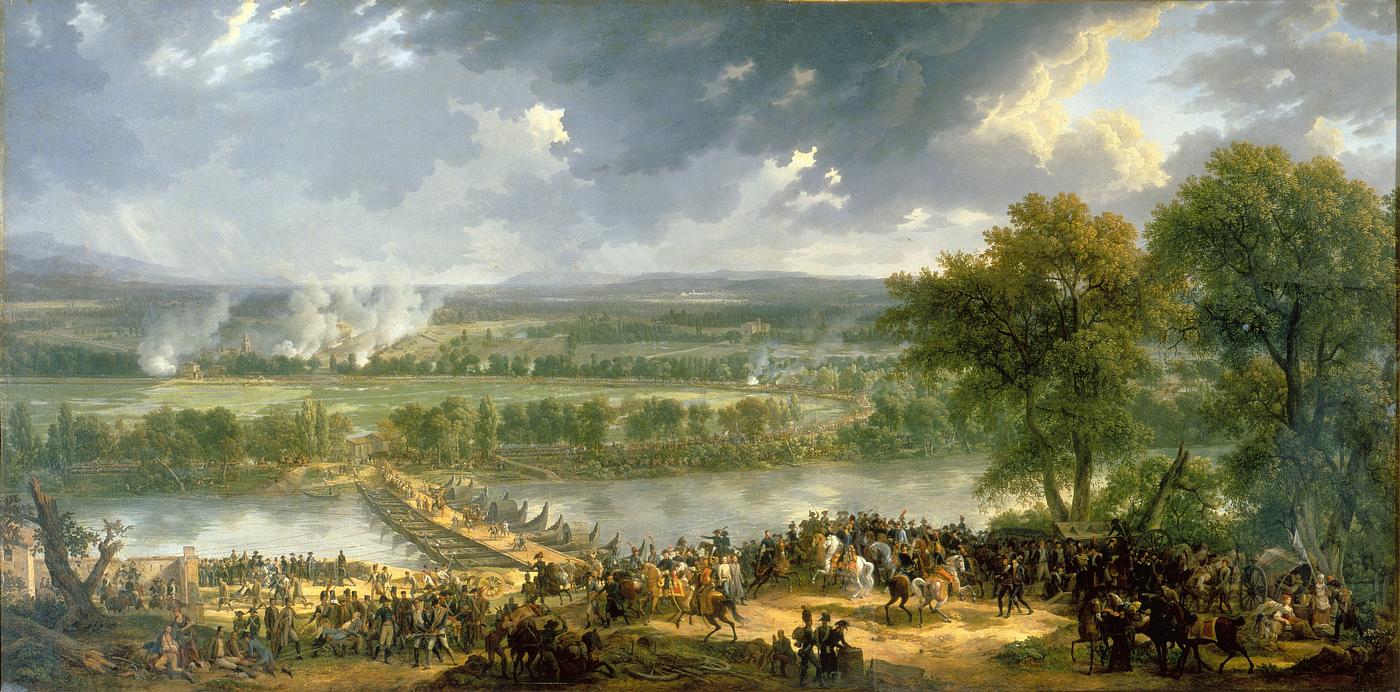
Schlacht von Arcole – 17. November 1796

Bonaparte au pont d'Arcole, illustration pour la traduction anglaise du Napoléon de Alexandre Dumas (1802-1870); John Bell Larner (1858-1931), traducteur, 1894.

Augereau au pont d’Arcole, 15 novembre 1796
![Adres wydawniczy: Paris : Furne, 1866Opis fizyczny: [2], 800 s., [1] k. tabl. ; 23 cm](https://upload.wikimedia.org/wikipedia/commons/9/95/Histoire_de_la_Revolution_francaise._T._2_1866_%28143261180%29.jpg)
Adres wydawniczy: Paris : Furne, 1866Opis fizyczny: [2], 800 s., [1] k. tabl. ; 23 cm
![Adres wydawniczy: Paris : Furne, 1866Opis fizyczny: [2], 800 s., [1] k. tabl. ; 23 cm](https://upload.wikimedia.org/wikipedia/commons/0/0f/Histoire_de_la_Revolution_francaise._T._2_1866_%28143261186%29.jpg)
Adres wydawniczy: Paris : Furne, 1866Opis fizyczny: [2], 800 s., [1] k. tabl. ; 23 cm
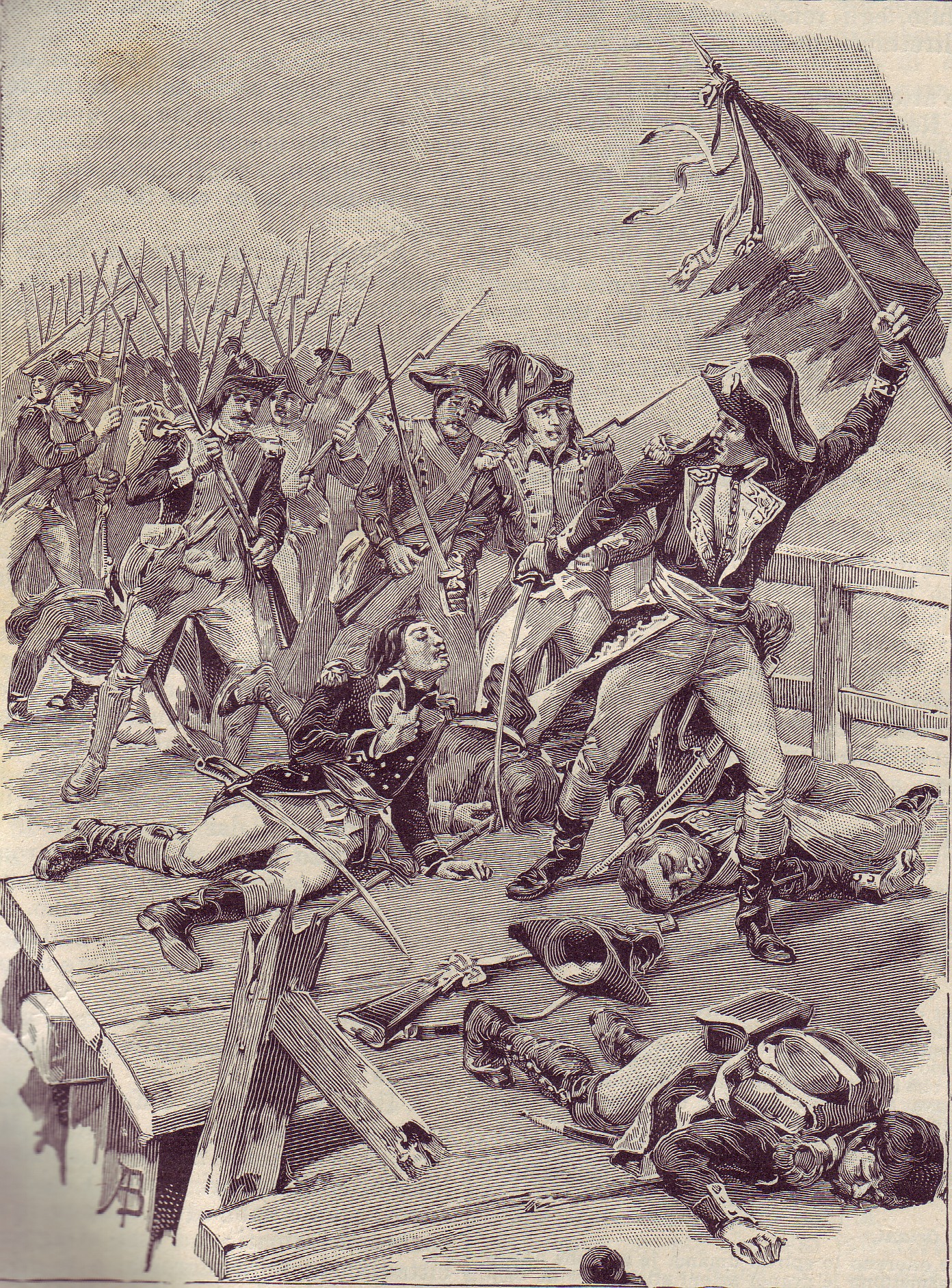
Battle of Arcole

Illustration tirée de Histoire de France, cours élémentaire, Ernest Lavisse, Armand Colin, 1913, page 162 de l'édition Heath de 1919.

Affiche de Chéret pour le lancement du journal Le Petit Caporal.

This antique French map illustrates the Battle of Arcole, fought on November 15–17, 1796, and won by Napoleon’s Army of Italy. Drawn by A. L. J. Baralle and engraved by Vicq, it features a precise scale in toises and detailed troop movements near the Alpone River.
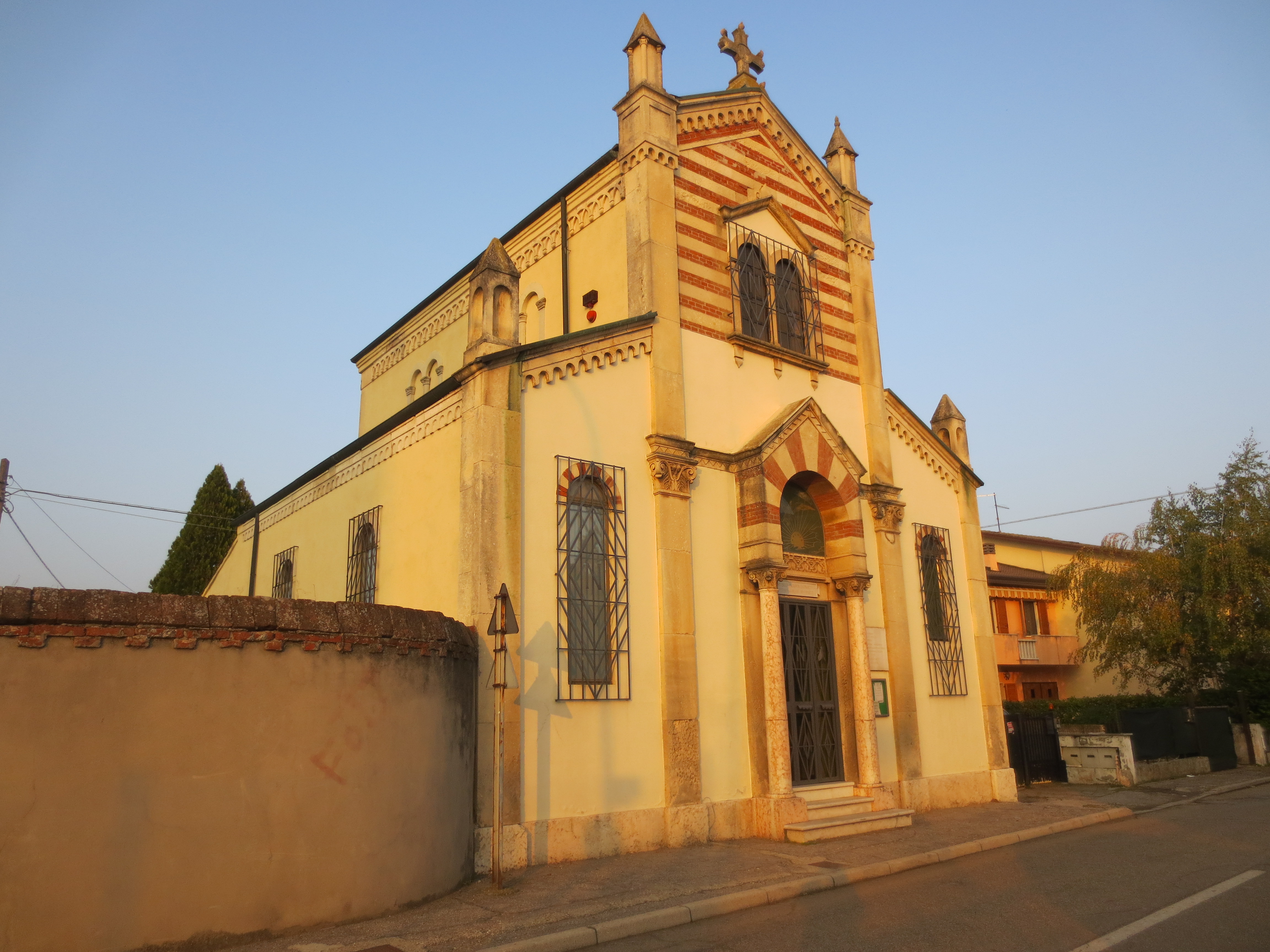
Napoleonic museum of Arcole
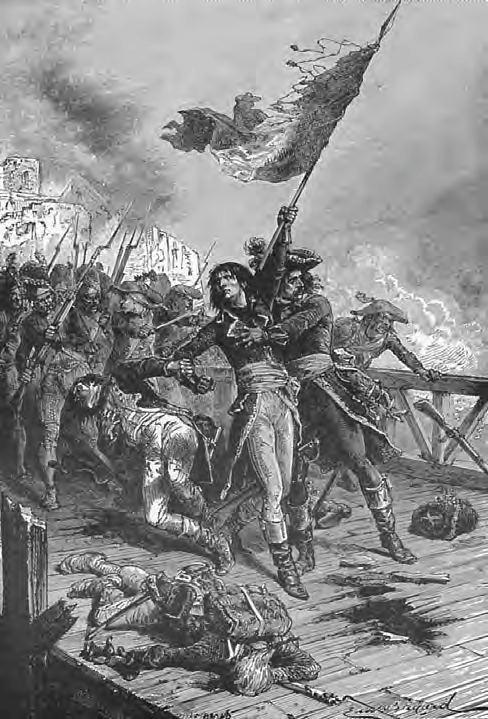
The young General Bonaparte, tricolor in hand, leads an attack across the bridge at Arcole, where he saved French forces from imminent defeat at the hands of a numerically superior Austrian army.

Napoleon Bonaparte leading his troops over the bridge of Arcole, by Horace Vernet.

Muzeul grăniceresc năsăudean

Данное изображение было использовано в статье «Арколе» опубликованной в третьем томе «Военной энциклопедии», который был издан книгоиздательским товариществом Ивана Дмитриевича Сытина в 1911 году в столице Российской империи городе Санкт-Петербурге.

Данное изображение было использовано в статье «Арколе» опубликованной в третьем томе «Военной энциклопедии», который был издан книгоиздательским товариществом Ивана Дмитриевича Сытина в 1911 году в столице Российской империи городе Санкт-Петербурге.

Данное изображение было использовано в статье «Арколе» опубликованной в третьем томе «Военной энциклопедии», который был издан книгоиздательским товариществом Ивана Дмитриевича Сытина в 1911 году в столице Российской империи городе Санкт-Петербурге.
Historical Overview
The Battle of Arcole or Battle of Arcola was fought between French and Austrian forces 25 kilometres (16 mi) southeast of Verona during the War of the First Coalition, a part of the French Revolutionary Wars. The battle saw a bold maneuver by Napoleon Bonaparte's French Army of Italy to outflank the Austrian army led by József Alvinczi and cut off its line of retreat. The French victory proved to be a highly significant event during the third Austrian attempt to lift the siege of Mantua. Alvinczi planned to execute a two-pronged offensive against Bonaparte's army. The Austrian commander ordered Paul Davidovich to advance south along the Adige River valley with one corps while Alvinczi led the main army in an advance from the east. The Austrians hoped to raise the siege of Mantua where Dagobert Sigmund von Wurmser was trapped with a large garrison. If the two Austrian columns linked up and if Wurmser's troops were released, French prospects were grim.
Quick Facts
Army of Italy
- Commander: Napoleon Bonaparte
- Strength: ca. 19.000
- Casualties: ca. 3.500
Archduchy of Austria
- Commander: Alvinczy
- Strength: ca. 24.000
- Casualties: ca. 4.000
Strategic Context
Flanking the Austrian defensive lines at Mantua.
Related Literature


Die Schlacht: Waterloo 1815
Historical Locations
Interactive map requires third-party cookie consent.