All Battles

Battle of Lake Trasimene

-217 Umbrien Hinterhalt

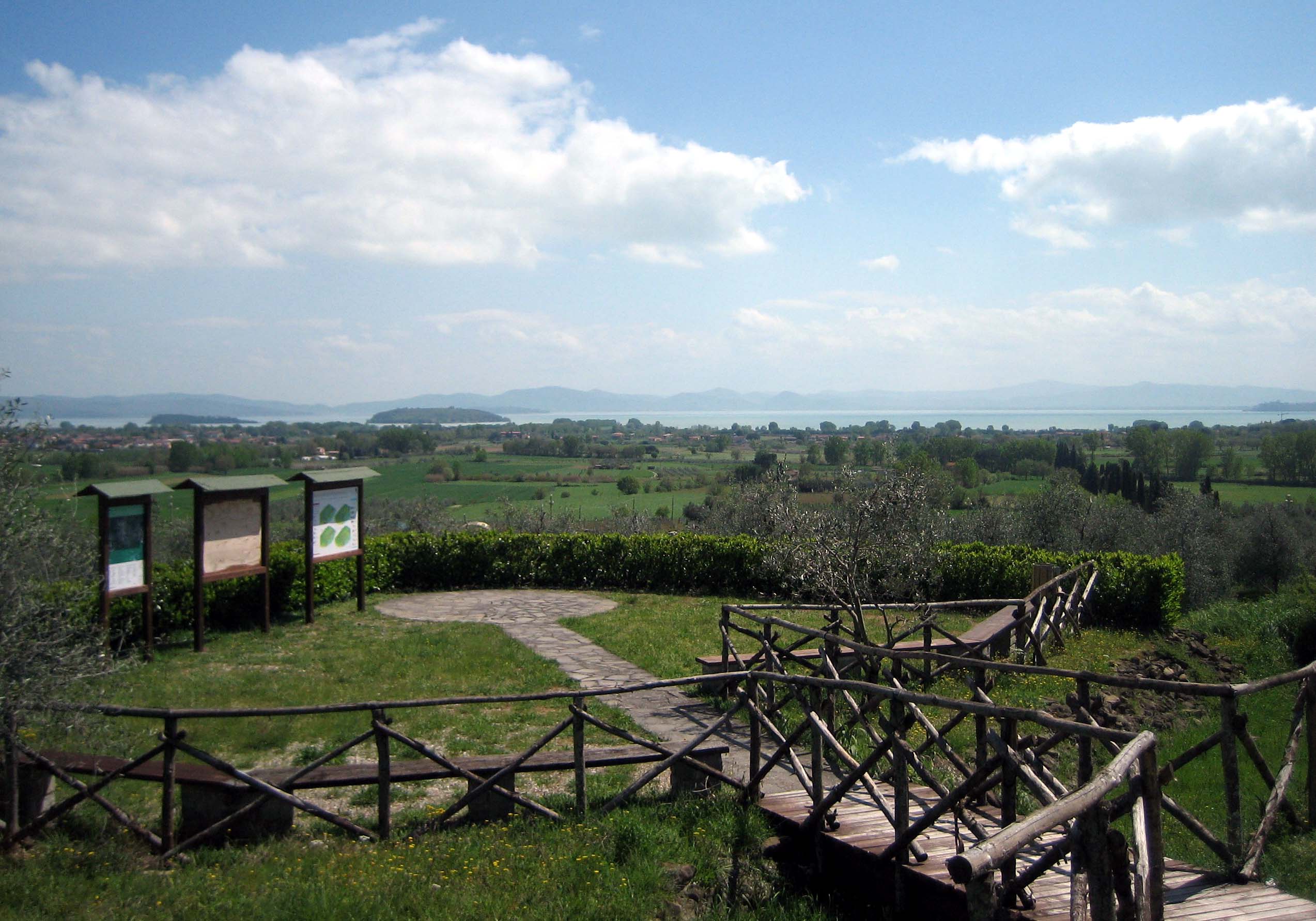
The battleground of the Battle of Lake Trasimene (217 BC), looking north, as seen from the Lake. The Roman army entered the natural amphitheatre through a defile on the far left and entered an open area skirting the north shore of the lake. The bulk of Hannibal's army was hidden in ambuscade within the wooded ridge in the foreground, with troops positioned to block the exits at both ends of the lakeside plain.  Hannibal's left wing was positioned roughly in the location of the town (Tuoro sul Trasimeno).

The battleground of the Battle of Lake Trasimene (217 BC), looking north, as seen from the Lake. The Roman army entered the natural amphitheatre through a defile on the far left and entered an open area skirting the north shore of the lake. The bulk of Hannibal's army was hidden in ambuscade within the wooded ridge in the foreground, with troops positioned to block the exits at both ends of the lakeside plain. Hannibal's left wing was positioned roughly in the location of the town (Tuoro sul Trasimeno).
Author: Tom BennettLicense:CC-BY-SA-4.0
Source
Schlachtfeld am Trasimenischen See

Schlachtfeld am Trasimenischen See

Author: upload by Adrian MichaelLicense:CC-BY-SA-4.0
Source
Castiglione del Lago ( Umbria ). Corgna palace (1563 ) - Aparment of Ascanio II: Fresco ( 1575 ) showing the Battle of Lake Trasimene by an unknown artist ( detail ).

Castiglione del Lago ( Umbria ). Corgna palace (1563 ) - Aparment of Ascanio II: Fresco ( 1575 ) showing the Battle of Lake Trasimene by an unknown artist ( detail ).

Author: Wolfgang SauberLicense:CC-BY-SA-4.0
Source
Castiglione del Lago ( Umbria ). Corgna palace (1563 ) - Aparment of Ascanio II: Fresco ( 1575 ) showing the Battle of Lake Trasimene by an unknown artist - detail: Disembarkment of troops..

Castiglione del Lago ( Umbria ). Corgna palace (1563 ) - Aparment of Ascanio II: Fresco ( 1575 ) showing the Battle of Lake Trasimene by an unknown artist - detail: Disembarkment of troops..

Author: Wolfgang SauberLicense:CC-BY-SA-4.0
Source
Castiglione del Lago ( Umbria ). Corgna palace (1563 ) - Aparment of Ascanio II: Fresco ( 1575 ) showing the Battle of Lake Trasimene by an unknown artist - detail: Clemency of Hannibal.

Castiglione del Lago ( Umbria ). Corgna palace (1563 ) - Aparment of Ascanio II: Fresco ( 1575 ) showing the Battle of Lake Trasimene by an unknown artist - detail: Clemency of Hannibal.

Author: Wolfgang SauberLicense:CC-BY-SA-4.0
Source
La colonna, donata dalla città di Roma, in memoria della Battaglia del Trasimeno e posata presso l'incrocio tra Via Annibale Cartaginese e Via del Porto in occasione del convegno internazionale annibalico del 1961. Il luogo venne ritenuto significativo poichè la teoria del Prof. G. Susini identificava in esso un fulcro della mischia.
La colonna, donata dalla città di Roma, in memoria della Battaglia del Trasimeno e posata presso l'incrocio tra Via Annibale Cartaginese e Via del Porto in occasione del convegno internazionale annibalico del 1961. Il luogo venne ritenuto significativo poichè la teoria del Prof. G. Susini identificava in esso un fulcro della mischia.

Author: UnnkownLicense:CC-BY-SA-4.0
Source
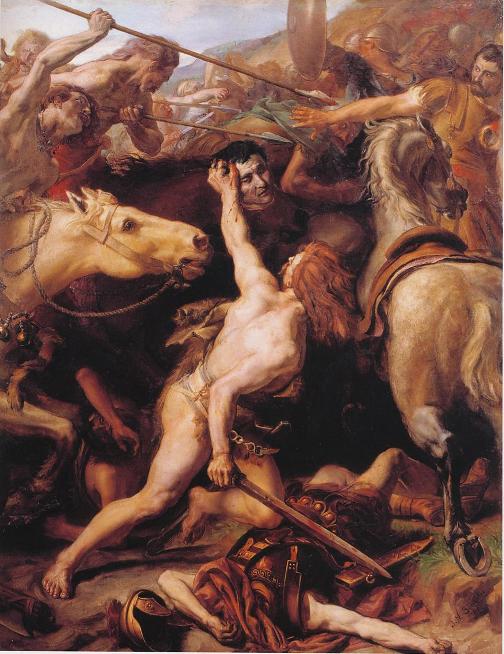
The Gaul Ducar beheads the Roman general Flaminius in the Battle of Lake Trasimeno

The Gaul Ducar beheads the Roman general Flaminius in the Battle of Lake Trasimeno

Author: Joseph-Noël SylvestreLicense:PD
Source
Ustrinum (lat. - forno crematorio) di forma circolare sito nella valle di Sanguineto - Tuoro s/T - fotografato dal Prof. Giancarlo Susini nel 1959 e da lui attribuito come opera eseguita al termine della battaglia del Trasimeno. Il manufatto era ricolmo di ceneri organiche e ricoperto da un tumulo. Sono state ritrovate, frammiste alle ceneri, punte di frecce e la punta di un pilum.
Nella valle ne sono stati censiti circa 16 di questo tipo, all'inizio degli anni '60. I due principali (uno in via del Fornello e l'altro presso il Palazzo del Capra - Centro di documentazione della Battaglia del Trasimeno) sono stati consolidati con muratura e sono tuttora visibili. Dimensioni medie del secondo sono 6,18 mt di profondità e 4,32 mt di diametro. Per maggiori informazioni si veda Susini G., Ricerche sulla battaglia del Trasimeno, Accademia Etrusca di Cortona, Annuatio XI, nuova serie Vol. IV, 1960, pagg. 84-89

Ustrinum (lat. - forno crematorio) di forma circolare sito nella valle di Sanguineto - Tuoro s/T - fotografato dal Prof. Giancarlo Susini nel 1959 e da lui attribuito come opera eseguita al termine della battaglia del Trasimeno. Il manufatto era ricolmo di ceneri organiche e ricoperto da un tumulo. Sono state ritrovate, frammiste alle ceneri, punte di frecce e la punta di un pilum. Nella valle ne sono stati censiti circa 16 di questo tipo, all'inizio degli anni '60. I due principali (uno in via del Fornello e l'altro presso il Palazzo del Capra - Centro di documentazione della Battaglia del Trasimeno) sono stati consolidati con muratura e sono tuttora visibili. Dimensioni medie del secondo sono 6,18 mt di profondità e 4,32 mt di diametro. Per maggiori informazioni si veda Susini G., Ricerche sulla battaglia del Trasimeno, Accademia Etrusca di Cortona, Annuatio XI, nuova serie Vol. IV, 1960, pagg. 84-89

Author: Prof. Giancarlo SusiniLicense:CC-BY-SA-4.0
Source
Ustrinum (lat. - forno crematorio) di tipo rettangolare fotografato dal Prof. Giancarlo Susini nel 1959, sito nella valle di Sanguineto - Tuoro sul Trasimeno. Il Prof. Susini lo identificò come ustrinum di fattura numidica e lo censì insieme agli altri, di tipo circolare, che erano stati ritrovati nell'area e ricondotti agli eventi immediatamente successivi alla battaglia del Trasimeno. Le dimensioni dell'opera raffigurata erano lung. 5,08 mt, larg 3,19, prof. tot. 2,40 mt. Per maggiori informazioni si veda Susini G., Ricerche sula battaglia del Trasimeno, Accademia Etrusca di Cortona, Annuario XI, nuova serie - Vol. IV, 1960, pagg. 84-89 e cosa lo stesso autore riporta nelle Appendici I e II in L'archeologia della guerra annibalica, Accademia Etrusca di Cortona, Annuario XII, nuova serie - Vol. V, 1964

Ustrinum (lat. - forno crematorio) di tipo rettangolare fotografato dal Prof. Giancarlo Susini nel 1959, sito nella valle di Sanguineto - Tuoro sul Trasimeno. Il Prof. Susini lo identificò come ustrinum di fattura numidica e lo censì insieme agli altri, di tipo circolare, che erano stati ritrovati nell'area e ricondotti agli eventi immediatamente successivi alla battaglia del Trasimeno. Le dimensioni dell'opera raffigurata erano lung. 5,08 mt, larg 3,19, prof. tot. 2,40 mt. Per maggiori informazioni si veda Susini G., Ricerche sula battaglia del Trasimeno, Accademia Etrusca di Cortona, Annuario XI, nuova serie - Vol. IV, 1960, pagg. 84-89 e cosa lo stesso autore riporta nelle Appendici I e II in L'archeologia della guerra annibalica, Accademia Etrusca di Cortona, Annuario XII, nuova serie - Vol. V, 1964

Author: Prof. Giancarlo SusiniLicense:CC-BY-SA-4.0
Source

Historical Overview

One of the largest ambushes in military history. Hannibal trapped the Roman army between the hills and the lakeshore.

Quick Facts

Outcome:Decisive Carthaginian victory; death of Consul Flaminius.

Carthage

  • Commander: Hannibal Barkas
  • Strength: ca. 50.000 Mann
  • Casualties: ca. 2.500

Roman Republic

  • Commander: Gaius Flaminius †
  • Strength: ca. 25.000 Mann
  • Casualties: ca. 15.000 Gefallene

Strategic Context

Destruction of the main Roman army on its way to Rome to provoke panic and the defection of allies.

Conflict / War

Second Punic War

Decisive Carthaginian victory; Northern Italy falls to Hannibal.

Related Literature

Cover of GOLDSWORTHY:ROMAN ARMY AT WAR 100BC-AD200

GOLDSWORTHY:ROMAN ARMY AT WAR 100BC-AD200

Non-fictionAncient RomeMilitärgeschichte

English
Classical Antiquity
Cover of Auf dem Weg zum Imperium: Eine Geschichte der römischen Armee

Auf dem Weg zum Imperium: Eine Geschichte der römischen Armee

Non-fictionAncient RomeMilitärgeschichte

German
Classical Antiquity
Cover of Aufstieg und Fall des Alten Ägypten: Die Geschichte einer geheimnisvollen Zivilisation vom 5. Jahrtausend v. Chr. bis Kleopatra

Aufstieg und Fall des Alten Ägypten: Die Geschichte einer geheimnisvollen Zivilisation vom 5. Jahrtausend v. Chr. bis Kleopatra

Non-fictionAncient WorldAltes Ägypten

German
Classical Antiquity
Cover of Caesar lässt grüßen: Die Geschichte der Römer

Caesar lässt grüßen: Die Geschichte der Römer

Non-fictionAncient Rome

German
Classical Antiquity
Cover of Das alte Griechenland: Die visuelle Geschichte. Hochwertiger Bildband mit über 850 Fotos

Das alte Griechenland: Die visuelle Geschichte. Hochwertiger Bildband mit über 850 Fotos

Illustrated BookAncient GreeceAncient World

German
Classical Antiquity
Cover of Das frühe Persien: Geschichte eines antiken Weltreichs

Das frühe Persien: Geschichte eines antiken Weltreichs

Non-fictionPersian HistoryAncient World

German
Classical Antiquity
Cover of Die verdammt blutige Geschichte der Antike: ohne den ganzen langweiligen Kram

Die verdammt blutige Geschichte der Antike: ohne den ganzen langweiligen Kram

Ancient WorldErzählendes Sachbuch

German
Classical Antiquity
Cover of Eine unerzählte Geschichte der Antike: Auf den Spuren vergessener Orte – von Britannia bis Vietnam

Eine unerzählte Geschichte der Antike: Auf den Spuren vergessener Orte – von Britannia bis Vietnam

Non-fictionAncient World

German
Classical Antiquity
Cover of Feldherren, Krieger und Strategen: Krieg in der Antike von Achill bis Attila

Feldherren, Krieger und Strategen: Krieg in der Antike von Achill bis Attila

Non-fictionAncient WorldMilitärstrategie

German
Classical Antiquity
Cover of Geschichte der römischen Kaiserzeit: Von Augustus bis zu Konstantin

Geschichte der römischen Kaiserzeit: Von Augustus bis zu Konstantin

Non-fictionAncient RomeGerman Empire

German
Classical Antiquity
Cover of Geschichte der römischen Republik: Von den Anfängen bis Augustus

Geschichte der römischen Republik: Von den Anfängen bis Augustus

Non-fictionAncient RomeRepublikc

German
Classical Antiquity
Cover of Gladius: Roms Legionen in Germanien

Gladius: Roms Legionen in Germanien

Non-fictionGerman HistoryAncient Rome

German
Classical Antiquity
Cover of Krise und Untergang der römischen Republik

Krise und Untergang der römischen Republik

Non-fictionAncient Rome

German
Classical Antiquity
Cover of Römische Geschichte

Römische Geschichte

Non-fictionAncient Rome

German
Classical Antiquity
Cover of Römische Geschichte: 5 Bände im Schuber

Römische Geschichte: 5 Bände im Schuber

Non-fictionAncient Rome

German
Classical Antiquity
Cover of Römische Geschichte: Von den Anfängen bis zum Untergang

Römische Geschichte: Von den Anfängen bis zum Untergang

Non-fictionAncient Rome

German
Classical Antiquity
Cover of Über die Germanen: Tacitus – antike Geschichtsschreibung über die Bewohner Germaniens

Über die Germanen: Tacitus – antike Geschichtsschreibung über die Bewohner Germaniens

ReportGerman HistoryAncient Rome

German
Classical Antiquity

Historical Locations

Interactive map requires third-party cookie consent.