All Battles

Battle of Nanking

1937 Jiangsu Belagerung

Nanking Massacre victims

Nanking Massacre victims

Author: Moriyasu MuraseLicense:PD
Source
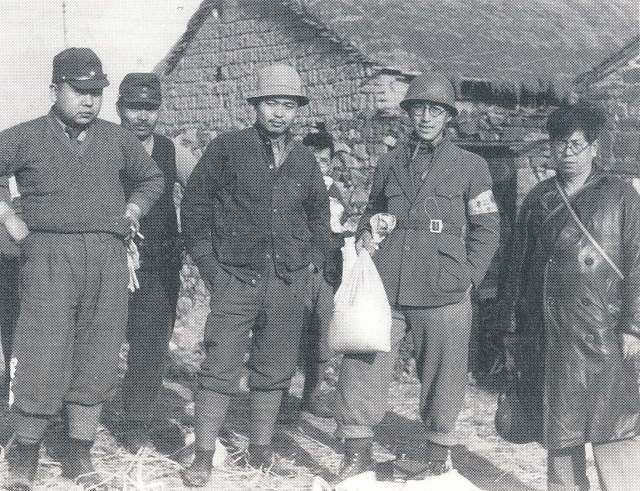
News crew members of the Tokyo Nichinichi Shimbun in Nanking

News crew members of the Tokyo Nichinichi Shimbun in Nanking

Author: Unknown photographer, Tokyo Nichinichi ShimbunLicense:PD
Source
*Iwane Matsui (1878-07-27 - 1948-12-23) rides into Nanjing.
Source:  The Memorial Hall of the Victims in Nanjing Massacre by Japanese Invaders.[1]
Image qualifies under fair use as no new photo may be produced for the Nanking Massacre.
Copyright is claimed by The Memorial Hall of the Victims in Nanjing Massacre by Japanese Invaders.

*Iwane Matsui (1878-07-27 - 1948-12-23) rides into Nanjing. Source: The Memorial Hall of the Victims in Nanjing Massacre by Japanese Invaders.[1] Image qualifies under fair use as no new photo may be produced for the Nanking Massacre. Copyright is claimed by The Memorial Hall of the Victims in Nanjing Massacre by Japanese Invaders.

Author: UnknownLicense:PD
Source
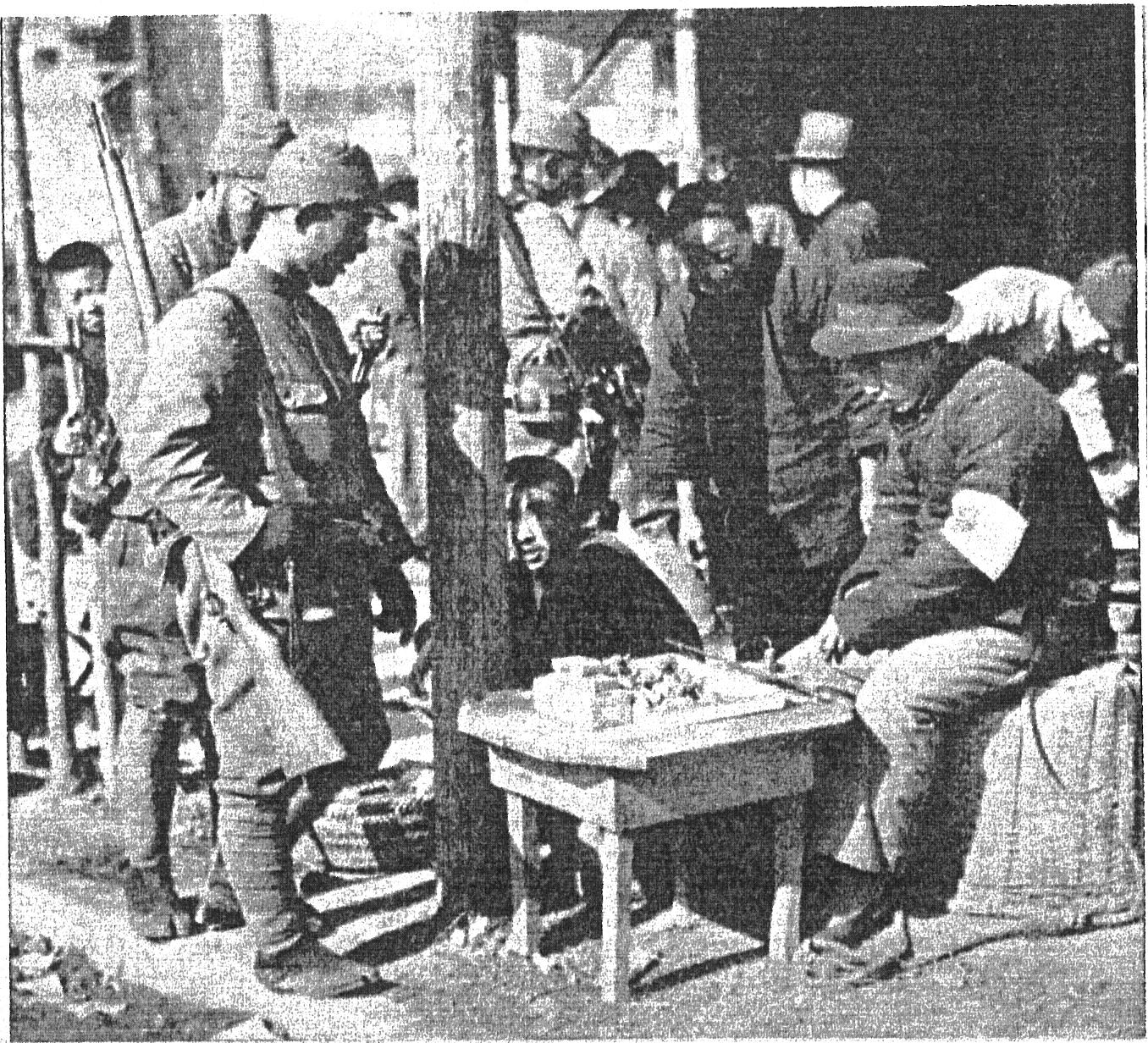
Nanking citizens with armbands of the flag of Japan selling vegetables on the street on Dec. 15, 1937, two days after the occupation of Nanking.

Nanking citizens with armbands of the flag of Japan selling vegetables on the street on Dec. 15, 1937, two days after the occupation of Nanking.

Author: . The original uploader was Arimasa at English Wikipedia.License:PD
Source
Streetscape in Nanking Castle. The Chinese regained their own lives under rule of the Japanese armed forces.(December 17, 1937)

Streetscape in Nanking Castle. The Chinese regained their own lives under rule of the Japanese armed forces.(December 17, 1937)

Author: Sweeper tamonten (talk)License:PD
Source
Description of the Battle of Nanking (1937) by Frank Capra

Description of the Battle of Nanking (1937) by Frank Capra

Author: Frank CapraLicense:PD
Source
南京戦闘経過要図 1937年12月上旬

南京戦闘経過要図 1937年12月上旬

Author: みや東亞License:CC-BY-SA-4.0
Source
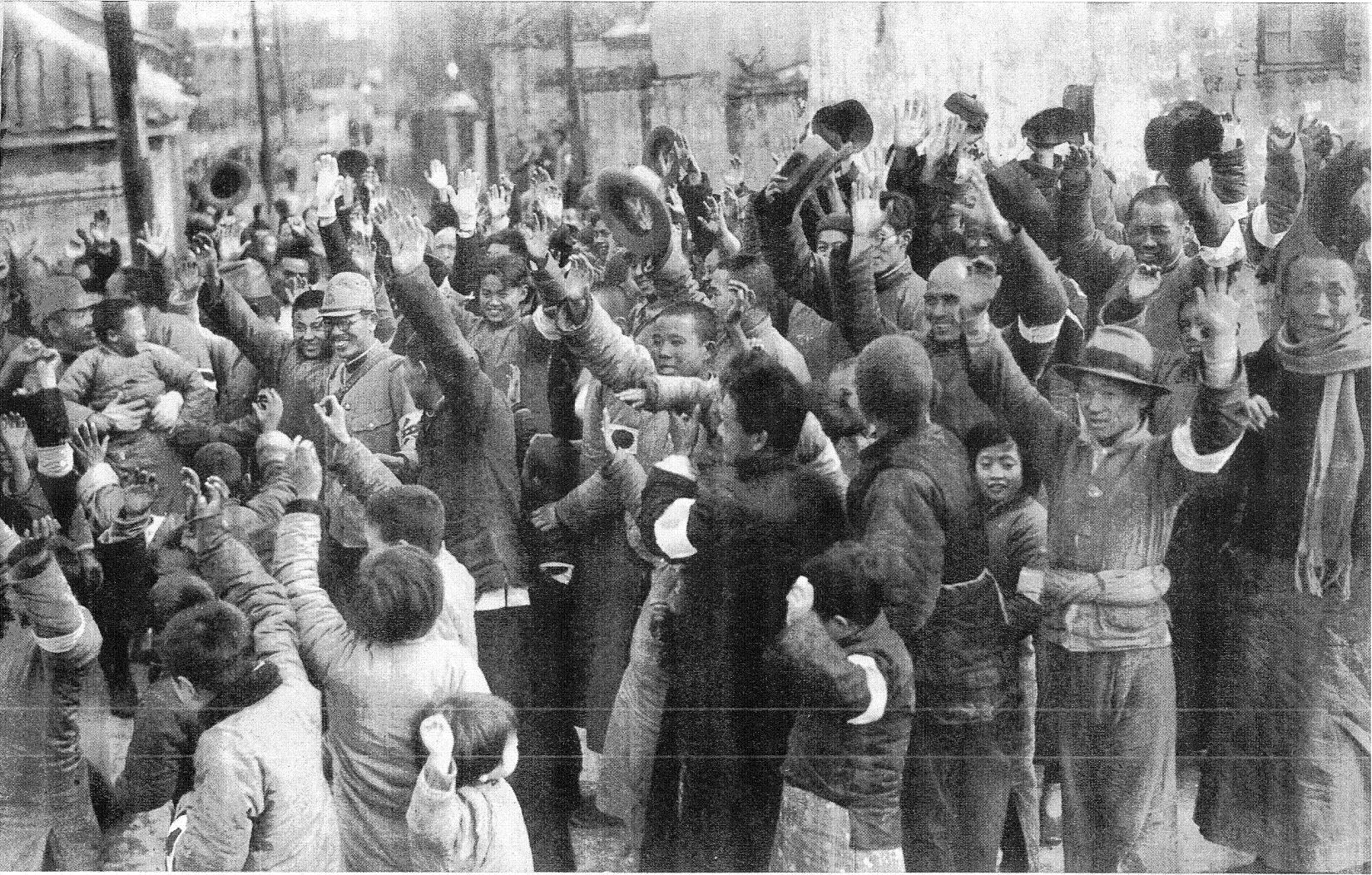
Cheers for Japanese forces by refugees who are receiving the distribution of sweets and cigarettes on the Japanese forces' "Nanking Entry Ceremony" day.

Cheers for Japanese forces by refugees who are receiving the distribution of sweets and cigarettes on the Japanese forces' "Nanking Entry Ceremony" day.

Author: Sweeper tamontenLicense:PD
Source
Chinese people clean up the mess which was made at the time of the retreat of Chinese soldiers.(December 22, 1937)

Chinese people clean up the mess which was made at the time of the retreat of Chinese soldiers.(December 22, 1937)

Author: Sweeper tamonten (talk)License:PD
Source
A caricature of Chiang Kai-shek put up in Ginza on December 12 1937 with Japanese characters reading "Nanking has fallen"

A caricature of Chiang Kai-shek put up in Ginza on December 12 1937 with Japanese characters reading "Nanking has fallen"

Author: Asahi ShimbunLicense:PD
Source
The bridge in front of the Gate of China was destroyed by Japanese shellfire.(December 13, 1937)

The bridge in front of the Gate of China was destroyed by Japanese shellfire.(December 13, 1937)

Author: Sweeper tamonten (talk)License:PD
Source
An advertisement for Gekkeikan sake printed in the Asahi Shimbun on December 12 1937. The text at the top reads "Celebrate the fall of Nanking" and to the left it says "Drink a toast with Gekkeikan".

An advertisement for Gekkeikan sake printed in the Asahi Shimbun on December 12 1937. The text at the top reads "Celebrate the fall of Nanking" and to the left it says "Drink a toast with Gekkeikan".

Author: Asahi ShimbunLicense:PD
Source
The poster which was published by the "war supporters' association of all quarters of capital city" can be seen everywhere in Nanking.  Anyone who is friendly with the Japanese armed forces must be punished as "Hanjian", or "a betrayer of the county".  Top right shows the scene of blows by a crowd.  Bottom right means that who sends signal to an airplane is made to rather die by bombimg.  Top left says that betrayers are to be arrested and shot to death.  Bottom left is the image of severed head as a warning to others.

The poster which was published by the "war supporters' association of all quarters of capital city" can be seen everywhere in Nanking. Anyone who is friendly with the Japanese armed forces must be punished as "Hanjian", or "a betrayer of the county". Top right shows the scene of blows by a crowd. Bottom right means that who sends signal to an airplane is made to rather die by bombimg. Top left says that betrayers are to be arrested and shot to death. Bottom left is the image of severed head as a warning to others.

Author: Unknown photographerLicense:PD
Source
They sing hymns in the yard of Chinese church of Nanking.
They sing hymns in the yard of Chinese church of Nanking.

Author: Correspondent Hayashi (林特派員)License:PD
Source
Bright friendship between Japan and China on a street corner of Nanking (December 17, 1937)

Bright friendship between Japan and China on a street corner of Nanking (December 17, 1937)

Author: Sweeper tamonten (talk)License:PD
Source
​1937年9月28日日軍轟炸南京評事街後的慘狀

​1937年9月28日日軍轟炸南京評事街後的慘狀

Author: Unknown authorUnknown authorLicense:PD
Source
​日軍於1937年實施跨海轟炸路線示意圖

​日軍於1937年實施跨海轟炸路線示意圖

Author: AizagLicense:CC-BY-SA-4.0
Source
The national flag of Japan on the center pole of the Republic of China government main gate in capital Nanking

The national flag of Japan on the center pole of the Republic of China government main gate in capital Nanking

Author: Sweeper tamontenLicense:PD
Source
Extra editions of Osaka Asahi Shimbun newspaper reporting the Fall of Nanking. The Memorial Hall of the Victims in Nanjing Massacre by Japanese Invaders, Jiangsu, China

Extra editions of Osaka Asahi Shimbun newspaper reporting the Fall of Nanking. The Memorial Hall of the Victims in Nanjing Massacre by Japanese Invaders, Jiangsu, China

Author: WLLicense:CC-BY-4.0
Source
Buildings lit up in Tokyo on December 12 1937 in celebration of the fall of Nanking

Buildings lit up in Tokyo on December 12 1937 in celebration of the fall of Nanking

Author: Asahi ShimbunLicense:PD
Source
Four military leaders of the Imperial Japanese Military at the Memorial Ceremony for War Dead at Ku-Kung Airfield after conquering Nanking (18 December 1937). From left to right: Vice Admiral Kiyoshi Hasegawa (Commander-in-chief of 3rd Fleet), General Iwane Matsui (Commander of the Central China Area Army),  Lieutenant General Prince Yasuhiko Asaka (Commander of the Shanghai Expeditionary Army), Lieutenant General Heisuke Yanagawa (Commander of 10th Army).

Four military leaders of the Imperial Japanese Military at the Memorial Ceremony for War Dead at Ku-Kung Airfield after conquering Nanking (18 December 1937). From left to right: Vice Admiral Kiyoshi Hasegawa (Commander-in-chief of 3rd Fleet), General Iwane Matsui (Commander of the Central China Area Army), Lieutenant General Prince Yasuhiko Asaka (Commander of the Shanghai Expeditionary Army), Lieutenant General Heisuke Yanagawa (Commander of 10th Army).

Author: Mainichi ShimbunLicense:PD
Source
The Nanking citizens who stayed in Nanking till the last come out from air-raid shelter and feel relieved to hear the proclamation of Japanese troops.(December 14, 1937)

The Nanking citizens who stayed in Nanking till the last come out from air-raid shelter and feel relieved to hear the proclamation of Japanese troops.(December 14, 1937)

Author: Correspondent Kadono (角野特派員)License:PD
Source
Japanese citizens celebrating the fall of Nanking

Japanese citizens celebrating the fall of Nanking

Author: Yomiuri ShimbunLicense:PD
Source
Japanese citizens are the Navy Ministry celebrating the fall of Nanking on December 11 1937.

Japanese citizens are the Navy Ministry celebrating the fall of Nanking on December 11 1937.

Author: Yomiuri Shimbun (Life time: ?)License:PD
Source
Japanese citizens celebrating the fall of Nanking

Japanese citizens celebrating the fall of Nanking

Author: Yomiuri ShimbunLicense:PD
Source
Photo from the Yūshūkan (遊就館) that shows the handling of the Rape of Nanking

Photo from the Yūshūkan (遊就館) that shows the handling of the Rape of Nanking

Author: TischbeinaheLicense:PD
Source

Historical Overview

Capture of the capital; followed by the Nanking Massacre.

Quick Facts

Outcome:Jap. victory.

Empire of Japan

  • Commander: Prinz Asaka
  • Strength: ca. 200.000
  • Casualties: gering

Rep. of China

  • Commander: Tang Shengzhi
  • Strength: ca. 150.000
  • Casualties: ca. 100.000*

Strategic Context

Psychological blow to the Chinese government.

Related Literature

Cover of Berlin: The Downfall 1945

Berlin: The Downfall 1945

Antony Beevor

Non-fictionWW2WW2 Eastern Front

English
World Wars Era
Cover of Gulag: A History

Gulag: A History

Non-fiction20th CenturySoviet Union

English
World Wars Era
Cover of Red Famine: Stalin's War on Ukraine

Red Famine: Stalin's War on Ukraine

Non-fiction20th CenturySoviet Union

English
World Wars Era
Cover of Stalingrad

Stalingrad

Antony Beevor

WW2ReportWW2 Eastern Front

English
World Wars Era
Cover of The Gulag Archipelago

The Gulag Archipelago

Non-fiction20th CenturySoviet Union

English
World Wars Era
Cover of Der Gulag

Der Gulag

Non-fiction20th CenturySoviet Union

German
World Wars Era
Cover of Die Schlacht um Berlin und das Ende des Dritten Reichs 1945

Die Schlacht um Berlin und das Ende des Dritten Reichs 1945

Non-fictionWW2WW2 Eastern Front

German
World Wars Era
Cover of Hunde, wollt ihr ewig leben: ein Stalingrad-Roman

Hunde, wollt ihr ewig leben: ein Stalingrad-Roman

WW2WW2 Eastern FrontHistorical Noval

German
World Wars Era
Cover of Roter Hunger: Stalins Krieg gegen die Ukraine

Roter Hunger: Stalins Krieg gegen die Ukraine

Non-fiction20th CenturySoviet Union

German
World Wars Era
Cover of So weit die Füße tragen

So weit die Füße tragen

20th CenturySoviet UnionGulag

German
World Wars Era
Cover of Söldner ohne Sold: Die deutschen Freikorps 1918–1923

Söldner ohne Sold: Die deutschen Freikorps 1918–1923

Report20th CenturyGerman History

German
World Wars Era
Cover of Vom Massensturm zur Stoßtrupptaktik: Die deutsche Landkriegtaktik im Spiegel von Dienstvorschriften und Publizistik 1906 bis 1918

Vom Massensturm zur Stoßtrupptaktik: Die deutsche Landkriegtaktik im Spiegel von Dienstvorschriften und Publizistik 1906 bis 1918

Non-fiction20th CenturyGerman History

German
World Wars Era
Cover of Wir Wehr-Wölfe: Erinnerungen eines Freikorps-Führers

Wir Wehr-Wölfe: Erinnerungen eines Freikorps-Führers

Report20th CenturyGerman History

German
World Wars Era
Cover of Zweiter Weltkrieg Erlebnisbericht Apokalypse Stalingrad: Untergang der 6. Armee 1942-1943

Zweiter Weltkrieg Erlebnisbericht Apokalypse Stalingrad: Untergang der 6. Armee 1942-1943

Walter Mönch

Non-fictionWW2WW2 Eastern Front

German
World Wars Era
Rise And Fall Of The Third Reich

Rise And Fall Of The Third Reich

William Shirer

20th CenturyGerman HistoryNational Socialism

World Wars Era

Historical Locations

Exact location not recorded in historical records