Battle of Magdhaba
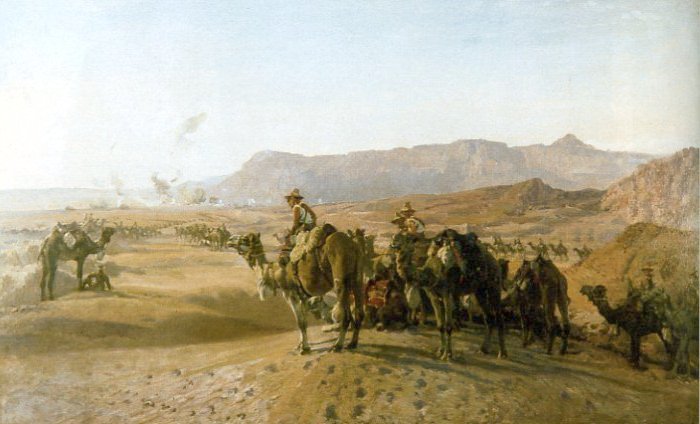
Painting depicts mounted troops of the Imperial Camel Corps Brigade with the Egyptian town of Magdhaba in the distance, 23 December 1916.
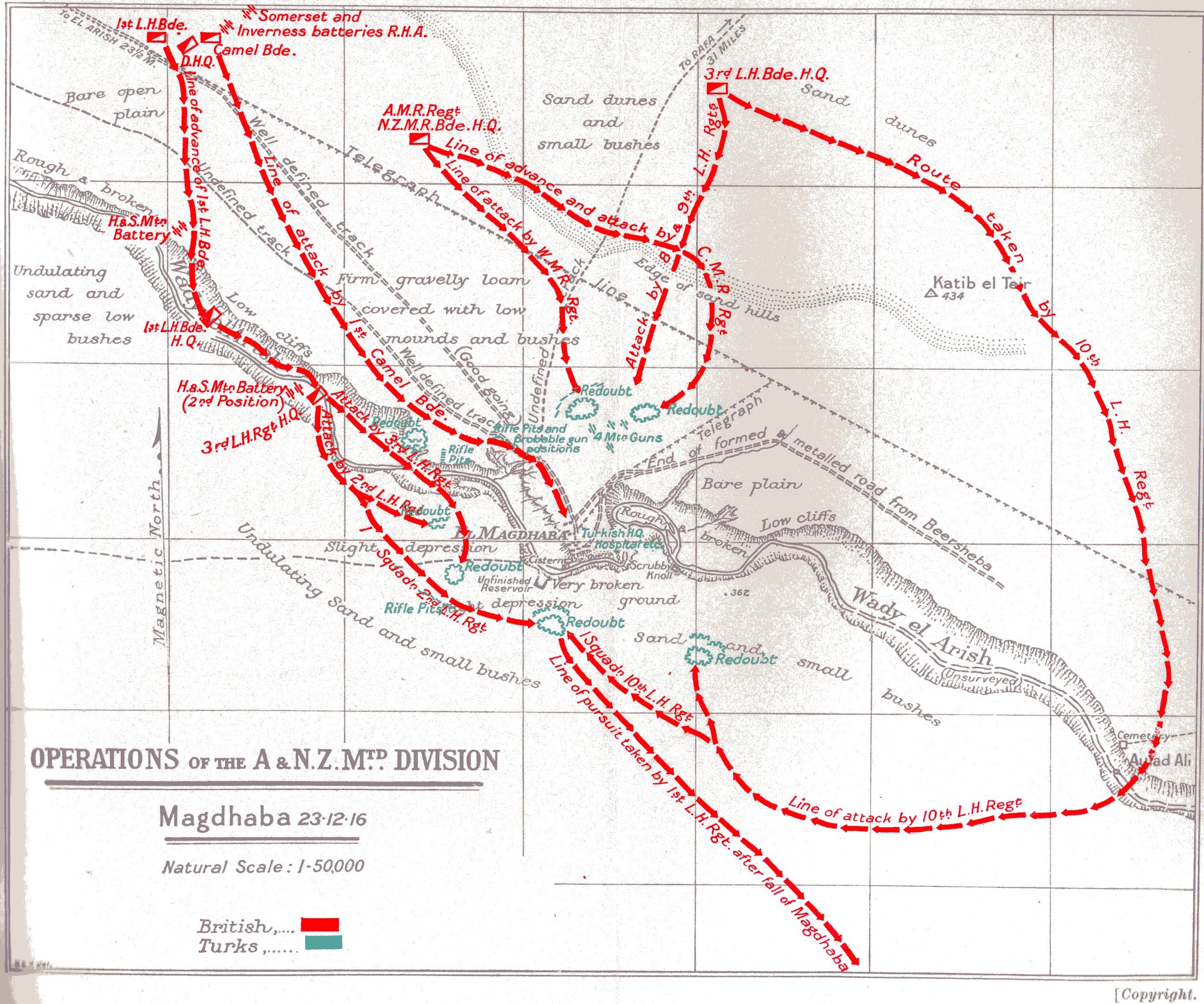
Map showing operations of the Australia and New Zealand Mounted Division at the Battle of Maghdaba, 23 December 1916.

9th Light Horse Regiment Magdhaba

Sandcart convoy travelling on the beach from El Arish after the battle of Magdhaba
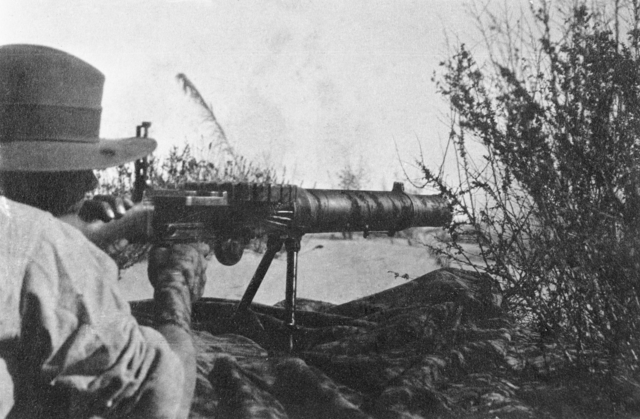
Australian War Memorial image P00812.011. An Australian soldier firing a Lewis Gun during the Battle of Magdhaba

Camels at Maghdabah.
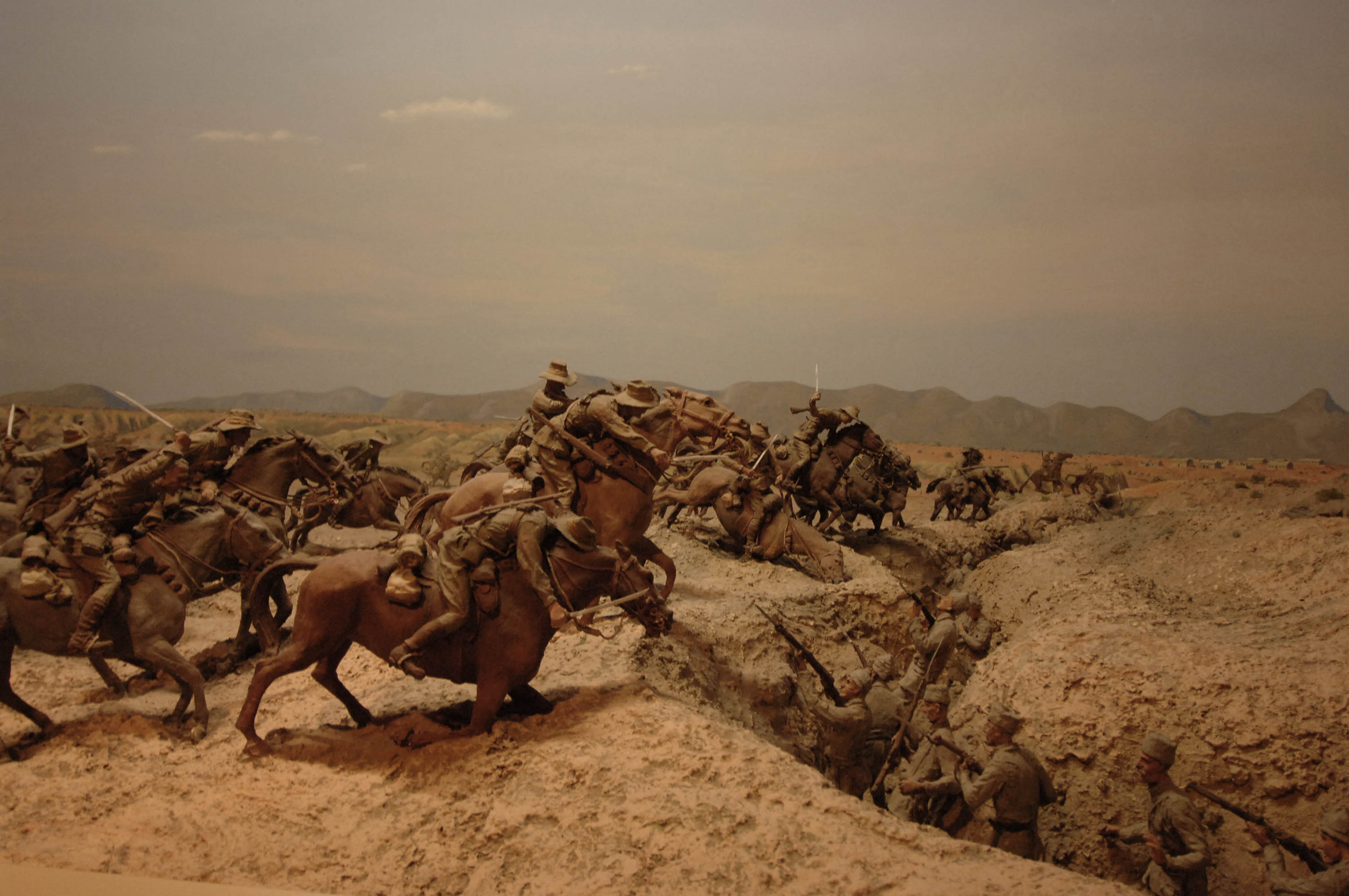
BATTLE OF MAGDHABA, 1916, PALESTINE CAMPAIGN. DIORAMA IS IN THE AUSTRALIAN WAR MEMORIAL IN CANBERRA, AUSTRALIA. IT SHOW AUSTRALIAN CAVALRY CHARGING THE TURKISH LINES.

Kantara to El Arish showing Ballah railhead between Kantara and Ferdan.

Photograph of Ottoman prisoners of war, captured at the Battle of Maghdhaba.

Map showing northern Sinai desert region in World War I; Magdhaba and the railway from Auja to Beersheba.

Military staff at Magdabah, captured in the British raid, 1916. LC-DIG-ppmsca-13709-00057 (digital file from original on page 16, no.56)
Historical Overview
The Battle of Magdhaba took place on 23 December 1916 during the Defence of Egypt section of the Sinai and Palestine Campaign in the First World War. The attack by the Anzac Mounted Division took place against an entrenched Ottoman Army garrison to the south and east of Bir Lahfan in the Sinai desert, some 18–25 miles (29–40 km) inland from the Mediterranean coast. This Egyptian Expeditionary Force (EEF) victory against the Ottoman Empire garrison also secured the town of El Arish after the Ottoman garrison withdrew.
Quick Facts
British & ANZAC
- Commander: Harry Chauvel
- Strength: ca. 7.000
- Casualties: ca. 140
Ottoman Empire
- Commander: unbekannt
- Strength: ca. 1.600
- Casualties: ca. 1.500
Strategic Context
Securing the Sinai Peninsula and preparing the Palestine campaign.
Related Literature


Der Gulag

Die Schlacht um Berlin und das Ende des Dritten Reichs 1945

Hunde, wollt ihr ewig leben: ein Stalingrad-Roman

Roter Hunger: Stalins Krieg gegen die Ukraine

So weit die Füße tragen

Söldner ohne Sold: Die deutschen Freikorps 1918–1923

Vom Massensturm zur Stoßtrupptaktik: Die deutsche Landkriegtaktik im Spiegel von Dienstvorschriften und Publizistik 1906 bis 1918

Wir Wehr-Wölfe: Erinnerungen eines Freikorps-Führers

Zweiter Weltkrieg Erlebnisbericht Apokalypse Stalingrad: Untergang der 6. Armee 1942-1943
Walter Mönch
Rise And Fall Of The Third Reich
William Shirer
Historical Locations
Interactive map requires third-party cookie consent.