Operation Lüttich

Battle of Mortain - Devastated German Tank

Aftermath of bombardment of Mortain in front of the station of Mortain-Le-Neufbourg, in the foreground a half-track vehicle Sdkfz of the 2.SS-Panzer division “Das Reich”, in the foreground the corpse of a dead German soldier.
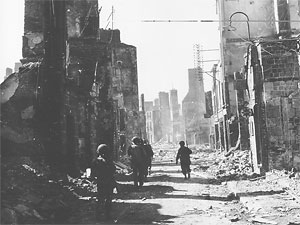
American forces moving through the ruins of Mortain, during the German counterattack of Operation Luttich

Battle of Mortain - Devastated German Half-track

Carte bataille mortain

Cartemortain2

Photographer - Alan Hughes

mezzi corazzati tedeschi durante la battaglia di Normandia

Maj. Gen. Jeffery Broadwater, the V Corps deputy commanding general, greets well-wishers June 3 in Mortain, France before delivering featured remarks during a ceremony commemorating the Battle of Mortain held on “Hill 314” – the site of a remarkable defensive stand by 30th Infantry Division Soldiers 79 years ago. For five days, the DCG told an engaged local national crowd, around 700 surrounded Americans fought off assaults by the 17th Panzer Division, despite running dangerously low on ammunition and almost entirely lacking food and supplies. Despite losing 400 men during fierce fighting, the “GIs” held their crucial position until relief arrived, inflicting heavy casualties on the enemy during the process. Their courageous stand helped ensure the continued success of the U.S. breakout from Normandy in June 1944. The DCG joined town and regional officials, the USAF-E Band, support Soldiers, organizers and citizens of the small, picturesque Norman town for a captivating ceremony. Grateful local officials presented the DCG the town medal after the event. (Photo by Sgt. 1st Class Lisa Litchfield, USACAPOC)

Maj. Gen. Jeffery Broadwater, the V Corps deputy commanding general, marches toward an historic monument June 3 in Mortain, France. The DCG subsequently delivering featured remarks during a ceremony commemorating the Battle of Mortain held on “Hill 314” – the site of a remarkable defensive stand by 30th Infantry Division Soldiers 79 years ago. For five days, the DCG told an engaged local national crowd, around 700 surrounded Americans fought off assaults by the 17th Panzer Division, despite running dangerously low on ammunition and almost entirely lacking food and supplies. Despite losing 400 men during fierce fighting, the “GIs” held their crucial position until relief arrived, inflicting heavy casualties on the enemy during the process. Their courageous stand helped ensure the continued success of the U.S. breakout from Normandy in June 1944. The DCG joined town and regional officials, the USAF-E Band, support Soldiers, organizers and citizens of the small, picturesque Norman town for a captivating ceremony. Grateful local officials presented the DCG the town medal after the event. (Photo by Sgt. 1st Class Lisa Litchfield, USACAPOC)

Maj. Gen. Jeffery Broadwater, the V Corps deputy commanding general, surrounded by local and regional officials, marches toward an historic monument June 3 in Mortain, France. The DCG subsequently delivering featured remarks during a ceremony commemorating the Battle of Mortain held on “Hill 314” – the site of a remarkable defensive stand by 30th Infantry Division Soldiers 79 years ago. For five days, the DCG told an engaged local national crowd, around 700 surrounded Americans fought off assaults by the 17th Panzer Division, despite running dangerously low on ammunition and almost entirely lacking food and supplies. Despite losing 400 men during fierce fighting, the “GIs” held their crucial position until relief arrived, inflicting heavy casualties on the enemy during the process. Their courageous stand helped ensure the continued success of the U.S. breakout from Normandy in June 1944. The DCG joined town and regional officials, the USAF-E Band, support Soldiers, organizers and citizens of the small, picturesque Norman town for a captivating ceremony. Grateful local officials presented the DCG the town medal after the event. (Photo by Sgt. 1st Class Lisa Litchfield, USACAPOC)

Maj. Gen. Jeffery Broadwater, the V Corps deputy commanding general, delivers featured remarks June 3 in Mortain, France, during a ceremony commemorating the Battle of Mortain held on “Hill 314” – the site of a remarkable defensive stand by 30th Infantry Division Soldiers 79 years ago. For five days, the DCG told an engaged local national crowd, around 700 surrounded Americans fought off assaults by the 17th Panzer Division, despite running dangerously low on ammunition and almost entirely lacking food and supplies. Despite losing 400 men during fierce fighting, the “GIs” held their crucial position until relief arrived, inflicting heavy casualties on the enemy during the process. Their courageous stand helped ensure the continued success of the U.S. breakout from Normandy in June 1944. The DCG joined town and regional officials, the USAF-E Band, support Soldiers, organizers and citizens of the small, picturesque Norman town for a captivating ceremony. Grateful local officials presented the DCG the town medal after the event. (Photo by Sgt. 1st Class Lisa Litchfield, USACAPOC)

Maj. Gen. Jeffery Broadwater, the V Corps deputy commanding general, delivers featured remarks June 3 in Mortain, France, during a ceremony commemorating the Battle of Mortain held on “Hill 314” – the site of a remarkable defensive stand by 30th Infantry Division Soldiers 79 years ago. For five days, the DCG told an engaged local national crowd, around 700 surrounded Americans fought off assaults by the 17th Panzer Division, despite running dangerously low on ammunition and almost entirely lacking food and supplies. Despite losing 400 men during fierce fighting, the “GIs” held their crucial position until relief arrived, inflicting heavy casualties on the enemy during the process. Their courageous stand helped ensure the continued success of the U.S. breakout from Normandy in June 1944. The DCG joined town and regional officials, the USAF-E Band, support Soldiers, organizers and citizens of the small, picturesque Norman town for a captivating ceremony. Grateful local officials presented the DCG the town medal after the event. (Photo by Sgt. 1st Class Lisa Litchfield, USACAPOC)

Maj. Gen. Jeffery Broadwater, the V Corps deputy commanding general, prepares to lay a wreath during a ceremony commemorating the Battle of Mortain held on “Hill 314” – the site of a remarkable defensive stand by 30th Infantry Division Soldiers 79 years ago. For five days, the DCG told an engaged local national crowd, around 700 surrounded Americans fought off assaults by the 17th Panzer Division, despite running dangerously low on ammunition and almost entirely lacking food and supplies. Despite losing 400 men during fierce fighting, the “GIs” held their crucial position until relief arrived, inflicting heavy casualties on the enemy during the process. Their courageous stand helped ensure the continued success of the U.S. breakout from Normandy in June 1944. The DCG joined town and regional officials, the USAF-E Band, support Soldiers, organizers and citizens of the small, picturesque Norman town for a captivating ceremony. Grateful local officials presented the DCG the town medal after the event. (Photo by Sgt. 1st Class Lisa Litchfield, USACAPOC)

Maj. Gen. Jeffery Broadwater, the V Corps deputy commanding general, salutes after laying a wreath during a ceremony commemorating the Battle of Mortain held on “Hill 314” – the site of a remarkable defensive stand by 30th Infantry Division Soldiers 79 years ago. For five days, the DCG told an engaged local national crowd, around 700 surrounded Americans fought off assaults by the 17th Panzer Division, despite running dangerously low on ammunition and almost entirely lacking food and supplies. Despite losing 400 men during fierce fighting, the “GIs” held their crucial position until relief arrived, inflicting heavy casualties on the enemy during the process. Their courageous stand helped ensure the continued success of the U.S. breakout from Normandy in June 1944. The DCG joined town and regional officials, the USAF-E Band, support Soldiers, organizers and citizens of the small, picturesque Norman town for a captivating ceremony. Grateful local officials presented the DCG the town medal after the event. (Photo by Sgt. 1st Class Lisa Litchfield, USACAPOC)

Maj. Gen. Jeffery Broadwater, the V Corps deputy commanding general, receives the town medal from local officials in Mortain, France June 3 following a ceremony commemorating the Battle of Mortain. An enthusiastic crowd of U.S. support Soldiers and townspeople joined the DCG, state and regional officials, and event organizers for a reception following a poignant ceremony punctuated by speeches, wreath-laying and patriotic music conducted on “Hill 314,” site of a heroic stand by 30th Infantry Division Soldiers in June 1944. The DCG delivered well-received featured remarks during a powerful ceremony. (Photo by Sgt. 1st Class Lisa Litchfield, USACAPOC)
Historical Overview
Operation Lüttich was the codename of the Nazi German counter-attack during the Operation Overlord, which occurred near U.S. positions near Mortain, in northwestern France. Lüttich is the German name for the city of Liège, Belgium. In British and American histories of the Second World War, the German Operation Lüttich is known as the Mortain counter-attack, which Hitler ordered to regain territory gained by the First United States Army during Operation Cobra by reaching the coast of the Avranches region, which is at the base of the Cotentin peninsula, in order to isolate the units of the Third United States Army that had advanced into Brittany.
Quick Facts
US 5th Army
- Commander: Omar Bradley
- Strength: 80000
- Casualties: 1000
German Army
- Commander: Paul Hausser
- Strength: 50000
- Casualties: 5000
Strategic Context
Hitler's attempt to seal off the US breakthrough.
Related Literature


Der Gulag

Die Schlacht um Berlin und das Ende des Dritten Reichs 1945

Hunde, wollt ihr ewig leben: ein Stalingrad-Roman

Roter Hunger: Stalins Krieg gegen die Ukraine

So weit die Füße tragen

Söldner ohne Sold: Die deutschen Freikorps 1918–1923

Vom Massensturm zur Stoßtrupptaktik: Die deutsche Landkriegtaktik im Spiegel von Dienstvorschriften und Publizistik 1906 bis 1918

Wir Wehr-Wölfe: Erinnerungen eines Freikorps-Führers

Zweiter Weltkrieg Erlebnisbericht Apokalypse Stalingrad: Untergang der 6. Armee 1942-1943
Walter Mönch
Rise And Fall Of The Third Reich
William Shirer
Historical Locations
Interactive map requires third-party cookie consent.