Operation Lam Son 719
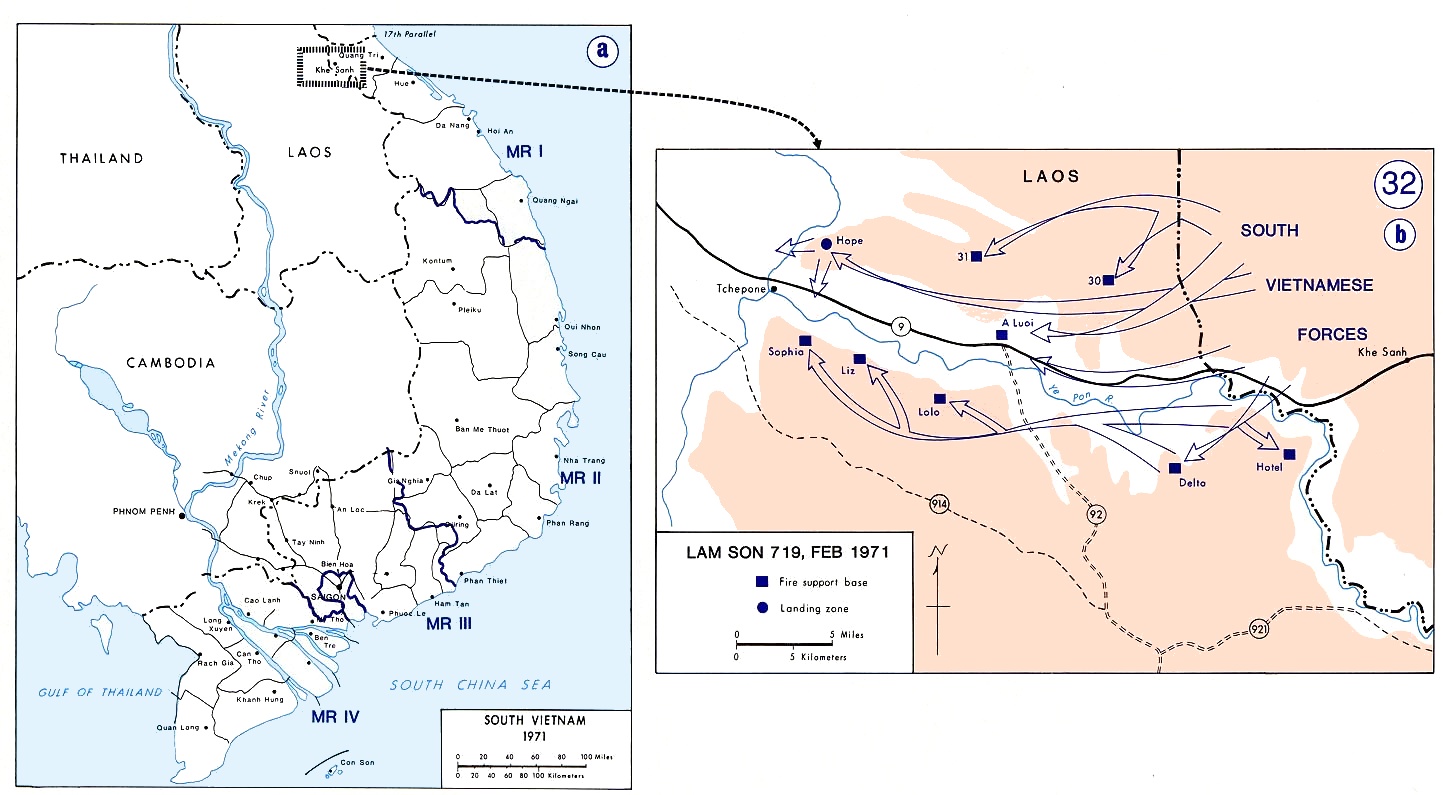
32. South Vietnam, 1971 - LAM SON 719

Cambodia Invasion 1971

ACAV's OF SOUTH VIETNAMESE 1ST ARMORED BRIGADE ON ROUTE 9 IN LAOS, 1971.

QLVNCH chạy khỏi căn cứ Khe Sanh, 20-3-1971

A U.S. Air Force Lockheed C-130 Hercules of The 29th Tactical Airlift Squadrom, Detachment 1. 463rd Tactical Airlift Wing delivering cargo to Khe Sanh during "Operation Lam Son 719" in February-March 1971.
CH-53 Sea Stallion helicopter from HMH-463 takes off from Lang Vei Combat Base, Operation Lam Son 719

U.S. Army photo from Joel D. Meyerson when Fire Support Base Lolo falls to PAVN forces
Khe Sanh reoccuppied, Operation Lam Son 719, 12 February 1971

Lam Son 719 operation ending

Operation Lam Son 719

RED DEVIL ROAD, an engineering feat that opened enemy areas never before penetrated.
Mortar impacts near two 1st Marine Aircraft Wing AH-1G Cobra helicopters from Marine Light Helicopter Squadron 367, Khe Sanh Combat Base, Operation Lam Son 719
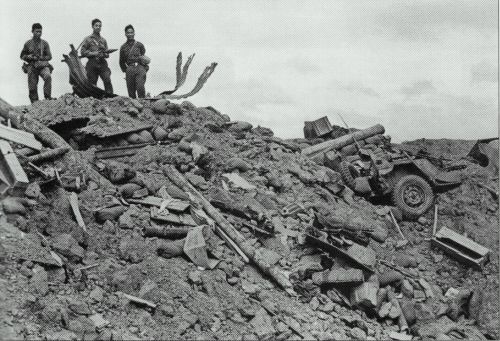
PAVN troops, Laos 1971

U.S. Army Bell AH-1G HueyCobra attack helicopters over Laos.

U.S. propaganda leaflet dropped on Ho Chi Minh Trail warning PAVN troops that their trucks were doomed. The leaflet asks "How do support the South when the ARVN has already blocked the Ho Chi Minh Trail" referencing the 1971 South Vietnamese Lam Son 719 campaign against NVA infiltration routes in southern Laos.
Historical Overview
Operation Lam Son 719 or 9th Route – Southern Laos Campaign was a limited-objective offensive campaign conducted in the southeastern portion of the Kingdom of Laos. The campaign was carried out by the armed forces of South Vietnam between 8 February and 25 March 1971, during the Vietnam War. The United States provided logistical, aerial and artillery support for the operation, but its ground forces were prohibited by law from entering Laotian territory. The objective of the campaign was the disruption of a possible future offensive by the People's Army of Vietnam (PAVN), whose logistical system within Laos was known as the Ho Chi Minh Trail.
Quick Facts
N. Vietnam (PAVN)
- Commander: Lê Trọng Tấn
- Strength: 60.000 Mann
- Casualties: ca. 2.000
S. Vietnam (ARVN)
- Commander: Hoàng Xuân Lãm
- Strength: 20.000 Mann
- Casualties: 9000
Strategic Context
Testing the "Vietnamization" of the war.
Related Literature


Der Eiserne Vorhang: Die Unterdrückung Osteuropas 1944–1956

Die Kubakrise 1962

Mao und seine verlorenen Kinder: Chinas Kulturrevolution

Maos Großer Hunger: Massenmord und Menschenexperiment in China
Historical Locations
Exact location not recorded in historical records