All Battles

Battle of Kwajalein

1944 Marshallinseln Amphib. Op.

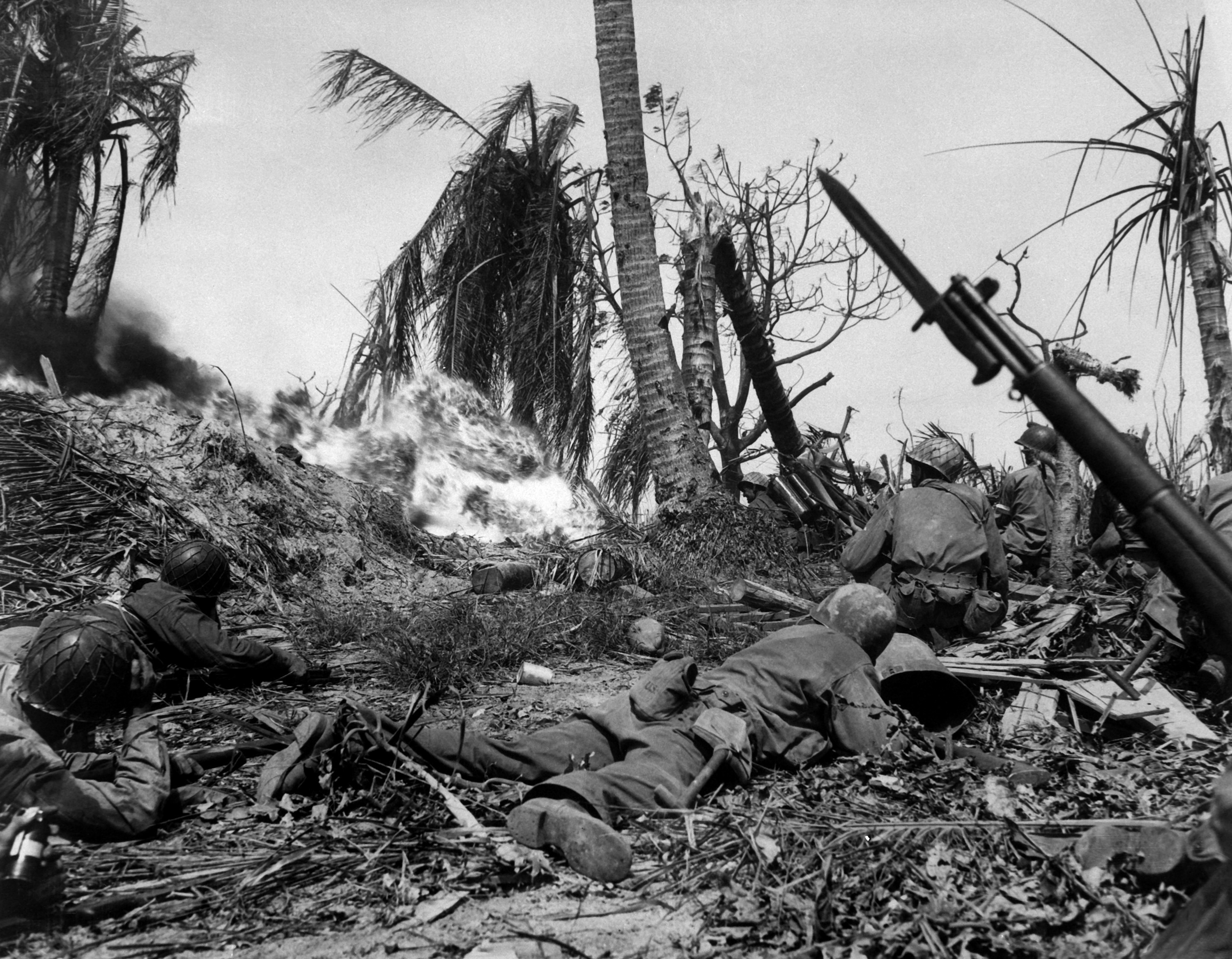
Men of the 7th Div. using flame throwers to smoke out Japanese soldiers from a block house on Kwajalein Island, while others wait with rifles ready in case soldiers come out. February 4, 1944.  Cordray. (Army)
NARA FILE #:  iii-SC-212770

WAR & CONFLICT BOOK #:  1187

Men of the 7th Div. using flame throwers to smoke out Japanese soldiers from a block house on Kwajalein Island, while others wait with rifles ready in case soldiers come out. February 4, 1944. Cordray. (Army) NARA FILE #: iii-SC-212770 WAR & CONFLICT BOOK #: 1187

Author: CORDRAYLicense:PD
Source
General notes:  Use War and Conflict Number 1166 when ordering a reproduction or requesting information about this image.
General notes: Use War and Conflict Number 1166 when ordering a reproduction or requesting information about this image.

Author: Unknown authorUnknown author or not providedLicense:PD
Source
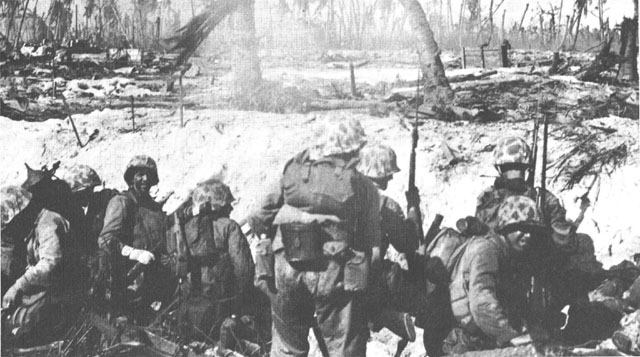
Marines from the 24th Marine Regiment during the Battle of Roi Namur.

Marines from the 24th Marine Regiment during the Battle of Roi Namur.

Author: United States Marine CorpsLicense:PD
Source
37mm-gun-Kwajalein

37mm-gun-Kwajalein

Author: UnknownLicense:PD
Source
Radio Operators from 3rd Battalion, 24th Marines, under fire on Roi Namur, Pacific Islands, World War II.

Radio Operators from 3rd Battalion, 24th Marines, under fire on Roi Namur, Pacific Islands, World War II.

Author: United States Marine CorpsLicense:PD
Source
7th Division men looking down at dead Japanese soldiers in a ditch on Kwajalein

7th Division men looking down at dead Japanese soldiers in a ditch on Kwajalein

Author: Signal Corps Archive from Ireland and United StatesLicense:PD
Source
7th Division troops board LSTs to leave Kwajalein, 4 February, 1944.

7th Division troops board LSTs to leave Kwajalein, 4 February, 1944.

Author: Signal Corps Archive from Ireland and United StatesLicense:PD
Source
'W-CPA-44-108-AH. 2/1. Cordray. Marshallese natives being given food and medical treatment while awaiting transportation to Enilapkan Island. Kwajalein Island, 7th Div. U.S. Army.' Signal Corps Photograph. Photographer: Cordray. Kwajalein Atoll, Marshall Islands. 1 February 1944

'W-CPA-44-108-AH. 2/1. Cordray. Marshallese natives being given food and medical treatment while awaiting transportation to Enilapkan Island. Kwajalein Island, 7th Div. U.S. Army.' Signal Corps Photograph. Photographer: Cordray. Kwajalein Atoll, Marshall Islands. 1 February 1944

Author: Signal Corps Archive from Ireland and United StatesLicense:PD
Source
Japanese facilities on Roi and Namur Islands, Kwajalein Atoll, under attack by planes from Task Force 50, on 4 December 1943. The large hangar on Roi (at top) is burning, but over twenty intact G4M "Betty" bombers are parked on the Roi airfield, along with a number of fighters. Note pier, concrete blockhouse and other buildings on Namur, in the foreground.

Japanese facilities on Roi and Namur Islands, Kwajalein Atoll, under attack by planes from Task Force 50, on 4 December 1943. The large hangar on Roi (at top) is burning, but over twenty intact G4M "Betty" bombers are parked on the Roi airfield, along with a number of fighters. Note pier, concrete blockhouse and other buildings on Namur, in the foreground.

Author: National Archives 80-G-212213License:PD
Source
Fourth Division Marines coming ashore under fire on Namur Island, Kwajalein Atoll, 1 February 1944. They are debarking from a LVT-2 amphibious tractor. In background is the collapsed "hammerhead" crane at the end of Namur's pier.

Fourth Division Marines coming ashore under fire on Namur Island, Kwajalein Atoll, 1 February 1944. They are debarking from a LVT-2 amphibious tractor. In background is the collapsed "hammerhead" crane at the end of Namur's pier.

Author: National Archives 80-G-213442License:PD
Source
Fourth Division marines fighting on Namur Island, Kwajalein Atoll, on the first day of combat there, 1 February 1944. These men are preparing to rush a Japanese blockhouse, after throwing hand grenades.
Fourth Division marines fighting on Namur Island, Kwajalein Atoll, on the first day of combat there, 1 February 1944. These men are preparing to rush a Japanese blockhouse, after throwing hand grenades.

Author: National Archives 80-G-213445License:PD
Source
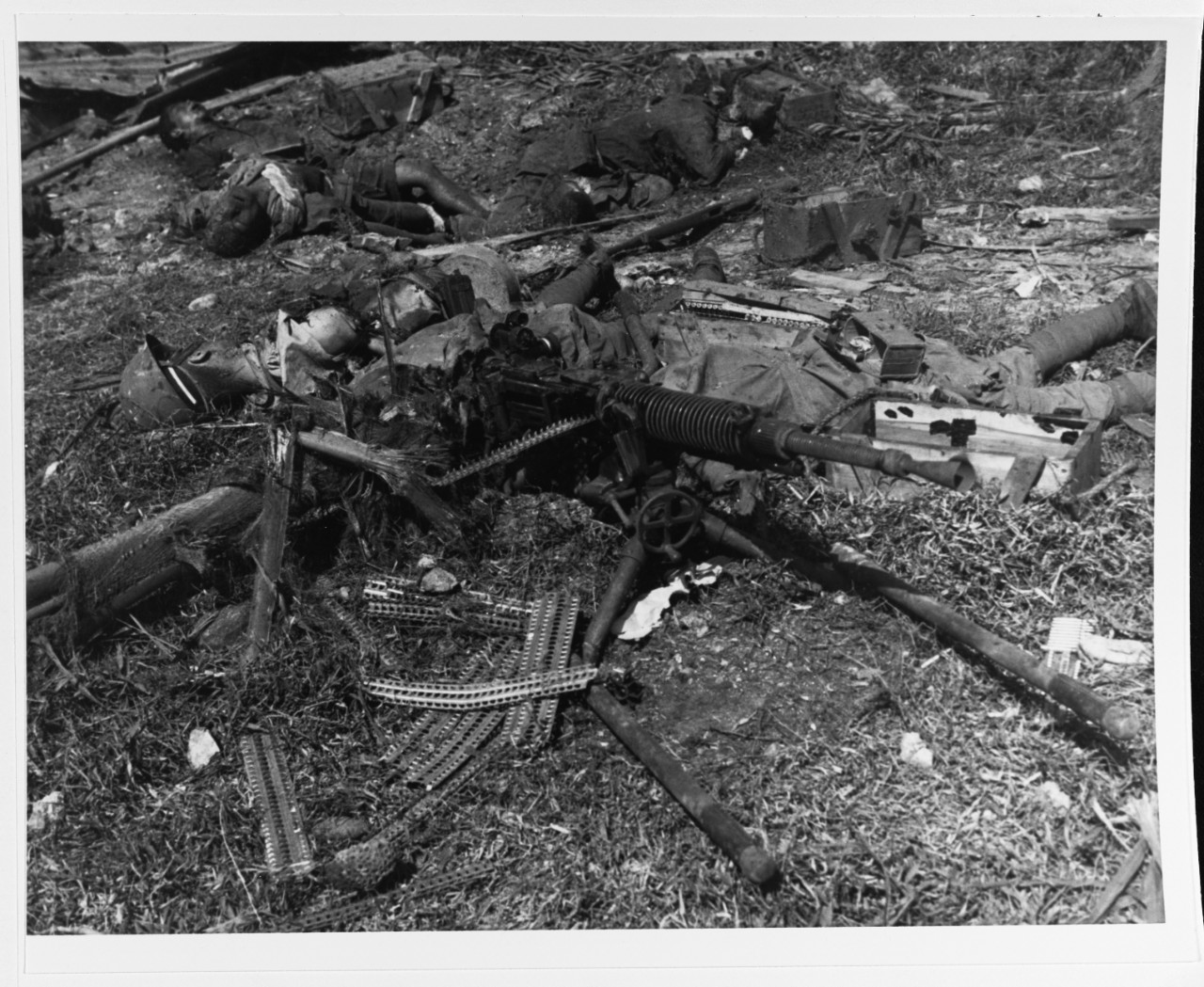
Japanese machine gun and its crew, destroyed by a direct hit during fighting on Namur Island, Kwajalein Atoll, 1 February 1944. Note ammunition clips and carrying arrangement for this weapon.

Japanese machine gun and its crew, destroyed by a direct hit during fighting on Namur Island, Kwajalein Atoll, 1 February 1944. Note ammunition clips and carrying arrangement for this weapon.

Author: National Archives 80-G-213449License:PD
Source
Wounded marine receives blood plasma, during fighting on Namur Island, Kwajalein Atoll, 1 February 1944. His right arm appears to have been badly injured.

Wounded marine receives blood plasma, during fighting on Namur Island, Kwajalein Atoll, 1 February 1944. His right arm appears to have been badly injured.

Author: National Archives 80-G-213456License:PD
Source
Dead Japanese soldier who had shot himself by pulling his rifle's trigger with his big toe. Taken on Kwajalein, 31 January 1944.

Dead Japanese soldier who had shot himself by pulling his rifle's trigger with his big toe. Taken on Kwajalein, 31 January 1944.

Author: National Archives 80-G-213472License:PD
Source
Namur Island, Kwajalein Atoll, photographed from a U.S. aircraft on 30 January 1944, before it was wrecked by pre-invasion bombardment. Note the many buildings and the pier (with a "hammerhead" crane) of the Japanese base there. Roi Island is in the far upper left. Virtually everything seen here was destroyed in the next few days.

Namur Island, Kwajalein Atoll, photographed from a U.S. aircraft on 30 January 1944, before it was wrecked by pre-invasion bombardment. Note the many buildings and the pier (with a "hammerhead" crane) of the Japanese base there. Roi Island is in the far upper left. Virtually everything seen here was destroyed in the next few days.

Author: National Archives 80-G-213594License:PD
Source
View of Namur (left) and Roi Islands, with their connecting causeway, as U.S. Marines landed, 1 February 1944. Photographed from a USS Suwanee (CVE-27) plane.

View of Namur (left) and Roi Islands, with their connecting causeway, as U.S. Marines landed, 1 February 1944. Photographed from a USS Suwanee (CVE-27) plane.

Author: National Archives 80-G-214821License:PD
Source
22nd Regiment Marines fighting on Parry Island, Eniwetok Atoll, on 22-23 February 1944. Note .30 caliber machine gun at left

22nd Regiment Marines fighting on Parry Island, Eniwetok Atoll, on 22-23 February 1944. Note .30 caliber machine gun at left

Author: National Archives 80-G-215732License:PD
Source
Marines and Coast Guardsmen proudly display a Japanese flag, picked up by one of them during the capture of Engebi Island, Eniwetok Atoll, 19 February 1944. Note bullet holes in the flag, and helmet camouflage on one marine.

Marines and Coast Guardsmen proudly display a Japanese flag, picked up by one of them during the capture of Engebi Island, Eniwetok Atoll, 19 February 1944. Note bullet holes in the flag, and helmet camouflage on one marine.

Author: National Archives 80-G-216033License:PD
Source
Wrecked Japanese installation on an island of Rongelap Atoll, photographed from a U.S. Navy PB4Y-1 patrol bomber, 8 February 1944. Note line of bomb craters at left.

Wrecked Japanese installation on an island of Rongelap Atoll, photographed from a U.S. Navy PB4Y-1 patrol bomber, 8 February 1944. Note line of bomb craters at left.

Author: National Archives 80-G-216035License:PD
Source
Three marines man a machine gun position near a Japanese dugout on one of the islands of Eniwetok Atoll, ready of knock out snipers, 18-22 February 1944. An SBD bomber is passing overhead.
Three marines man a machine gun position near a Japanese dugout on one of the islands of Eniwetok Atoll, ready of knock out snipers, 18-22 February 1944. An SBD bomber is passing overhead.

Author: National Archives 80-G-216218License:PD
Source
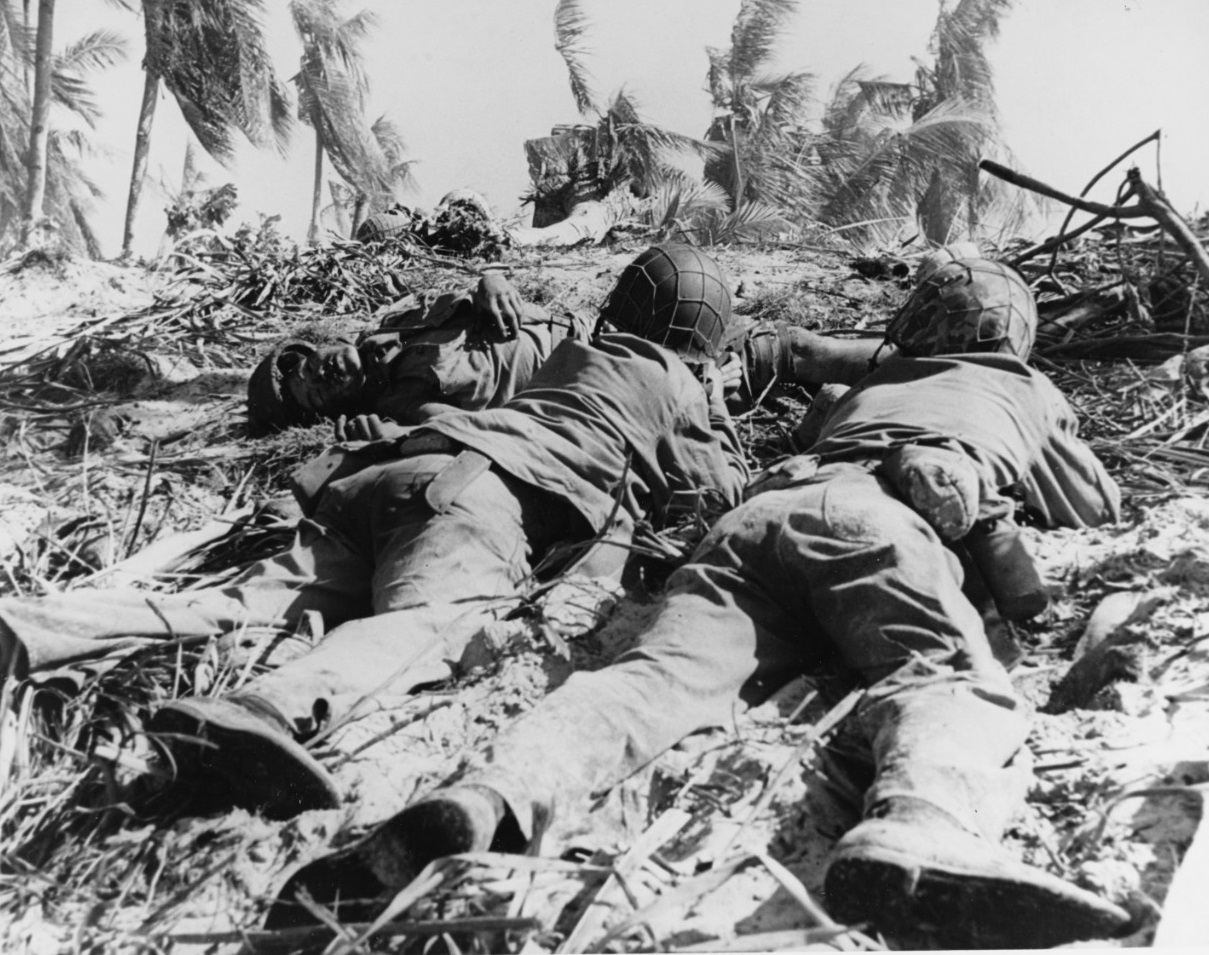
Two marines take cover behind the body of a Japanese soldier, during fighting on Parry Island, Eniwetok Atoll, 22-23 February 1944. The helmet of a third marine is visible in the left center distance. Taken by a Coast Guard photographer, whose camera was later destroyed when he was blown into a foxhole by a Japanese mortar shell explosion.

Two marines take cover behind the body of a Japanese soldier, during fighting on Parry Island, Eniwetok Atoll, 22-23 February 1944. The helmet of a third marine is visible in the left center distance. Taken by a Coast Guard photographer, whose camera was later destroyed when he was blown into a foxhole by a Japanese mortar shell explosion.

Author: National Archives 80-G-216607License:PD
Source
Wrecked trucks and shattered trees litter Kwajalein, soon after its capture in February 1944.

Wrecked trucks and shattered trees litter Kwajalein, soon after its capture in February 1944.

Author: National Archives 80-G-K-1293License:PD
Source
Wrecked Japanese blockhouse on Kwajalein, soon after the Island's capture in February 1944.

Wrecked Japanese blockhouse on Kwajalein, soon after the Island's capture in February 1944.

Author: National Archives 80-G-K-1308License:PD
Source
Wrecked Japanese fuel dump and pier on Kwajalein, soon after the Island's capture in February 1944

Wrecked Japanese fuel dump and pier on Kwajalein, soon after the Island's capture in February 1944

Author: National Archives 80-G-K-1317License:PD
Source
A native woman is given medical attention by 7th Div. medics on Kwajalein Island. 3 February, 1944.

A native woman is given medical attention by 7th Div. medics on Kwajalein Island. 3 February, 1944.

Author: Signal Corps Archive from Ireland and United StatesLicense:PD
Source
Aerial view of the invasion of Namur island, Kwajalein Atoll, on 1 February 1944.

Aerial view of the invasion of Namur island, Kwajalein Atoll, on 1 February 1944.

Author: U.S. NavyLicense:PD
Source

Historical Overview

Successful landing on the Marshall Islands.

Quick Facts

Outcome:US victory.

US Army/Marines

  • Commander: Richmond K. Turner
  • Strength: 42000
  • Casualties: 372

Empire of Japan

  • Commander: Monzo Akiyama †
  • Strength: 8000
  • Casualties: 7870

Strategic Context

Breaking the outer Japanese defensive perimeter.

Related Literature

Cover of Berlin: The Downfall 1945

Berlin: The Downfall 1945

Antony Beevor

Non-fictionWW2WW2 Eastern Front

English
World Wars Era
Cover of Gulag: A History

Gulag: A History

Non-fiction20th CenturySoviet Union

English
World Wars Era
Cover of Red Famine: Stalin's War on Ukraine

Red Famine: Stalin's War on Ukraine

Non-fiction20th CenturySoviet Union

English
World Wars Era
Cover of Stalingrad

Stalingrad

Antony Beevor

WW2ReportWW2 Eastern Front

English
World Wars Era
Cover of The Gulag Archipelago

The Gulag Archipelago

Non-fiction20th CenturySoviet Union

English
World Wars Era
Cover of Der Gulag

Der Gulag

Non-fiction20th CenturySoviet Union

German
World Wars Era
Cover of Die Schlacht um Berlin und das Ende des Dritten Reichs 1945

Die Schlacht um Berlin und das Ende des Dritten Reichs 1945

Non-fictionWW2WW2 Eastern Front

German
World Wars Era
Cover of Hunde, wollt ihr ewig leben: ein Stalingrad-Roman

Hunde, wollt ihr ewig leben: ein Stalingrad-Roman

WW2WW2 Eastern FrontHistorical Noval

German
World Wars Era
Cover of Roter Hunger: Stalins Krieg gegen die Ukraine

Roter Hunger: Stalins Krieg gegen die Ukraine

Non-fiction20th CenturySoviet Union

German
World Wars Era
Cover of So weit die Füße tragen

So weit die Füße tragen

20th CenturySoviet UnionGulag

German
World Wars Era
Cover of Söldner ohne Sold: Die deutschen Freikorps 1918–1923

Söldner ohne Sold: Die deutschen Freikorps 1918–1923

Report20th CenturyGerman History

German
World Wars Era
Cover of Vom Massensturm zur Stoßtrupptaktik: Die deutsche Landkriegtaktik im Spiegel von Dienstvorschriften und Publizistik 1906 bis 1918

Vom Massensturm zur Stoßtrupptaktik: Die deutsche Landkriegtaktik im Spiegel von Dienstvorschriften und Publizistik 1906 bis 1918

Non-fiction20th CenturyGerman History

German
World Wars Era
Cover of Wir Wehr-Wölfe: Erinnerungen eines Freikorps-Führers

Wir Wehr-Wölfe: Erinnerungen eines Freikorps-Führers

Report20th CenturyGerman History

German
World Wars Era
Cover of Zweiter Weltkrieg Erlebnisbericht Apokalypse Stalingrad: Untergang der 6. Armee 1942-1943

Zweiter Weltkrieg Erlebnisbericht Apokalypse Stalingrad: Untergang der 6. Armee 1942-1943

Walter Mönch

Non-fictionWW2WW2 Eastern Front

German
World Wars Era
Rise And Fall Of The Third Reich

Rise And Fall Of The Third Reich

William Shirer

20th CenturyGerman HistoryNational Socialism

World Wars Era

Historical Locations

Exact location not recorded in historical records