Kronstadt Rebellion

Suppression of the Kronstadt mutiny. Soldiers of the Red Army attack the island fortress of Kronstadt on the ice of the Gulf of Finland.

Stepan Petrichenko (arrow), leader of the Kronstadt rebellion among russian oppositionists and emigrants in Finland.

The sovietrussian battleships "Petropavlovsk" and "Sevastopol" in the port of Kronstadt.

Red Army troops enter Kronstadt after the liquidation of the Kronstadt Kronstadt rebellion. Left: Ivan Fedko. Center: Pavel Dybenko.
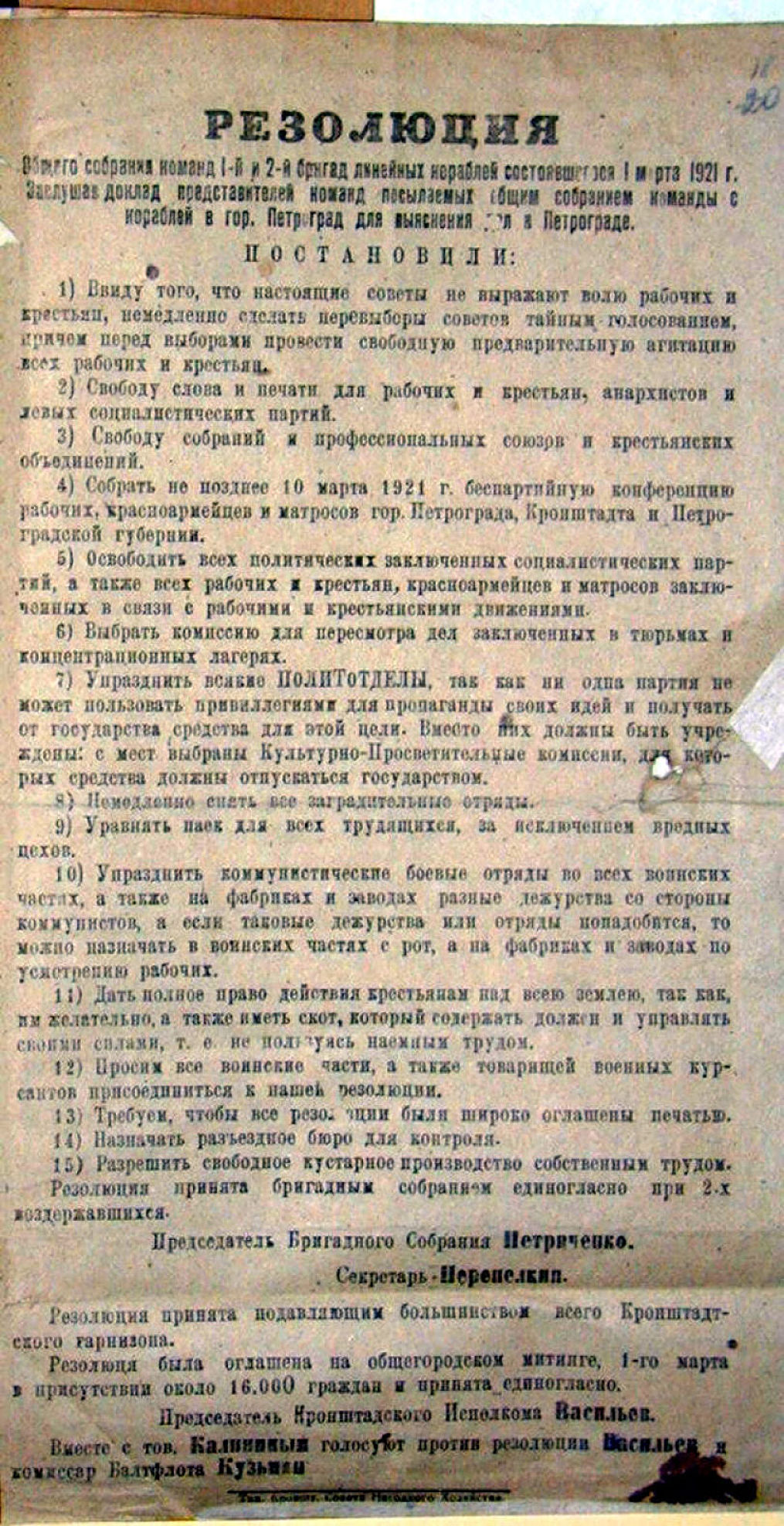
Kronstädter Matrosenaufstand: Resolution der Vollversammlung der Mannschaften der ersten und zweiten Brigade der Schlachtschiffe Petropawlowsk und Sewastopol.

Подавление Крондштатского мятежа. Красная армия атакует Кронштадт по льду Финского залива.

Suppression of the Kronstadt mutiny. Soldiers of the Red Army attack the island fortress of Kronstadt on the ice of the Gulf of Finland.

Сотрудники следственно-розыскной милиции Петрограда участвуют в штурме Кронштадта.

Frontpage of the 7th issue of the Newspaper "Iswestiya of the Provisorial Revolutionary Comitee of Kronstadt", created by the participants of the Kronstadt Rebellion.
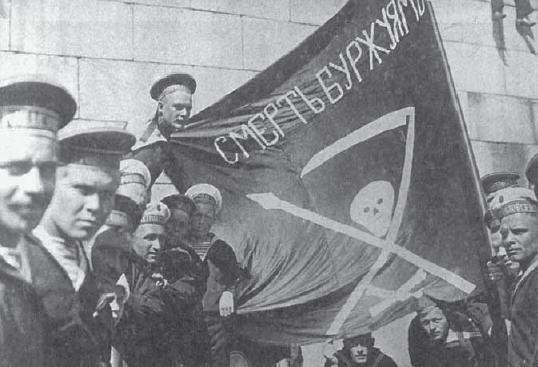
Revolutionary Russian sailors of Russian Imperial Navy battleship Petropavlovsk in Helsinki during summer 1917. Flag carries text "Death to the bourgeois".

Bed of an anarchist companion in the United States, with a cat and two anarchist flags, comprising a Circle-A black flag and a Kronstadt flag

Map of Kronstadt and local interests during the Kronstadt rebellion

"Кронштадт. Март 1921". РГАКФД. Просматриваются 12 трупов. Вероятно, показательно расстрелянные 20 марта

Братская могила Кронштадтского восстания. Общий вид

Братская могила Кронштадтского восстания. Текст
“The Kronstadt Rebellion,” by Alexander Berkman.
Kronstadt rebellion 1921. The first refugees of the rebellion arrive at Terijoki shore 17.3.1921.
Kronstadt rebellion 1921. Kronstadt refugees arrive at Koivisto, Finland.
Kronstadt rebellion 1921. Kronstadt refugees are led to a train in Koivisto, Finland.

Graffiti "Кронштадт 1921" à Kronstadt (Russie).

Graffiti "Кронштадт 1921" à Kronstadt (Russie).
Kronstadt rebellion 1921. Petropavlovski refugee officers at a dining table in Terijoki, Finland.

Lenin, Voroshilov (behind Lenin) and Trotsky among soldiers among the delegates to the Tenth Congress of the R.C.P.(B) - the participants in the liquidation of the Kronstadt uprising, Moscow
![Lenin, Voroshilov (behind Lenin) and Trotsky (from left to right, in the center of the image) among soldiers among the delegates to the Tenth Congress of the R.C.P.(B) - the participants in the liquidation of the Kronstadt uprising. Moscow.[1]
For more on those depicted, see Soviet Life, v9(156), Sept 1969, pp. 42–43.](https://upload.wikimedia.org/wikipedia/commons/c/cf/Lenin%2C_Trotsky_and_Voroshilov_with_Delegates_of_the_10th_Congress_of_the_Russian_Communist_Party_%28Bolsheviks%29.jpg)
Lenin, Voroshilov (behind Lenin) and Trotsky (from left to right, in the center of the image) among soldiers among the delegates to the Tenth Congress of the R.C.P.(B) - the participants in the liquidation of the Kronstadt uprising. Moscow.[1] For more on those depicted, see Soviet Life, v9(156), Sept 1969, pp. 42–43.
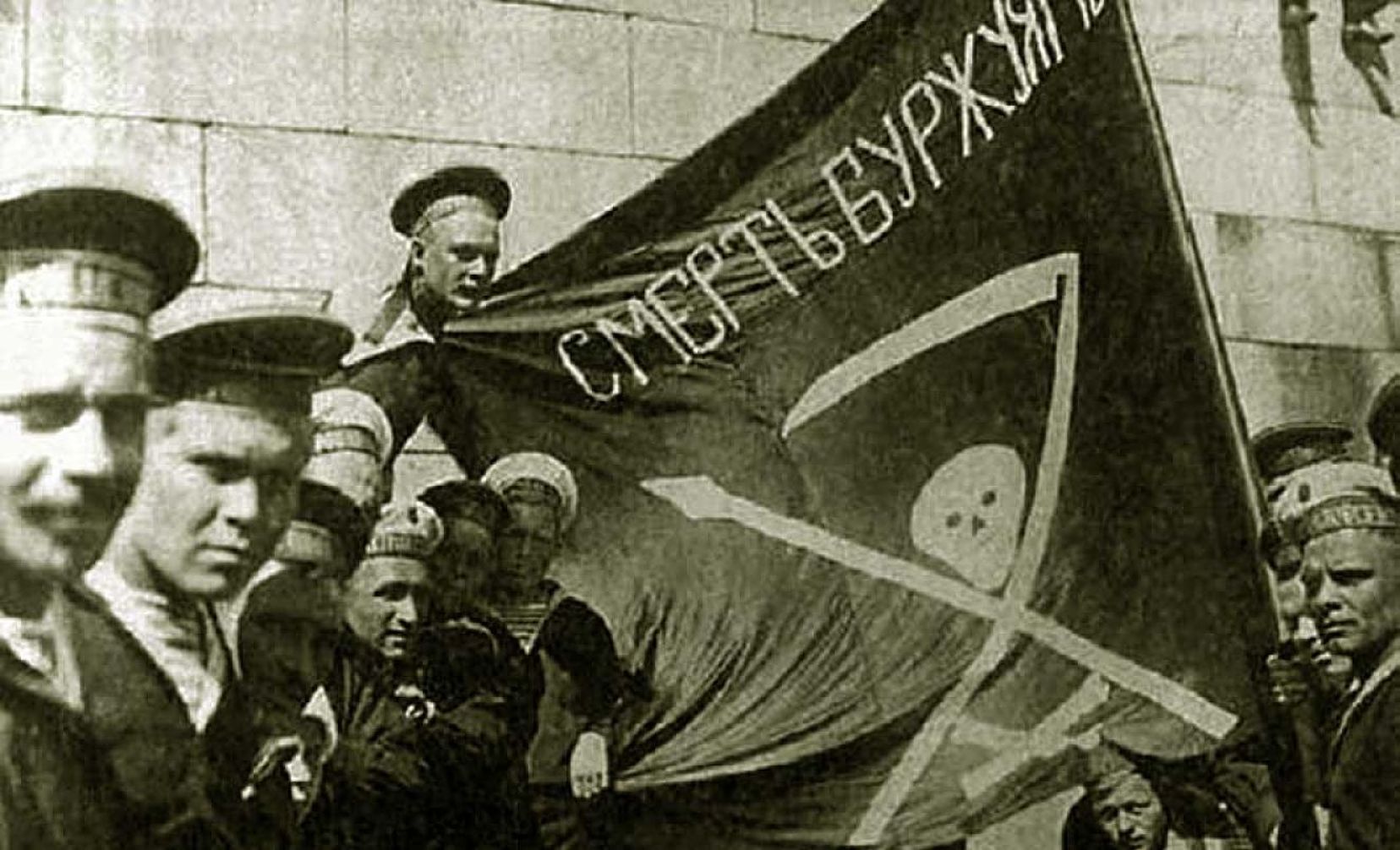
Marins de Kronstadt sur le cuirassé Petropavlovsk
Historical Overview
The Kronstadt rebellion was a 1921 insurrection of Soviet sailors, naval infantry, and civilians against the Bolshevik government in the Russian port city of Kronstadt. Located on Kotlin Island in the Gulf of Finland, Kronstadt defended the former capital city, Petrograd, as the base of the Baltic Fleet. For sixteen days in March 1921, rebels in Kronstadt's naval fortress rose in opposition to the Soviet government which they had helped to consolidate. Led by Stepan Petrichenko, it was the last major revolt against Bolshevik rule on Russian territory during the Russian Civil War.
Quick Facts
Red Guards
- Commander: Michail Tuchatschewski
- Strength: ca. 50.000
- Casualties: ca. 2.000
Kronstadt Rebels
- Commander: Stepan Petritschenko
- Strength: ca. 15.000
- Casualties: ca. 1.000
Strategic Context
Inner-revolutionary conflict over the direction of socialism.
Related Literature


Der Gulag

Die Schlacht um Berlin und das Ende des Dritten Reichs 1945

Hunde, wollt ihr ewig leben: ein Stalingrad-Roman

Roter Hunger: Stalins Krieg gegen die Ukraine

So weit die Füße tragen

Söldner ohne Sold: Die deutschen Freikorps 1918–1923

Vom Massensturm zur Stoßtrupptaktik: Die deutsche Landkriegtaktik im Spiegel von Dienstvorschriften und Publizistik 1906 bis 1918

Wir Wehr-Wölfe: Erinnerungen eines Freikorps-Führers

Zweiter Weltkrieg Erlebnisbericht Apokalypse Stalingrad: Untergang der 6. Armee 1942-1943
Walter Mönch
Rise And Fall Of The Third Reich
William Shirer
Historical Locations
Interactive map requires third-party cookie consent.