Invasion of Kuwait
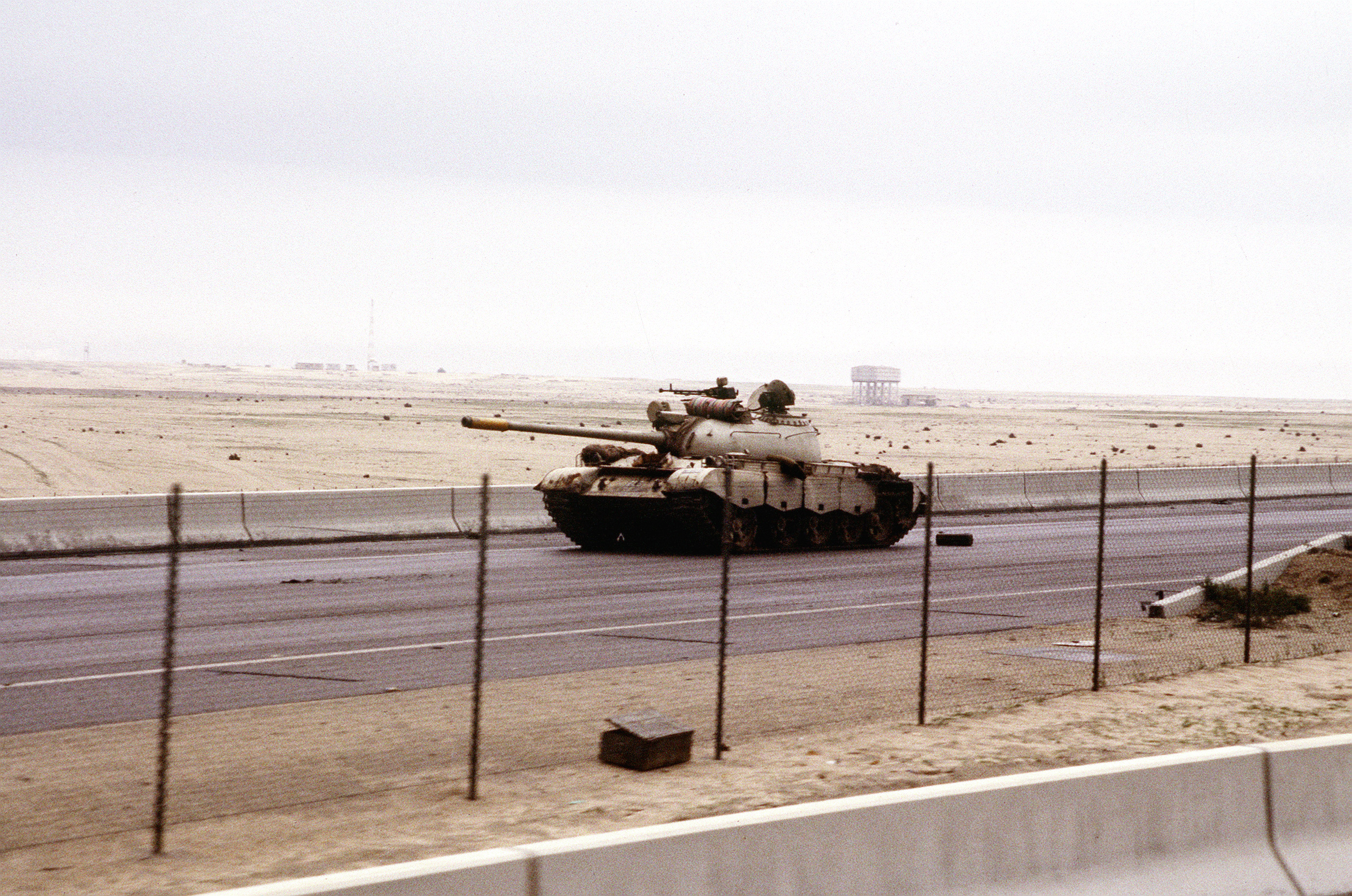
An abandoned Iraqi Type 69 main battle tank sits on the side on the road into Kuwait City during the ground phase of Operation Desert Storm.
Historical Overview
The Iraqi invasion of Kuwait, codenamed Project 17, began on 2 August 1990 and marked the beginning of the Gulf War. After defeating the State of Kuwait on 4 August 1990, Iraq went on to militarily occupy the country for the next seven months. The invasion was condemned internationally, and the United Nations Security Council (UNSC) adopted numerous resolutions urging Iraq to withdraw from Kuwaiti territory. The Iraqi military, however, continued to occupy Kuwait and defied all orders by the UNSC. After initially establishing the "Republic of Kuwait" as a puppet state, Iraq annexed the entire country on 28 August 1990; northern Kuwait became the Saddamiyat al-Mitla' District and was merged into the existing Basra Governorate, while southern Kuwait was carved out as the all-new Kuwait Governorate. By November 1990, the adoption of UNSC Resolution 678 officially issued Iraq an ultimatum to withdraw unconditionally by 15 January 1991 or else be removed by "all necessary means" from Kuwaiti territory. In anticipation of a war with Iraq, the UNSC authorized the assembly of an American-led military coalition.
Quick Facts
Iraq
- Commander: Saddam Hussein
- Strength: 100.000 Mann
- Casualties: gering
Kuwaiti Army
- Commander: Jaber Al-Sabah
- Strength: 16.000 Mann
- Casualties: ca. 1.000
Strategic Context
Trigger of the international crisis.
Related Literature


Der Eiserne Vorhang: Die Unterdrückung Osteuropas 1944–1956

Die Kubakrise 1962

Mao und seine verlorenen Kinder: Chinas Kulturrevolution

Maos Großer Hunger: Massenmord und Menschenexperiment in China
Historical Locations
Interactive map requires third-party cookie consent.