Battle of Ia Drang

Soldiers of the U.S. Amry 1/7th Cavalry disembark from a Bell UH-1D Huey at LZ X-Ray during the battle of Ia Drang.
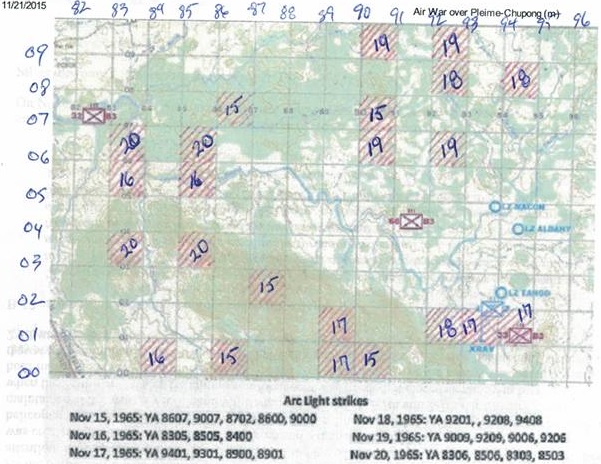
B-52 strike on NVA troop positions from Nov 15 to 19, 1965 in Chu Pong Ia Drang complex

Battle of Ia Drang Valley LZ X-Ray.

Cropped version of File:Bruce Crandall's UH-1D.jpg
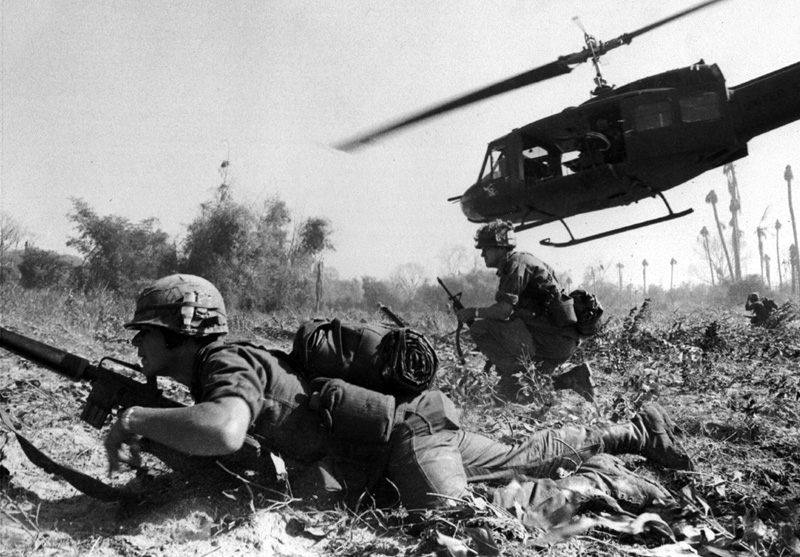
Combat operations at Ia Drang Valley, Vietnam, November 1965. Major Bruce P. Crandall's UH-1D helicopter climbs skyward after discharging a load of infantrymen on a search and destroy mission.

Cavalrymen of the 1st Cavalry Division (airmobile) in action during the battle of Ia Drang

Equipment taken from 1st Cavalry Division (Airmobile) casualties during Operation Long Reach near the Cambodian border NARA 111-CCV-374-CC32732

Le lieutenant-colonel Hal Moore lors de la bataille de Ia Drang en novembre 1965.

Helmets and field equipment taken from 1st Cavalry Division (Airmobile) casualties during Operation Long Reach near the Cambodian border NARA 111-CCV-374-CC32731

LZ X-RAY, Republic of Vietnam Terrain Board covers the immediate area around the LZ; two boards, each 36”x72”.
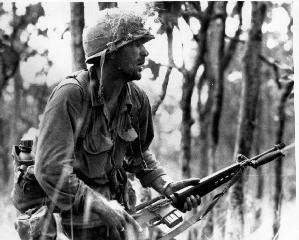
Rick Rescorla
Historical Overview
The Battle of Ia Drang was the first major battle between the United States Army and the People's Army of Vietnam (PAVN), as part of the Pleiku campaign conducted early in the Vietnam War, at the eastern foot of the Chu Pong Massif in the central highlands of Vietnam, in 1965. It is notable for being the first large scale helicopter air assault and also the first use of Boeing B-52 Stratofortress strategic bombers in a tactical support role. Ia Drang set the blueprint for the Vietnam War with the Americans relying on air mobility, artillery fire and close air support, while the PAVN neutralized that firepower by quickly engaging American forces at very close range.
Quick Facts
USA (7th Cavalry)
- Commander: Hal Moore
- Strength: 450 Mann
- Casualties: 234
N. Vietnam (PAVN)
- Commander: Chu Huy Man
- Strength: 2.000 Mann
- Casualties: ca. 800
Strategic Context
Validating the "Air Cavalry" concept.
Related Literature


Der Eiserne Vorhang: Die Unterdrückung Osteuropas 1944–1956

Die Kubakrise 1962

Mao und seine verlorenen Kinder: Chinas Kulturrevolution

Maos Großer Hunger: Massenmord und Menschenexperiment in China
Historical Locations
Exact location not recorded in historical records