Siege of Dubrovnik

Letak za poziv na predaju
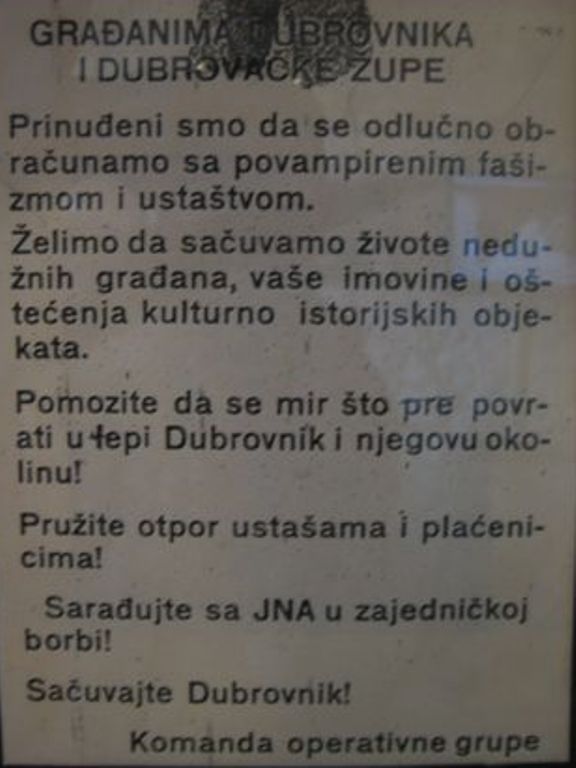
Letak JNA sa pozivom na pružanje otpora

minobacač velikosrpske vojske iz Domovinskog rata, Dubrovnik

prizor iz dubrovačkog Muzeja Domovinskog rata na Srđu

One of a set here

After the onslaught. A typical street scene. One of a set here

View of the Old Town of Dubrovnik from Fort Imperial

Typical street scene. One of a set here

Typical street scene. One of a set here

Typical street scene. One of a set here

People queue for water at a standpipe. One of a set here

Dogs of war... stray animals in Dubrovnik forage for whatever they can find. One of a set here
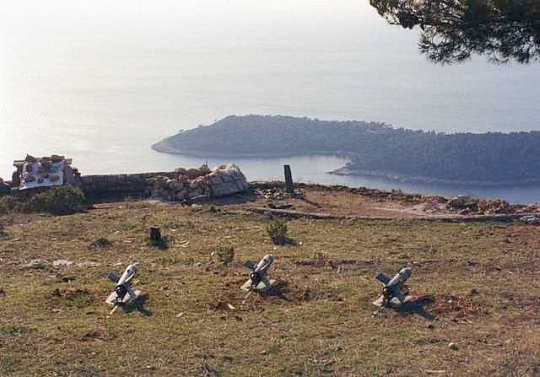
Rockets in a Serbian placement overlooking Dubrovnik and the Adriatic coast. One of a set here

Croatian soldier in Sustjepan, Dubrovnik

Preslik brojnog stanja obrane Dubrovnika

Collage of the 1991 siege of Dubrovnik (clockwise from the top): Rockets in a Serbian placement overlooking Dubrovnik and the Adriatic coast.Typical street scene during the war. After the onslaught.People queue for water at a standpipe. JNA soldiers checking papers at the coast.A typical street scene.

Srebreno, Croatia - hotel destroyed in 1991 year (HDR version)

Photograph of a publicly displayed picture in Dubrovnik, created by the city authorities.

Typical street scene. One of a set here
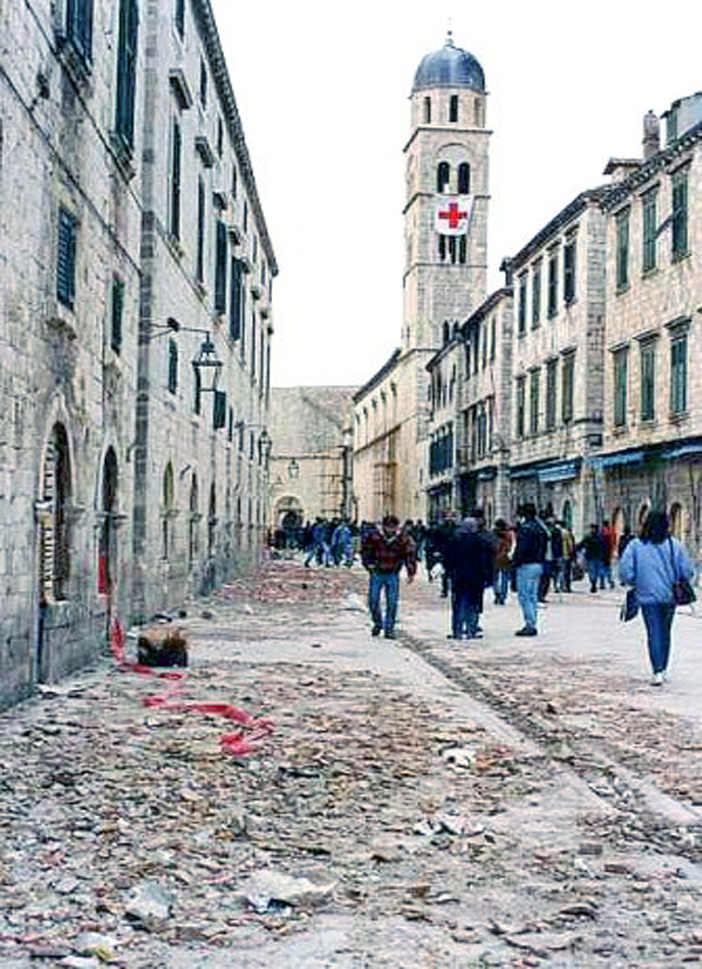
Typical street scene. One of a set here
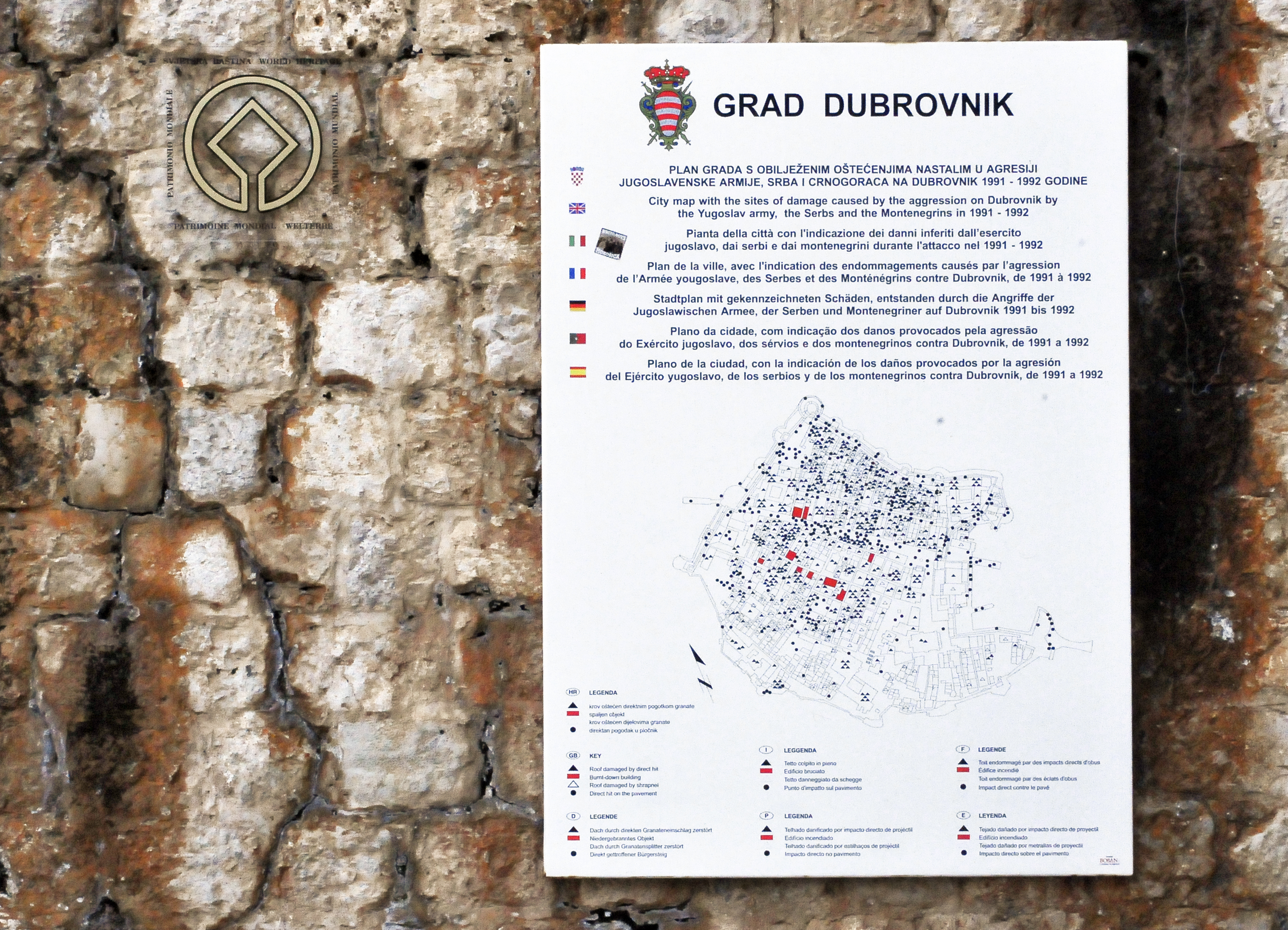
Explanatory poster of the damages suffered by the Old City during the 1991-1992 war. Dubrovnik (Dubrovnik-Neretva, Dalmatia, Croatia)

Photograph of a publicly displayed picture in Dubrovnik, created by the city authorities.

Hirlimann-dubrovnik-degats

Muzejski eksponat muzeja Domovinskog rata u Dubrovniku
poluotok Prevlaka

prizor iz dubrovačkog Muzeja Domovinskog rata na Srđu
Historical Overview
The siege of Dubrovnik was a military campaign fought between the Yugoslav People's Army (JNA) and Croatian forces defending the city of Dubrovnik and its surroundings during the Croatian War of Independence. The JNA started its advance on 1 October 1991, and by late October, it had captured virtually all the land between the Pelješac and Prevlaka peninsulas on the coast of the Adriatic Sea, with the exception of Dubrovnik itself. The siege was accompanied by a Yugoslav Navy blockade. The JNA's bombardment of Dubrovnik, including that of the Old Town—a UNESCO World Heritage Site—culminated on 6 December 1991. The bombardment provoked international condemnation, and became a public relations disaster for Serbia and Montenegro, contributing to their diplomatic and economic isolation, as well as the international recognition of Croatia's independence. In May 1992, the JNA retreated to Bosnia and Herzegovina, less than 1 kilometre from the coast in some places, and handed over its equipment to the newly formed Army of Republika Srpska (VRS). During this time, the Croatian Army (HV) attacked from the west and pushed back the JNA/VRS from the areas east of Dubrovnik, both in Croatia and in Bosnia and Herzegovina, and by the end of May linked up with the HV unit defending the city. Fighting between the HV and Yugoslav troops east of Dubrovnik gradually died down.
Quick Facts
Croatia
- Commander: Nojko Marinović
- Strength: 1000
- Casualties: 100
Serbs / JNA
- Commander: Pavle Strugar
- Strength: 10000
- Casualties: 160
Strategic Context
Isolating Dalmatia from the Croatian mainland.
Related Literature


Das Karfreitagsgefecht: Deutsche Soldaten im Feuer der Taliban | Was Soldaten der Bundeswehr in Afghanistan erlebt haben

Die Rückkehr des Krieges: Warum wir wieder lernen müssen, mit Krieg umzugehen

Leben und sterben lassen: Die letzten Tage der Bundeswehr in Afghanistan

Welt in Aufruhr: Die Ordnung der Mächte im 21. Jahrhundert
Historical Locations
Interactive map requires third-party cookie consent.