All Battles

Colmar Pocket

1945 Elsass Kesselschlacht

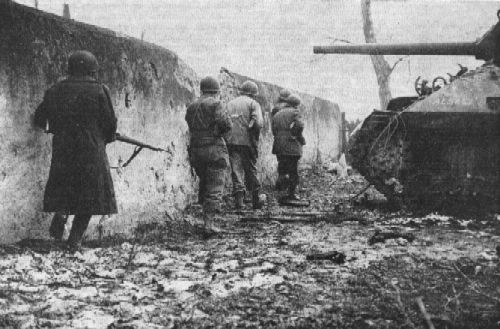
30th Inf. Regt., 3rd Div.

30th Inf. Regt., 3rd Div.

Author: Signal Corps Archive from Ireland and United StatesLicense:PD
Source
Monument in de Vredestuin bij Jebsheim, Elzas, Frankrijk

Monument in de Vredestuin bij Jebsheim, Elzas, Frankrijk

Author: Angel3 at Dutch Wikipedia (Original text: I.S. Mensert)License:CC-BY-SA-4.0
Source
Company D, 83rd Chemical Bn, in Zellenberg. targeting Germans in nearby Mittelwihr with their 4.2 inch mortars, SC 197578.

Company D, 83rd Chemical Bn, in Zellenberg. targeting Germans in nearby Mittelwihr with their 4.2 inch mortars, SC 197578.

Author: Unknown authorUnknown authorLicense:PD
Source
General notes:  According to Gaujac, P., La réduction de la poche de Colmar, janvier-février 1945 (in French), Armes Militaria magazine, No. 141 (1997), p. 31, the Moroccans are from the 1st Tirailleurs Regiment while the American may belong to the 999th Field Artillery Battalion.

General notes: According to Gaujac, P., La réduction de la poche de Colmar, janvier-février 1945 (in French), Armes Militaria magazine, No. 141 (1997), p. 31, the Moroccans are from the 1st Tirailleurs Regiment while the American may belong to the 999th Field Artillery Battalion.

Author: Unknown authorUnknown author or not providedLicense:PD
Source
German prisoners taken in drive south of Colmar carry a wounded American with them as they are marched out of the battle area, 4 February, 1945. The American soldier is Pvt. Charles P. Deathrage, 225 Madison St., Jefferson, Mo.; Unit censored, U.S. National Archives

German prisoners taken in drive south of Colmar carry a wounded American with them as they are marched out of the battle area, 4 February, 1945. The American soldier is Pvt. Charles P. Deathrage, 225 Madison St., Jefferson, Mo.; Unit censored, U.S. National Archives

Author: U.S. Signal CorpsLicense:PD
Source
German prisoners taken in drive south of Colmar carry a wounded American with them as they are marched out of the battle area, 4 February, 1945. The American soldier is Pvt. Charles P. Deathrage, 225 Madison St., Jefferson, Mo.; Unit censored, U.S. National Archives

German prisoners taken in drive south of Colmar carry a wounded American with them as they are marched out of the battle area, 4 February, 1945. The American soldier is Pvt. Charles P. Deathrage, 225 Madison St., Jefferson, Mo.; Unit censored, U.S. National Archives

Author: U.S. Signal CorpsLicense:PD
Source
Map of the Colmar Pocket.
W. B. Wilson 22:31, 15 March 2007 (UTC)

Source for image is http://www.army.mil/cmh-pg/brochures/ardennes/aral.htm (U.S. Army publication in the public domain) W. B. Wilson 02:53, 14 May 2007 (UTC)

Map of the Colmar Pocket. W. B. Wilson 22:31, 15 March 2007 (UTC) Source for image is http://www.army.mil/cmh-pg/brochures/ardennes/aral.htm (U.S. Army publication in the public domain) W. B. Wilson 02:53, 14 May 2007 (UTC)

Author: Transferred from en.wikipedia to Commons. Transfer was stated to be made by User:Une Ame.License:PD
Source
Carri armati e truppe francesi durante la battaglia di Colmar nel febbraio 1945

Carri armati e truppe francesi durante la battaglia di Colmar nel febbraio 1945

Author: Unknown authorUnknown authorLicense:PD
Source
Soultz est libéré le 4 février 1945

Soultz est libéré le 4 février 1945
Author: Soultz68License:CC-BY-SA-4.0
Source
Combats de la Libération de l’Alsace à Ostheim, janvier 1945.
Combats de la Libération de l’Alsace à Ostheim, janvier 1945.

Author: photographe inconnuLicense:PD
Source
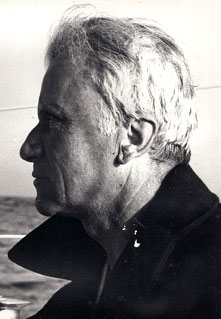
René de Salins

René de Salins

Author: CiviousLicense:CC-BY-SA-4.0
Source
A light tank of the 12th Armored Division in Rouffach, III-SC 200083.S

A light tank of the 12th Armored Division in Rouffach, III-SC 200083.S

Author: NewellLicense:PD
Source
3rd Infantry Division.

3rd Infantry Division.

Author: Signal Corps Archive from Ireland and United StatesLicense:PD
Source
Five men of an infantry squad clean up, write letters, and relax at a command post in the Neuf Brisach area, France. During the night, the full squad occupies a position along the river, and during the day, half of each squad comes in for a rest. This dugout was constructed by the Germans. 30th Infantry Regiment, 3rd Infantry Division.

Five men of an infantry squad clean up, write letters, and relax at a command post in the Neuf Brisach area, France. During the night, the full squad occupies a position along the river, and during the day, half of each squad comes in for a rest. This dugout was constructed by the Germans. 30th Infantry Regiment, 3rd Infantry Division.

Author: Signal Corps Archive from Ireland and United StatesLicense:PD
Source

Historical Overview

Destruction of the last German bridgehead west of the Rhine.

Quick Facts

Outcome:Allied victory.

USA & France

  • Commander: Jean de Lattre
  • Strength: ca. 110.000
  • Casualties: ca. 14.000

German Army

  • Commander: Siegfried Rasp
  • Strength: ca. 50.000
  • Casualties: ca. 20.000

Strategic Context

Liberating Alsace and securing the southern flank.

Related Literature

Cover of Berlin: The Downfall 1945

Berlin: The Downfall 1945

Antony Beevor

Non-fictionWW2WW2 Eastern Front

English
World Wars Era
Cover of Gulag: A History

Gulag: A History

Non-fiction20th CenturySoviet Union

English
World Wars Era
Cover of Red Famine: Stalin's War on Ukraine

Red Famine: Stalin's War on Ukraine

Non-fiction20th CenturySoviet Union

English
World Wars Era
Cover of Stalingrad

Stalingrad

Antony Beevor

WW2ReportWW2 Eastern Front

English
World Wars Era
Cover of The Gulag Archipelago

The Gulag Archipelago

Non-fiction20th CenturySoviet Union

English
World Wars Era
Cover of Der Gulag

Der Gulag

Non-fiction20th CenturySoviet Union

German
World Wars Era
Cover of Die Schlacht um Berlin und das Ende des Dritten Reichs 1945

Die Schlacht um Berlin und das Ende des Dritten Reichs 1945

Non-fictionWW2WW2 Eastern Front

German
World Wars Era
Cover of Hunde, wollt ihr ewig leben: ein Stalingrad-Roman

Hunde, wollt ihr ewig leben: ein Stalingrad-Roman

WW2WW2 Eastern FrontHistorical Noval

German
World Wars Era
Cover of Roter Hunger: Stalins Krieg gegen die Ukraine

Roter Hunger: Stalins Krieg gegen die Ukraine

Non-fiction20th CenturySoviet Union

German
World Wars Era
Cover of So weit die Füße tragen

So weit die Füße tragen

20th CenturySoviet UnionGulag

German
World Wars Era
Cover of Söldner ohne Sold: Die deutschen Freikorps 1918–1923

Söldner ohne Sold: Die deutschen Freikorps 1918–1923

Report20th CenturyGerman History

German
World Wars Era
Cover of Vom Massensturm zur Stoßtrupptaktik: Die deutsche Landkriegtaktik im Spiegel von Dienstvorschriften und Publizistik 1906 bis 1918

Vom Massensturm zur Stoßtrupptaktik: Die deutsche Landkriegtaktik im Spiegel von Dienstvorschriften und Publizistik 1906 bis 1918

Non-fiction20th CenturyGerman History

German
World Wars Era
Cover of Wir Wehr-Wölfe: Erinnerungen eines Freikorps-Führers

Wir Wehr-Wölfe: Erinnerungen eines Freikorps-Führers

Report20th CenturyGerman History

German
World Wars Era
Cover of Zweiter Weltkrieg Erlebnisbericht Apokalypse Stalingrad: Untergang der 6. Armee 1942-1943

Zweiter Weltkrieg Erlebnisbericht Apokalypse Stalingrad: Untergang der 6. Armee 1942-1943

Walter Mönch

Non-fictionWW2WW2 Eastern Front

German
World Wars Era
Rise And Fall Of The Third Reich

Rise And Fall Of The Third Reich

William Shirer

20th CenturyGerman HistoryNational Socialism

World Wars Era

Historical Locations

Interactive map requires third-party cookie consent.