Chemin des Dames

Map of the Western Front, 1917. Battle of the Aisne 16 April 1917. Green circel; Guignicourt

Map of the Western Front, 1917. Battle of the Aisne 16 April 1917.

Foto "Meine Kriegserinnerungen" 1914 - 1918
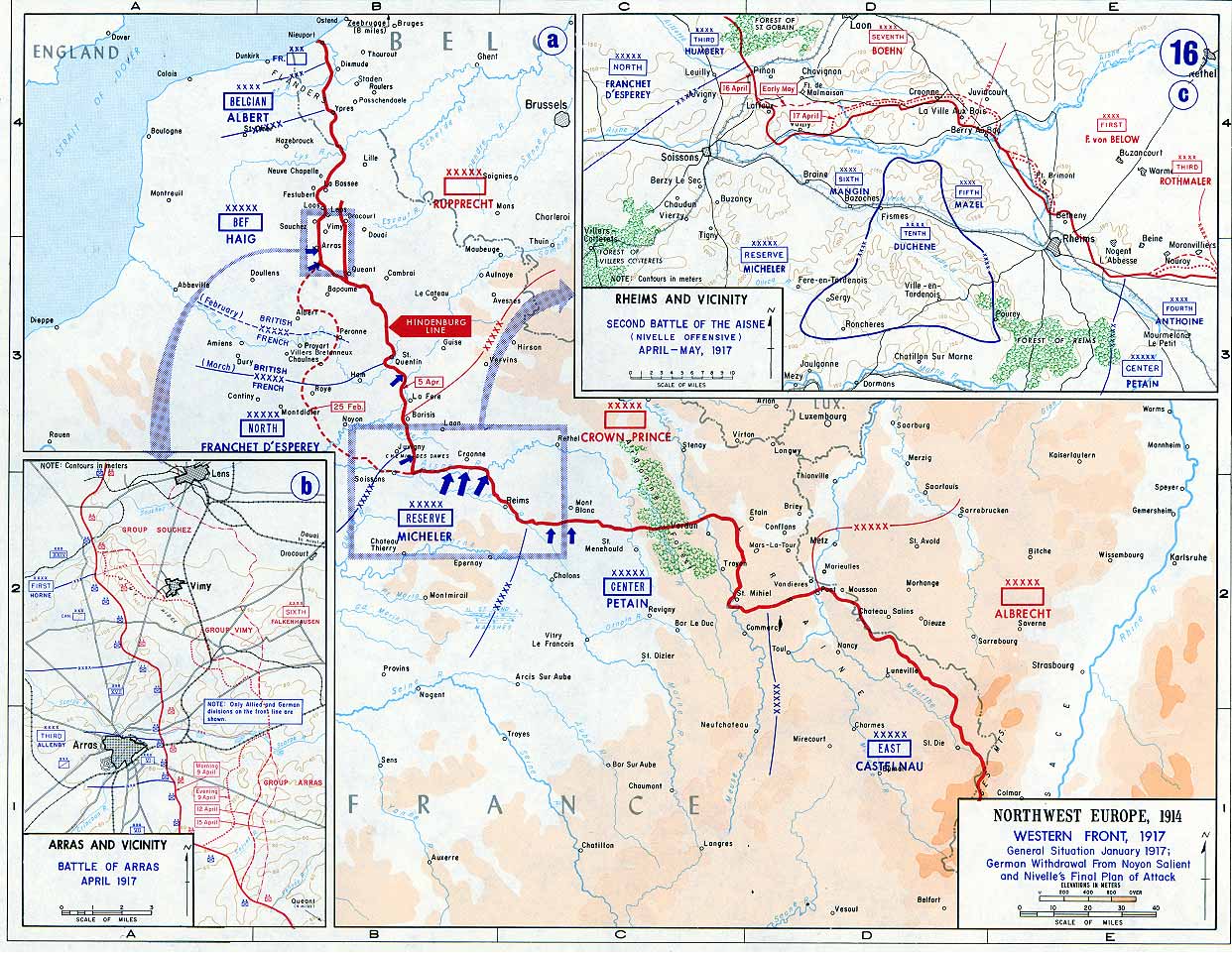
Map of the Western Front, 1917. The red line marks the front as of 5 April 1917. The Siegfriedstellung or Hindenburg Line, only ran from Arras to Laffaux (shown in insert) on the river Aisne - essentially the portion to the east of the dotted red line marking the 25 February front.

French charge in the Chemin des Dames

Three views of a French attack on Craonne in 1917, in the village sector Corbeny. The text below, subject to censorship and propaganda speaks of French victory. Photographs published by the French weekly Le Miroir June 10, 1917.

Abris boches devenus abris Français (Chemin des Dames). Talouen, Leroux, Colin

Map of Chavonne defences, 1917

Map of the Chemin des Dames and Champagne, 1917

Chemin des Dames terrain

Map of Craonne and the eastern Chemin des Dames, 1917

Destruction on the Western Front, 1914-1918 Ruined village of Craonne, 7 May 1917. same photograph on imagesdefense.gouv.fr

Ferme du Godat : la première vague d'assaut, attaque du 16 avril 1917.

Ferme du Godat : la sortie d'assaut, 16 avril 1917.

Ferme du Godat : le terrain où progressent les troupes, attaque du 16 avril 1917.
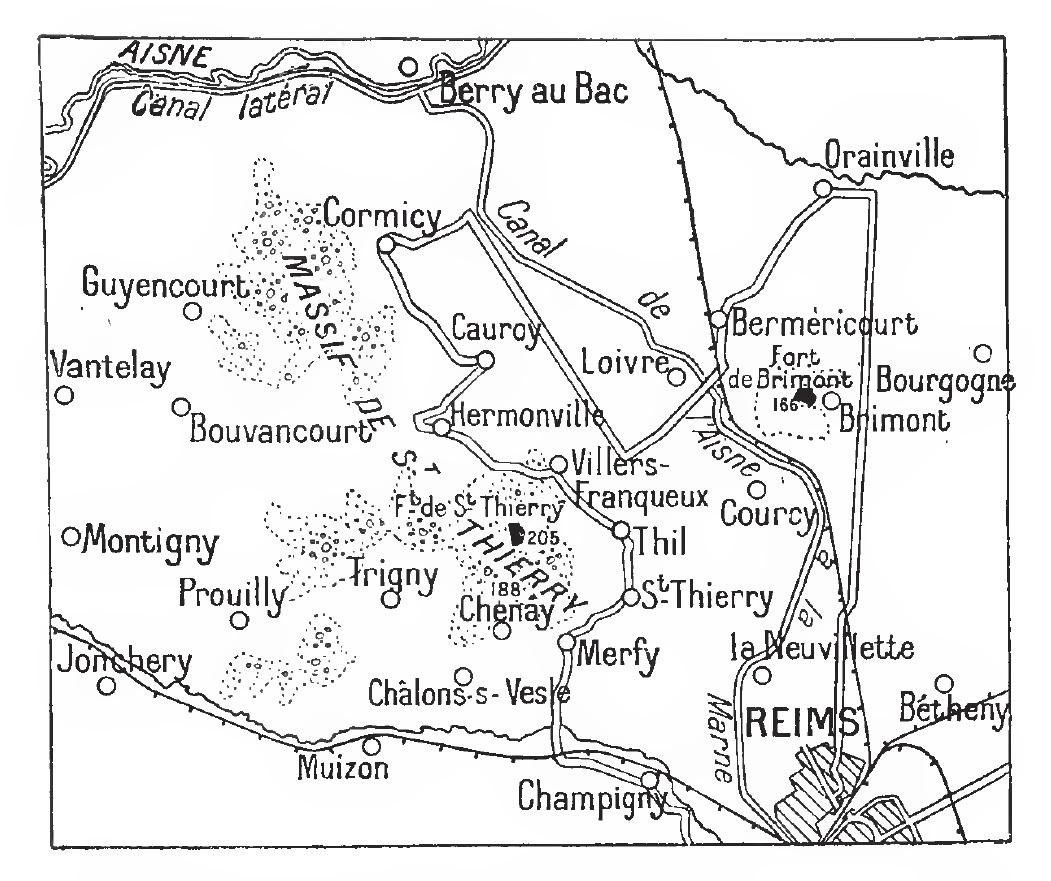
Aisne front 1917

Air photograph of Fort de la Malmaison, 1917

French attack on the German lines at Chemin-des-Dames, which had been destroyed by six days of barrage, on October 23, 1917

French gains on the Aisne, April-May 1917

Aquarelle "Avion abattu près de Cormicy, Aisne (17 avril 1917)" Henri Antoine, le grand oncle du contributeur, est nancéien. Lorsque la guerre est déclarée, il s’engage, tout jeune, comme volontaire. Il semble avoir fréquenté l'école des Beaux-arts de Nancy ; le nom d'un architecte enseignant figure dans un de ces carnets de guerre. Il semble avoir été versé dans l'infanterie au début de la guerre puis intégré à l'artillerie ; il appartiendra au 111e et au 130e régiment d’artillerie lourde. De 1914 à 1918, au grès des déplacements de son régiment, il est présent sur l'ensemble du front : Somme, Oise, Champagne, Aisne, Verdun, Picardie, Haute-Alsace, Meuse, Marne, Meurthe-et-Moselle. Dans trois carnets, il prend des notes et dessine au crayon et à l’aquarelle ce qu’il voit : tranchées, champs de bataille, villages, pièces d'artillerie, chars, avions. Ses croquis sont saisissants de réalisme et sont très souvent légendés et datés. Après guerre, Henri Antoine expose plusieurs aquarelles lors de l’exposition « La guerre vue par les artistes anciens combattants lorrains » tenue au Musée des Beaux-arts de Nancy à l’occasion du vingtième anniversaire de l’armistice. Il exercera par la suite la profession d’architecte.

Kriegerdenkmal bei der Marienkirche (Ruhstorf an der Rott)

Map of La Coulotte area, 14 April 1917

Le Régiment monte à l'attaque du Chemin des Dames 17 avril 1917.

Le Pays de France No 137. 31 Mai 1917

Map of Loivre and Bermericourt, Aisne, 1917
Historical Overview
The Second Battle of the Aisne was the main part of the Nivelle Offensive, a Franco-British attempt to inflict a decisive defeat on the German armies in France. The Entente strategy was to conduct offensives from north to south, beginning with an attack by the British Expeditionary Force (BEF) then the main attack by two French army groups on the Aisne. General Robert Nivelle planned the offensive in December 1916, after he replaced Joseph Joffre as Commander-in-Chief of the French Army.
Quick Facts
German Empire
- Commander: Erich Ludendorff
- Strength: ca. 500.000
- Casualties: ca. 160.000
France
- Commander: Robert Nivelle
- Strength: ca. 850.000
- Casualties: ca. 187.000
Strategic Context
General Nivelle's attempt at a swift breakthrough.
Related Literature


Der Gulag

Die Schlacht um Berlin und das Ende des Dritten Reichs 1945

Hunde, wollt ihr ewig leben: ein Stalingrad-Roman

Roter Hunger: Stalins Krieg gegen die Ukraine

So weit die Füße tragen

Söldner ohne Sold: Die deutschen Freikorps 1918–1923

Vom Massensturm zur Stoßtrupptaktik: Die deutsche Landkriegtaktik im Spiegel von Dienstvorschriften und Publizistik 1906 bis 1918

Wir Wehr-Wölfe: Erinnerungen eines Freikorps-Führers

Zweiter Weltkrieg Erlebnisbericht Apokalypse Stalingrad: Untergang der 6. Armee 1942-1943
Walter Mönch
Rise And Fall Of The Third Reich
William Shirer
Historical Locations
Interactive map requires third-party cookie consent.