Unternehmen Barbarossa
Historische Übersicht
Mit dem Angriff des NS-Regimes auf die Sowjetunion begann das „Unternehmen Barbarossa“, der größte militärische Feldzug der Menschheitsgeschichte. Das primäre strategische Ziel war die vollständige Zerschlagung der UdSSR als kontinentale Großmacht. Die Planungen sahen vor, die Rote Armee nahe der Grenze zu vernichten und bis zu einer Linie von der Wolga bis nach Archangelsk vorzurücken. Dort sollte eine dauerhafte Abwehrposition aufgebaut werden, um die Sowjets aus Europa herauszuhalten und die eroberten Ressourcen als Basis für spätere globale Operationen zu nutzen.

Eine Pionierbrücke über die Düna

Armed with heavy shovels, a hastily assembled work force of Moscow women and elderly men gouge a huge tank trap out of the earth to halt German Panzers advancing on the Russian capital. In the feverish effort to save the city, more than 100,000 citizens labored from mid-October until late November digging ditches and building other obstructions. When completed, the ditches extended more than 100 miles. Source: Scanned from "Russia Besieged" (ISBN 705405273), page 165 Image originally from the United States Information Agency

Barbarossa Decree , 2nd page.

Barbarossa Decree , 3rd page.

1st Panzer Division column on the move in Russia, 1941

I have no information on this photo so all that information is educated guesswork Clues that makes me think it’s Operation Barbarossa: Photo was likely taken in summer based on the background Most Barbarossa photos feature wide open grassy fields like this, makes me also think he could be part of Army Group Centre The soldier is very characteristically 1941 dressed - no green collar, decal on helmet The atmosphere doesn’t really have the same nightmarish hell on earth feel that Eastern Front photos gradually gained over the years Colorized by me

Eine Pionierbrücke über die Düna

Photograph is part of an album I recently purchased belonging to the Gefreiter in this photograph. From other photos in the album I’ve been able to figure out his rank and most likely his regiment. Photograph shows the owner of the album, fiddling with something. It appears they’re taking a break from digging trenches in a field. In the trench you can see 2 shovels together with a captured Soviet SVT-40. On the trench edges there’s three helmets and a tunic probably belonging to our Gefreiter. On the right of him you can see his mess kit, perhaps a lunch break.
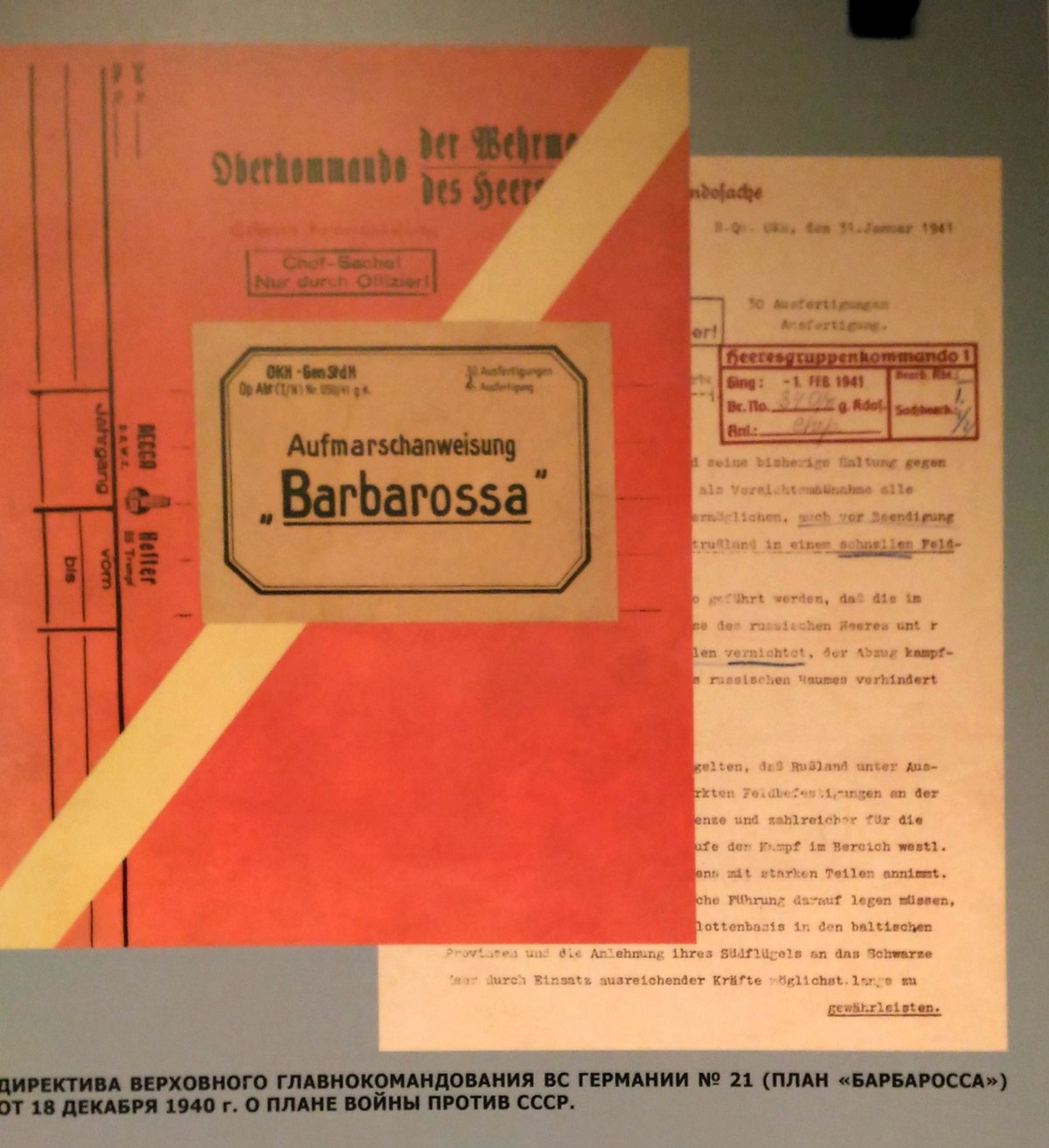
Original of the german 'Aufmarschanweisung "Barbarossa"' (troop deployment instruction Barbarossa) in the russian Central Armed Forces Museum in Moscow, time stamped February 1, 1941.

Barbarossa Decree (C-50), first page.
![For documentary purposes the German Federal Archive often retained the original image captions, which may be erroneous, biased, obsolete or politically extreme. Prop. Kp. 501 Film-Nr. 3362/13
Ostfront , bei Molwoitzi 8.12.41
Verlegewagen auf Panjeschlitten
An der Ostfronthat sich auch die Nachrichtentruppe auf den Winter umgestellt und den kleinen Verlegewagen für das Feldfernkabel auf Panjeschlitten "montiert".
Bildberichter: Fenske
31. Dezember 1941 [Herausgabedatum]
11071-41
[Scherl Bilderdienst]](https://upload.wikimedia.org/wikipedia/commons/e/e6/Bundesarchiv_Bild_101I-002-3362-13%2C_Russland%2C_Feldkabel_mit_Schlitten_verlegt.jpg)
For documentary purposes the German Federal Archive often retained the original image captions, which may be erroneous, biased, obsolete or politically extreme. Prop. Kp. 501 Film-Nr. 3362/13 Ostfront , bei Molwoitzi 8.12.41 Verlegewagen auf Panjeschlitten An der Ostfronthat sich auch die Nachrichtentruppe auf den Winter umgestellt und den kleinen Verlegewagen für das Feldfernkabel auf Panjeschlitten "montiert". Bildberichter: Fenske 31. Dezember 1941 [Herausgabedatum] 11071-41 [Scherl Bilderdienst]

No description
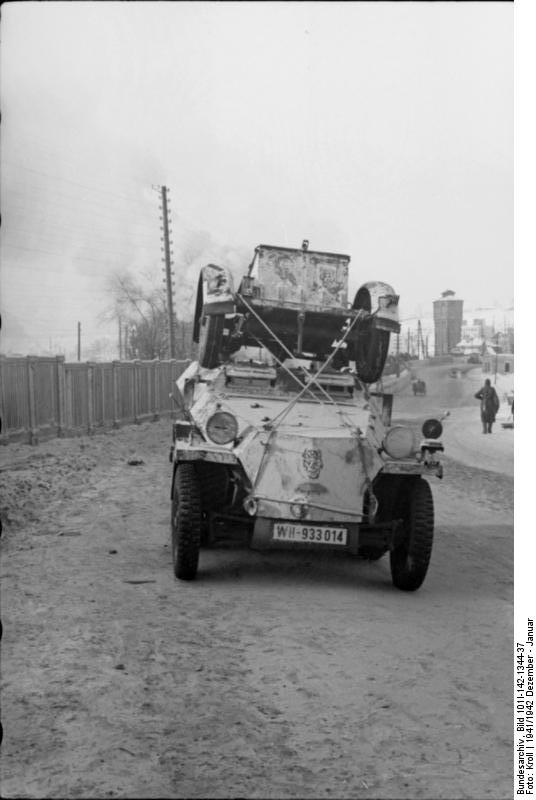
No description

No description

No description

No description

No description

No description
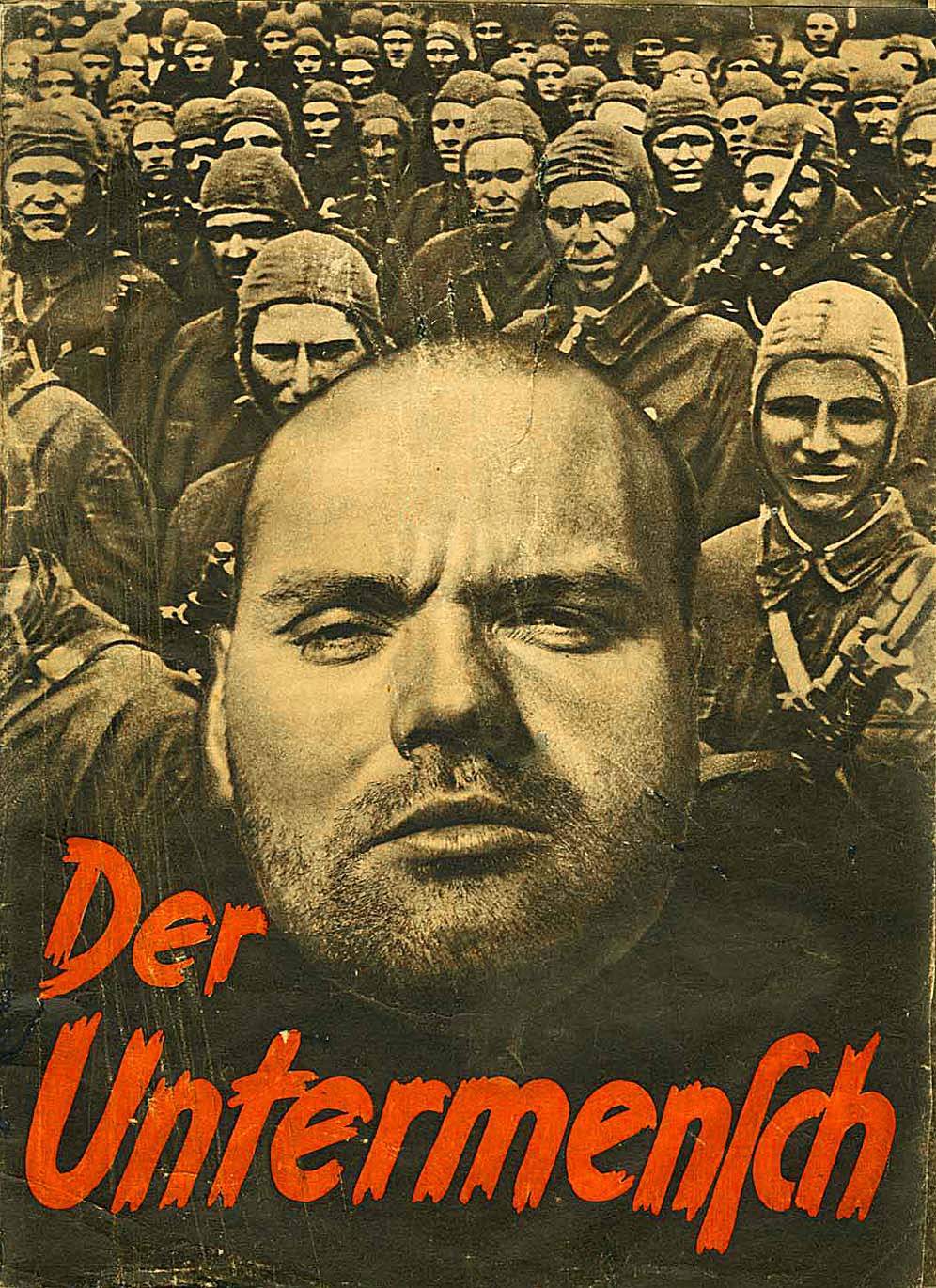
Cover of the Nazi propaganda brochure "Der Untermensch" (The Subhuman)

"German-Russian Soldier's Dictionary", belonging to a Norwegian SS volunteer. Center for Studies of the Holocaust and Religious Minorities, Norway.

Bilder meines Großvaters, wären der Jahre 1939 bis 1943, Beschreibungen folgen später
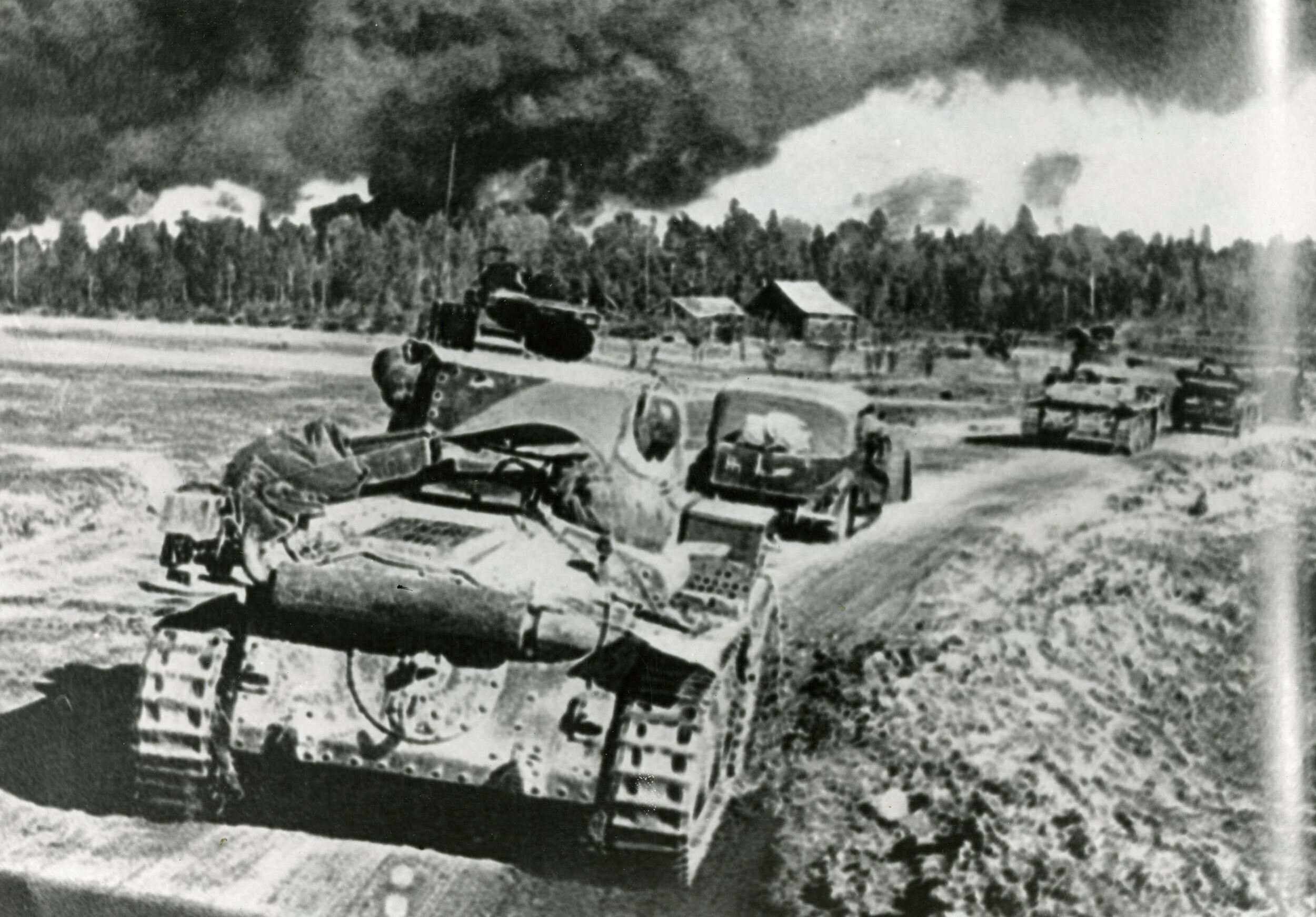
Duitse tanks rukken op tijdens de Kesselschlacht bij Wjasma.
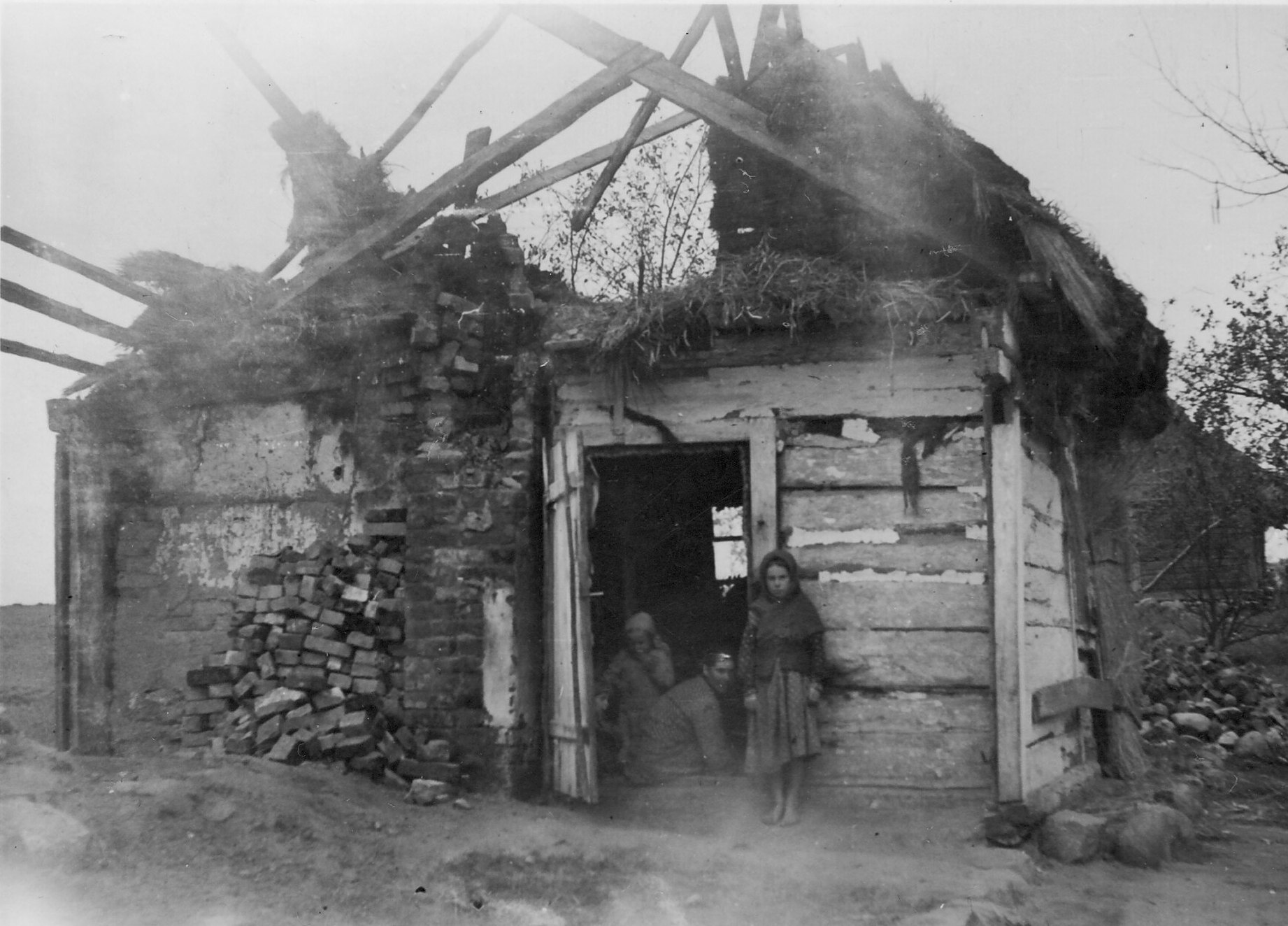
Eastern Poland farmhouse destroyed during German invasion in 1941. Territory of todays Belarus or Ukraine.

Bilder meines Großvaters, wären der Jahre 1939 bis 1943, Beschreibungen folgen später

Bilder meines Großvaters, wären der Jahre 1939 bis 1943, Beschreibungen folgen später

Bilder meines Großvaters, wären der Jahre 1939 bis 1943, Beschreibungen folgen später