Beginn der Berliner Luftbrücke
Historische Übersicht
Als Reaktion auf die sowjetische Blockade der Westsektoren Berlins begann am 26. Juni 1948 die Berliner Luftbrücke. Das primäre strategische Ziel der Westalliierten unter Führung der USA war es, die vollständige Abriegelung West-Berlins durch die Sowjets zu brechen und die rund zwei Millionen Einwohner aus der Luft mit Lebensmitteln, Kohle und Medikamenten zu versorgen. Ohne eine militärische Eskalation zu riskieren, sollte so die Position der Westmächte in der geteilten Stadt behauptet und ein erzwungener Abzug verhindert werden. Das logistische Großprojekt zwang die Sowjetunion im Mai 1949 zur Aufgabe der Blockade.

The Berlin Airlift 1948 - 1949 A civil registered Avro Tudor V, G-AKBY, of Airflight Ltd (owned by the wartime commander of No 8 Group RAF, Air Vice Marshal Donald Bennett) refuels at Wunstorf aerodrome during the Berlin Airlift, November 1948. Tudor V aircraft were used as fuel tankers during the Airlift.

The Berlin Airlift 1948 - 1949 A civil registered Avro Tudor C5, G-AKBZ 'Star Falcon', of British South American Airways at Wunstorf aerodrome during the Berlin Airlift, 1948. This aircraft was used as a fuel freighter during the Airlift. In the background can be seen Handley Page Halifax, G-ALEF 'Red Eagle' of the Eagle Aviation company.

The Berlin Airlift 1948 - 1949 Air Vice Marshal Donald Bennett, (wartime commander of No 8 Group RAF, and owner of the civil aviation company Airflight Ltd),and others chat next to one of his Avro Tudor II aircraft at Wunstorf aerodrome during the Berlin Airlift, November 1948.

The Berlin Airlift 1948 - 1949 A civil registered Avro Tudor C5, G-AKBZ 'Star Falcon', of British South American Airways at Wunstorf aerodrome during the Berlin Airlift, 1948. This aircraft was used as a fuel freighter during the Airlift.
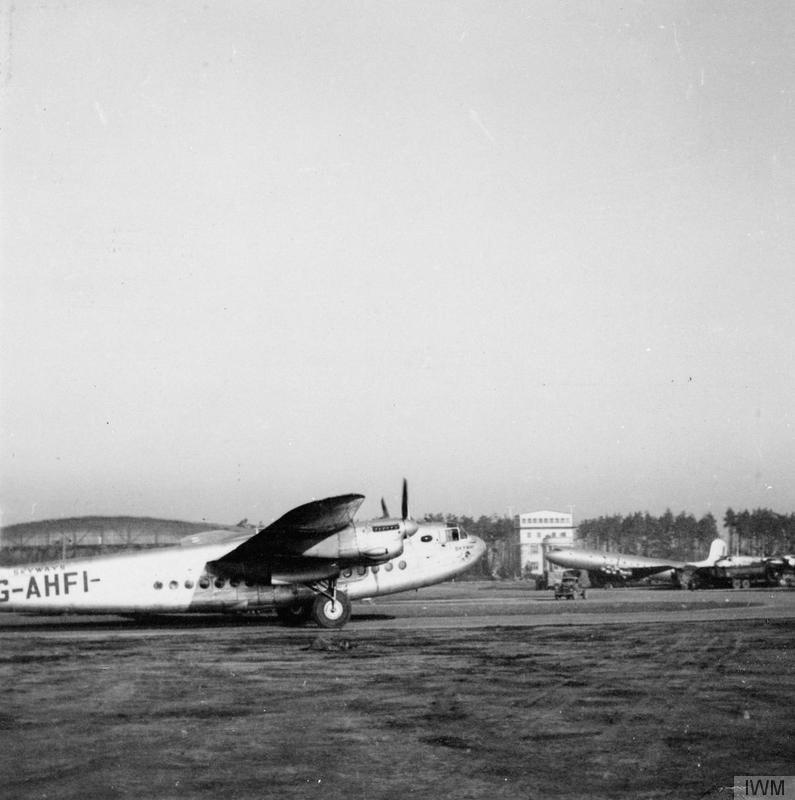
The Berlin Airlift 1948 - 1949 A civil registered Avro York C. aircraft, G-AHFI of the Skyways Company taxxiing at Wunstorf aerodrome during the Berlin Airlift, November 1948. On 15 March 1949, this aircraft crashed while attempting to land at RAF Gatow.
Berlin Airlift 40th Anniversary Airforce Now 1983

During the Berlin Airlift in 1948, U.S., British, and French planes delivered food and other goods to Berlin, which was blockaded by Soviet forces. In this photo, German children stand on a hillside and watch a U.S. plane fly overhead.
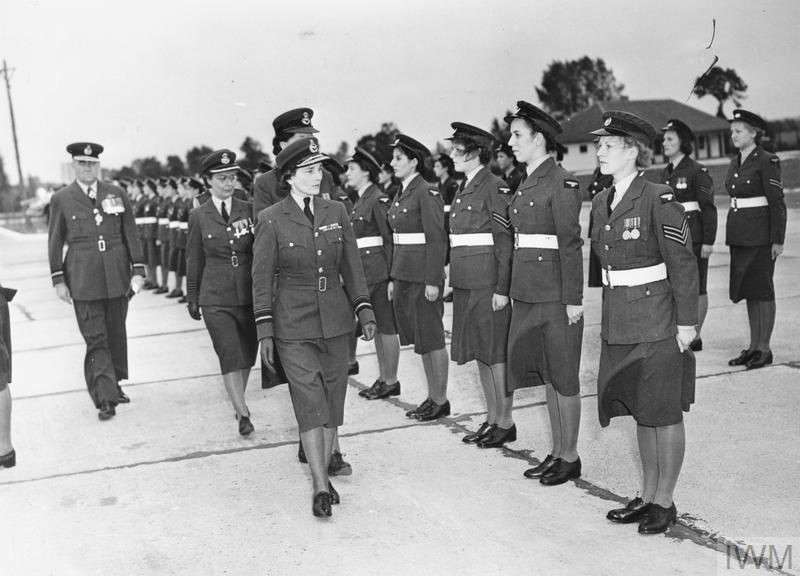
1948 berlin airlift - IWM says HRH The Duchess of Gloucester inspects the WRAF at Gatow. behind her are Commander in Chief BAFO, Sir Thomas Williams, WRAF Command Staff Officer, Group Officer Conan Doyle and Air Commandant Felicity Hanbury (later Dame Felicity Peake). 1948 exact day no known

After loading of the C-54 air transport plane with sacks of flour by displaced Polish persons, German civilian personnel, and crewmembers of the plane prepares to take off from Rhine Main Airfield, Germany for Templehof Airbase in Berlin. This C-54 arrived in Germany from Alaska to assist in "Operation Vittles" (otherwise known as the Berlin Airlift June 24, 1948-May 12, 1949) the carrying of food to the blockaded city of Berlin. S/SSgt Robert Zimmerman of the 54th troop carrier squadron assists in the airlift of food to Berlin, Germany on July 14, 1948. Photo courtesy of National Archives and Records Administration.

Berlin youngsters, who live near the Tempelhof Air Force Base, where the U. S. Air Force transports planes unload their airlift supplies, play at a game called "Luftbucks" (air bridge). These children of the junior airlift task force use model American planes, which are sold, in German toyshops throughout the western sector of Berlin in 1948. Photo courtesy of National Archives and Records Administration.

307th Bombardment Group Boeing B-29A-75-BN Superfortress 44-62328 SAC 8th Air Force, at RAF Lakenheath, England during the Berlin Airlift, 1948

60th Troop Carrier Group C-54 Skymasters during the Berlin Airlift, 1948

U.S. Navy R5D Skymasters at Templehof Airfield during the Berlin Airlift

69269 AC. Aerial view of Tempelhof Air Force Base, Berlin, Germany.

C-47 aircraft parked in front of the terminal at Tempelhof Central Airport during the Berlin Airlift
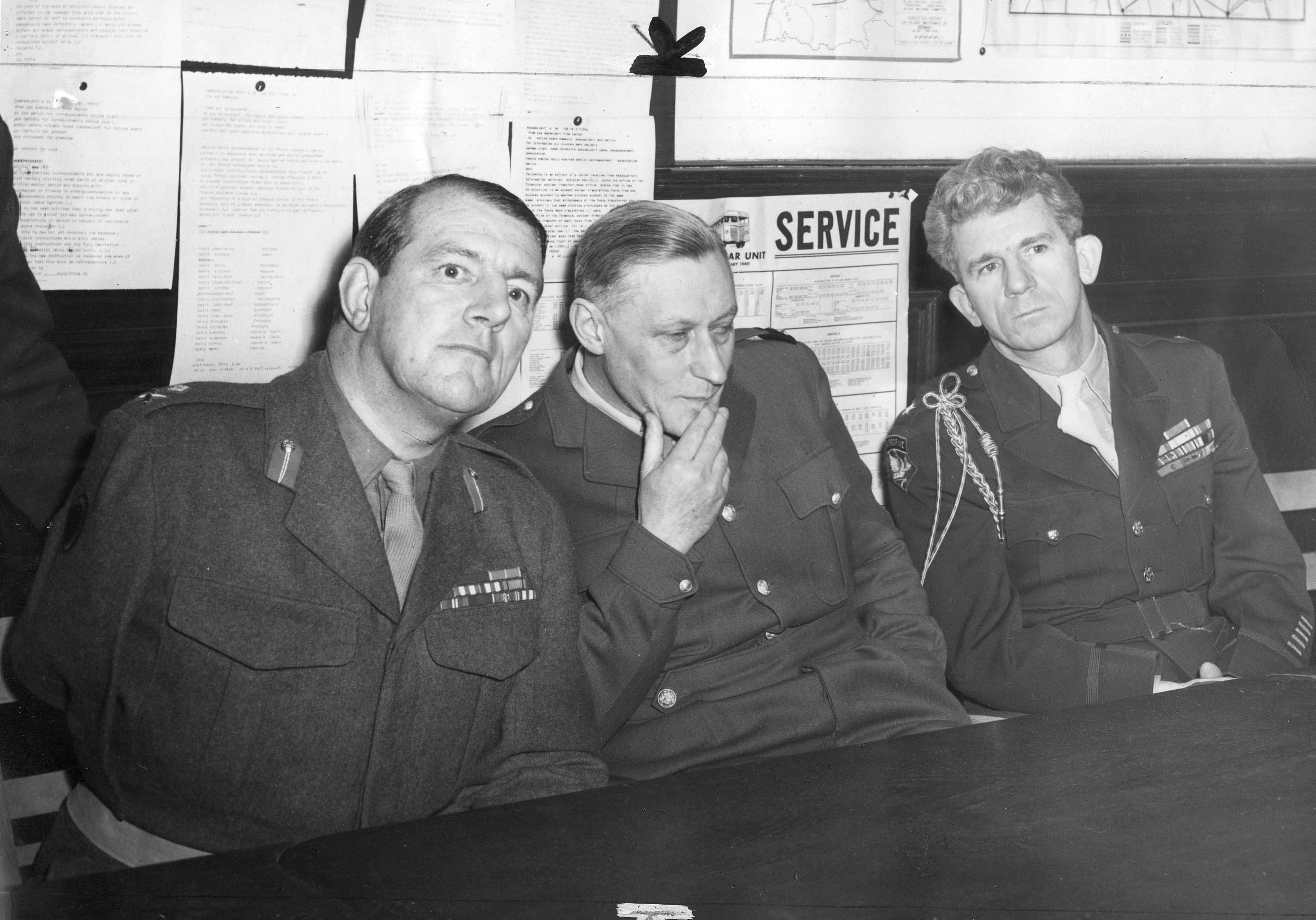
Group photo with British Commandant in Berlin Sir Geoffrey Bourne, French commandant in Berlin Jean Ganeval and American commandant in Berlin Frank L. Howley at the occasion of introduction of the Westmark in West-Berlin Der Telegraf 1949

The Berlin Airlift 1948 - 1949 A civil registered Avro Tudor II, G-AGRY, of Airflight Ltd (owned by the wartime commander of No 8 Group RAF, Air Vice Marshal Donald Bennett), taxiing at Wunstorf aerodrome during the Berlin Airlift, November 1948.

Berlin Airlift Memorial at the entrance of Lucius D. Clay Kaserne in Wiesbaden
![On September 30 1949, the Berlin Airlift came to an end.
The Airlift started in June 1948 after the Soviet Union blocked all ground traffic into West Berlin which was located entirely within the Russian zone of occupation in Germany. Over the next 15 months over 250,000 flights transported over 2 million tonnes of supplies. The Airlift was predominantly supported by the United States Airforce, alongside support from British, Australian, Canadian, South African and New Zealand airforces. Even though the Soviet blockade ended in May 1949 flights continued until September in order to stockpile essential supplies.
According to the image shown here, from a New Zealand Defence Force file titled Intelligence and Appreciations - Germany - Berlin Airlift, three New Zealand planes were involved in the airlift in July 1949. The letter, from the British government, states that New Zealand support for the airlift was required until early September 1949. Archives New Zealand has two other files on the Berlin Airlift and the use of New Zealand forces which may include details on the specific planes used:
archway.archives.govt.nz/ViewFullItem.do?code=20218944 - Pay and Allowances - RNZAF [Royal New Zealand Air Force] - Berlin Air Lift (R20218944)
archway.archives.govt.nz/ViewFullItem.do?code=23566732 - Operations - Berlin Airlift (R23566732)
File Reference for Image -
ABFK 19754 W5767 55 32/4/3 part 1 Intelligence And Appreciations - Germany - Berlin Airlift (R23447284) - archway.archives.govt.nz/ViewFullItem.do?code=23447284
All three files noted above are open access and can be seen in the Wellington Reading Room.
Material from Archives New Zealand](https://upload.wikimedia.org/wikipedia/commons/e/e9/Berlin_Airlift_Ends_1949_%2815169775589%29.jpg)
On September 30 1949, the Berlin Airlift came to an end. The Airlift started in June 1948 after the Soviet Union blocked all ground traffic into West Berlin which was located entirely within the Russian zone of occupation in Germany. Over the next 15 months over 250,000 flights transported over 2 million tonnes of supplies. The Airlift was predominantly supported by the United States Airforce, alongside support from British, Australian, Canadian, South African and New Zealand airforces. Even though the Soviet blockade ended in May 1949 flights continued until September in order to stockpile essential supplies. According to the image shown here, from a New Zealand Defence Force file titled Intelligence and Appreciations - Germany - Berlin Airlift, three New Zealand planes were involved in the airlift in July 1949. The letter, from the British government, states that New Zealand support for the airlift was required until early September 1949. Archives New Zealand has two other files on the Berlin Airlift and the use of New Zealand forces which may include details on the specific planes used: archway.archives.govt.nz/ViewFullItem.do?code=20218944 - Pay and Allowances - RNZAF [Royal New Zealand Air Force] - Berlin Air Lift (R20218944) archway.archives.govt.nz/ViewFullItem.do?code=23566732 - Operations - Berlin Airlift (R23566732) File Reference for Image - ABFK 19754 W5767 55 32/4/3 part 1 Intelligence And Appreciations - Germany - Berlin Airlift (R23447284) - archway.archives.govt.nz/ViewFullItem.do?code=23447284 All three files noted above are open access and can be seen in the Wellington Reading Room. Material from Archives New Zealand
Film by the British Government about the Berlin Airlift

Berlin Airlift Memorial at National Memorial Arboretum, Staffordshire

BERLIN AIRLIFT MEMORIAL PAINTING AT TEMPELHOF FLUGHAFEN MAIN TERMIAL HALL BERLIN JUNE 2013

U.S. Army Corps of Engineers, Europe District Commander Col. Dan Kent speaks at a ceremony dedicating the new air traffic control tower on the Clay Kaserne portion of U.S. Army Garrison Wiesbaden the Berlin Airlift’s “Candy Bomber” – the late Col. Gail S. Halvorsen June 15, 2024. Members of the U.S. Army Garrison Wiesbaden community, U.S. Army Corps of Engineers personnel and several Berlin Airlift time witnesses and time witness family members joined together for the ceremony officially dedicating the facility as the Col. Gail S. Halvorsen Tower. (U.S. Army photo by Chris Gardner)

Denise Williams, daughter of the late Col. Gail S. Halvorsen, speaks at a ceremony dedicating the new air traffic control tower on the Clay Kaserne portion of U.S. Army Garrison Wiesbaden in her father’s name June 15, 2024. Members of the U.S. Army Garrison Wiesbaden community, U.S. Army Corps of Engineers personnel and several Berlin Airlift time witnesses and time witness family members joined together for the ceremony officially dedicating the facility as the Col. Gail S. Halvorsen Tower. (U.S. Army photo by Chris Gardner)

U.S. Army Garrison Wiesbaden Commander Col. David Mayfield; daughter of the late Col. Gail S. Halvorsen Denise Williams; U.S. Army Corps of Engineers, Europe District Commander Col. Dan Kent and Air Traffic Controller Dirk Schulz gather to unveil the sign at the newly dedicated Col. Gail S. Halvorsen Tower on the Clay Kaserne portion of the U.S. Army Garrison Wiesbaden June 15, 2024. Members of the U.S. Army Garrison Wiesbaden community, U.S. Army Corps of Engineers personnel and several Berlin Airlift time witnesses and time witness family members joined together for the ceremony officially dedicating the new air traffic control tower in honor of the late Berlin Airlift “Candy Bomber.” (U.S. Army photo by Chris Gardner)

U.S. Army Garrison Wiesbaden Commander Col. David Mayfield embraces Denise Williams, daughter of the late Col. Gail Halvorsen, following a ceremony dedicating and naming USAG Wiesbaden’s new air traffic control tower in her father’s honor June 15, 2024. Halvorsen flew missions from the airfield on the Clay Kaserne portion of U.S. Army Garrison Wiesbaden during the Berlin Airlift and earned the nickname the “Candy Bomber” for delivering candy to children in West Berlin. (U.S. Army photo by Chris Gardner)