All Conflicts

Opiumkriege

nullongoing0 battles

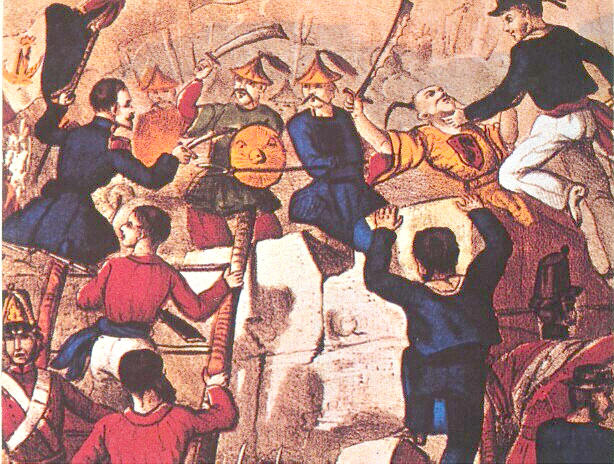
Second Opium War-guangzhou

Second Opium War-guangzhou

Author: UnknownLicense:PD
Source
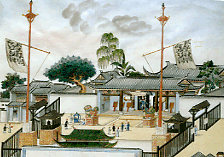
068 Les factoreries de Canton pendant la guerre de l'opium

068 Les factoreries de Canton pendant la guerre de l'opium

Author: AnonymousUnknown authorLicense:PD
Source
छवि अफीम युद्ध की क्रूरता को दर्शाती है।

छवि अफीम युद्ध की क्रूरता को दर्शाती है।

Author: Modern China and the legacy of the Opium WarsLicense:CC-BY-SA-4.0
Source
Auswirkungen der Beendigung der Landwirtschaft in Großbritannien auf den Welthandel, nach Bairoch (Komparativer Kostenvorteil)

Auswirkungen der Beendigung der Landwirtschaft in Großbritannien auf den Welthandel, nach Bairoch (Komparativer Kostenvorteil)

Author: VIGNERON * discut. & AliesinLicense:CC-BY-SA-4.0
Source
Book from the Anti-Opium league

Book from the Anti-Opium league

Author: Unknown authorUnknown authorLicense:PD
Source
The Customs House and the Hoppo's Headquarters at Guanzhou

The Customs House and the Hoppo's Headquarters at Guanzhou

Author: Unknown authorUnknown authorLicense:PD
Source
Huang Entong, politician of the Qing Dynasty. He participated in the negotiation on the Treaty of Nanjing during the First Opium War. In the French Journal his name is written as "Huan-Gan-Tun".
Huang Entong, politician of the Qing Dynasty. He participated in the negotiation on the Treaty of Nanjing during the First Opium War. In the French Journal his name is written as "Huan-Gan-Tun".

Author: Unknown authorUnknown authorLicense:PD
Source
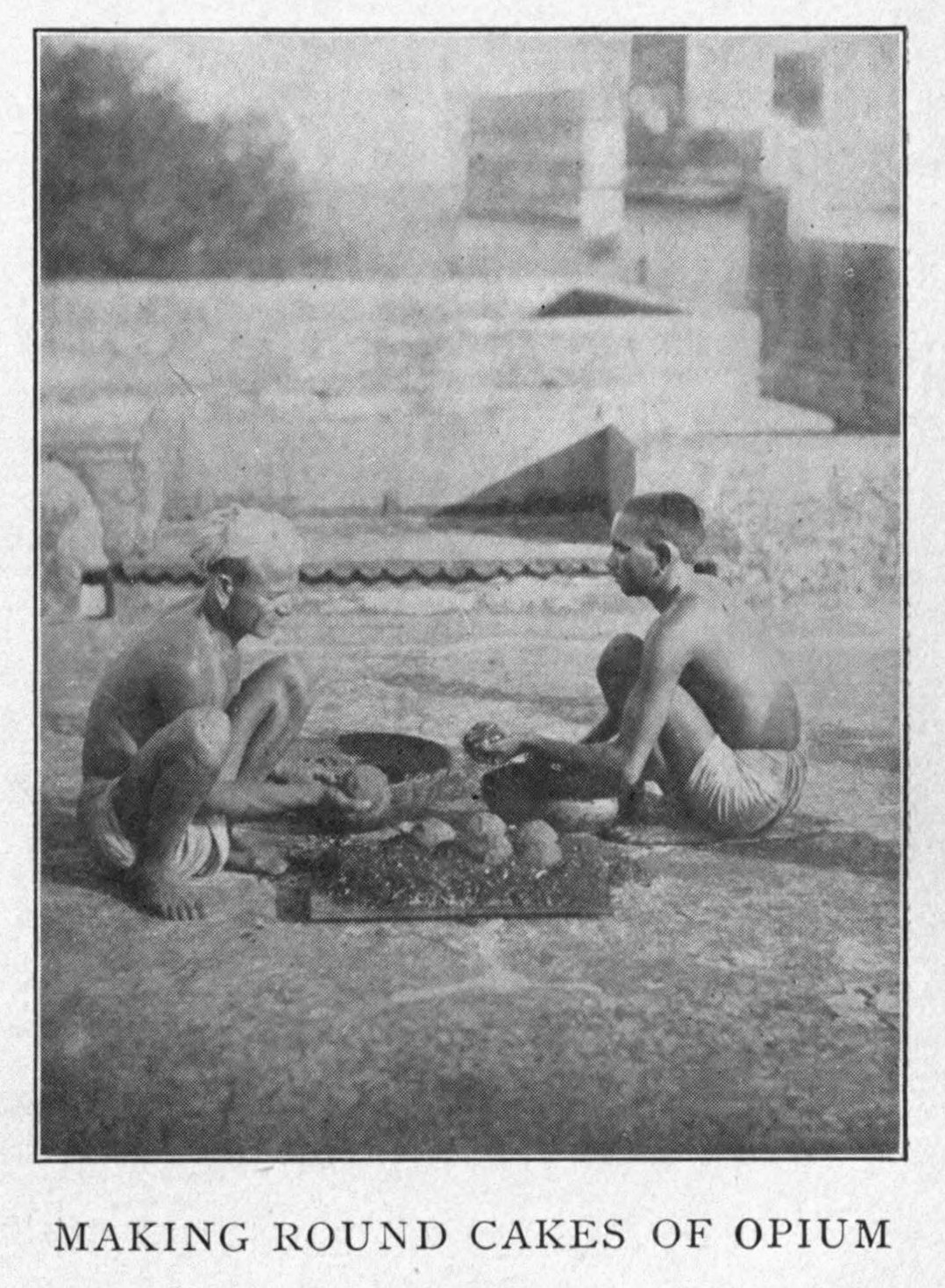
Making of opium cakes

Making of opium cakes
Author: Samuel Merwin (text)License:PD
Source
Making of opium cakes

Making of opium cakes

Author: Samuel Merwin (text)License:PD
Source
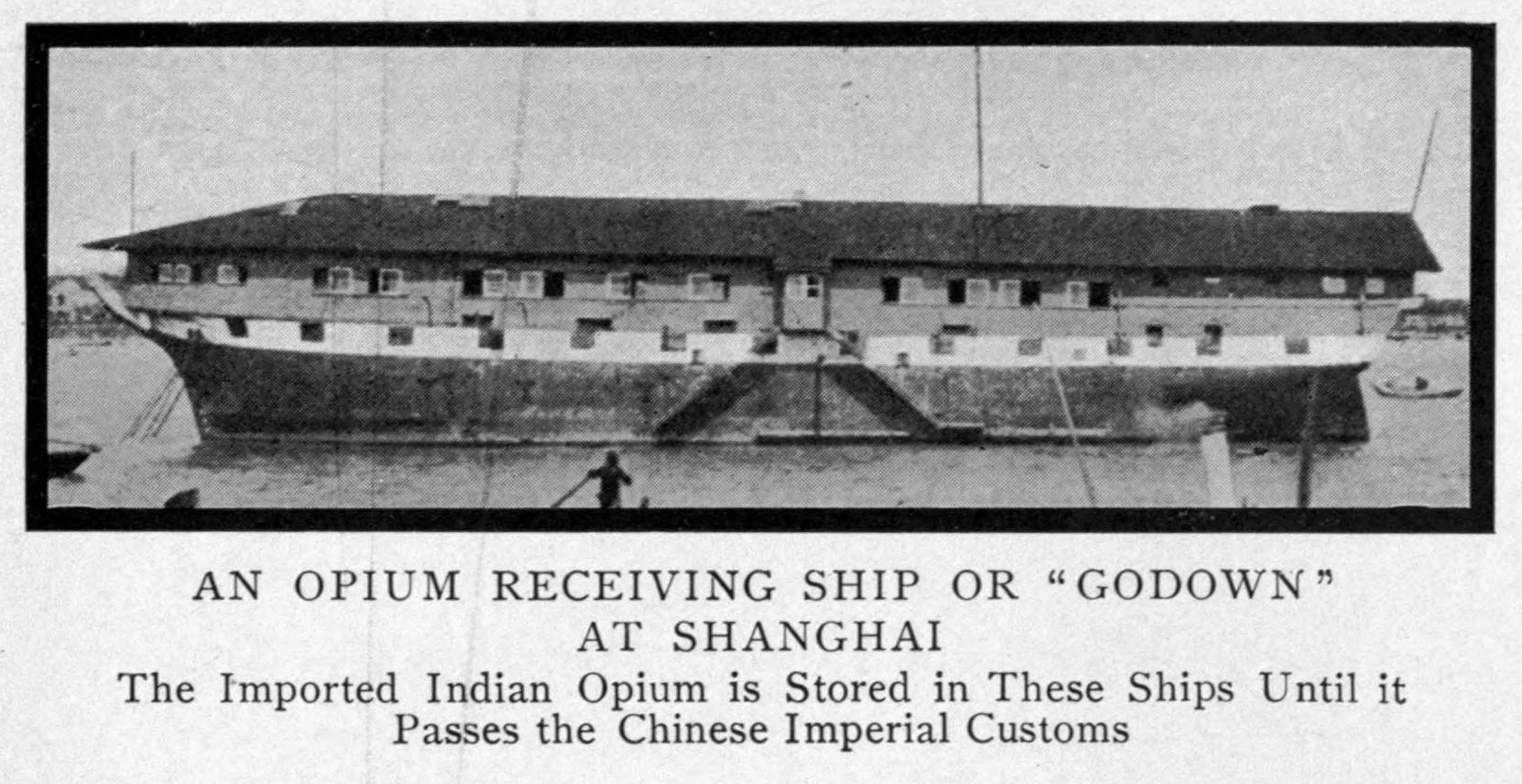
Opium ship

Opium ship

Author: Samuel Merwin (text)License:PD
Source
यह छवि अफीम युद्धों के दौरान चीन के लोगों की स्थिति का प्रतिनिधित्व करती है।

यह छवि अफीम युद्धों के दौरान चीन के लोगों की स्थिति का प्रतिनिधित्व करती है।

Author: Opium war Documentary- YoutubeLicense:CC-BY-SA-4.0
Source
The First Opium War (1839–1842) erupted when the Qing dynasty of China attempted to suppress the massive inflow of opium, imported largely by British merchants from colonial India, which had caused widespread addiction, public health crises, and severe silver outflow from China. Britain, defending its commercial interests in the opium trade and broader access to Chinese markets, launched a naval war that ended with China’s defeat and the Treaty of Nanking, which opened ports and ceded Hong Kong. While Britain framed its actions as defending principles of commerce, the war is often seen as a precursor to the global spread of “free trade” ideology—though here it was enforced through coercion rather than voluntary exchange. The Second Opium War (1856–1860) began when Britain, joined later by France, sought to expand the commercial and legal concessions gained after the First Opium War. The war ended with the Treaties of Tientsin (1858) and the Convention of Peking (1860), which forced China to open more ports, legalize the opium trade, allow foreign envoys in Beijing, and cede land. The health impacts in China were devastating: millions became dependent on opium, undermining productivity, family life, and social stability, with long-term consequences for Chinese society and governance even beyond the formal end of the trade.

The First Opium War (1839–1842) erupted when the Qing dynasty of China attempted to suppress the massive inflow of opium, imported largely by British merchants from colonial India, which had caused widespread addiction, public health crises, and severe silver outflow from China. Britain, defending its commercial interests in the opium trade and broader access to Chinese markets, launched a naval war that ended with China’s defeat and the Treaty of Nanking, which opened ports and ceded Hong Kong. While Britain framed its actions as defending principles of commerce, the war is often seen as a precursor to the global spread of “free trade” ideology—though here it was enforced through coercion rather than voluntary exchange. The Second Opium War (1856–1860) began when Britain, joined later by France, sought to expand the commercial and legal concessions gained after the First Opium War. The war ended with the Treaties of Tientsin (1858) and the Convention of Peking (1860), which forced China to open more ports, legalize the opium trade, allow foreign envoys in Beijing, and cede land. The health impacts in China were devastating: millions became dependent on opium, undermining productivity, family life, and social stability, with long-term consequences for Chinese society and governance even beyond the formal end of the trade.

Author: Upendra BhojaniLicense:CC-BY-4.0
Source
koerees, a class of opium traders who hired labourers for weighing opium in an Indian factory

koerees, a class of opium traders who hired labourers for weighing opium in an Indian factory

Author: Samuel Merwin (text)License:PD
Source
फाइल अफीम युद्ध का प्रतिनिधित्व करती है

फाइल अफीम युद्ध का प्रतिनिधित्व करती है

Author: BBC Radio 4License:CC-BY-SA-4.0
Source
Patna EIC opium crates in museum in Hong Kong

Patna EIC opium crates in museum in Hong Kong

Author: Yourusernamewillbepublic2License:CC0
Source
Peace between ENGLAND and CHINA!
Text at bottom:PEACEPIECE between ENGLAND and CHINA!
Text from right to left (spelling is as close to original as possible):

Englishman: Well my pretty little Sing Sing! __
What do the Chinese Ladies think of my
Countrymen?
Chinese lady: Oh dey tink you quite
irresistible
Chinese man: Hi yah. the men think
so to!

Peace between ENGLAND and CHINA! Text at bottom:PEACEPIECE between ENGLAND and CHINA! Text from right to left (spelling is as close to original as possible): Englishman: Well my pretty little Sing Sing! __ What do the Chinese Ladies think of my Countrymen? Chinese lady: Oh dey tink you quite irresistible Chinese man: Hi yah. the men think so to!

Author: John DoyleLicense:PD
Source
Taking of Chinhai at the mouth of the Ningpo River on 10 October 1841, showing HMS Rattlesnake.

Taking of Chinhai at the mouth of the Ningpo River on 10 October 1841, showing HMS Rattlesnake.

Author: Edward H. CreeLicense:PD
Source
Chinese opium smokers

Chinese opium smokers

Author: Arnold WrightLicense:PD
Source
A ceramic chamber pot the shape of a British man, made by local Guangzhou craftsmen in the aftermath of the First Opium War

A ceramic chamber pot the shape of a British man, made by local Guangzhou craftsmen in the aftermath of the First Opium War

Author: Lv JinsuLicense:CC0
Source

Historische Übersicht

Opiumkriege zwischen China und westlichen Mächten.

Teilkonflikte