Zweite Flandernschlacht

Hull Minster: memorials (i)

They were sent by my wife's grandfather, John Lakeland, who was in the Loyals. He was transferred during the war to the Lincs. regiment.

Ruins ypres

This aerial view of the Belgian city of Ypres during the Second Battle of Ypres (1915) was taken from a captured German soldier (or spy - the precise details of his role have been lost).

7am April 22nd 1915label QS:Len,"7am April 22nd 1915"

13th Canadian Infantry Battalion

PANIC IN YPRES APRIL 1915label QS:Len,"PANIC IN YPRES APRIL 1915"

For documentary purposes the German Federal Archive often retained the original image captions, which may be erroneous, biased, obsolete or politically extreme. I. Weltkrieg 1914-1918 Schloss Hollebeke, Rückansicht

Portrait of Col. G.G. Nasmith C.M.G. Head of field laboratories (hygiene) with Canadian Expeditionary Force, World War I. Col. Nasmith confirmed that the gas during 2nd Battle of Ypres was chlorine, and suggested first primitive gas mask.

Fields at Langemark-Poelkapelle, Belgium: Photo taken from a position approx 50°55'13.4"N 2°54'54.6"E just west of Langemark German War Cemetery, facing approx north, towards the former location of the German trench from which the first gas attack was launched on 22 April 1915. In this area, the German trench system ran approximately from the farmhouse on the left to the group of willow trees visible on the right.

Gefallene Soldaten Einzelgedenken Alter Friedhof Mölln

Nighttime photo of German barrage of Allied trenches at Ypres. (Probably 2nd Battle of Ypres.)

"Heroes of St. Julien and Festubert" WWI Canadian recruiting poster

Hull Minster: memorial (e)

They were sent by my wife's grandfather, John Lakeland, who was in the Loyals. He was transferred during the war to the Lincs. regiment.

brasserie_Rabeau à Ypres détruite pendant le début de la Première guerrre mondiale, photographie publiée dans le journale Pages de Gloire de juin 1915.

dégats lors de la Première guerre mondiale au cimetrière d'Ypres_.
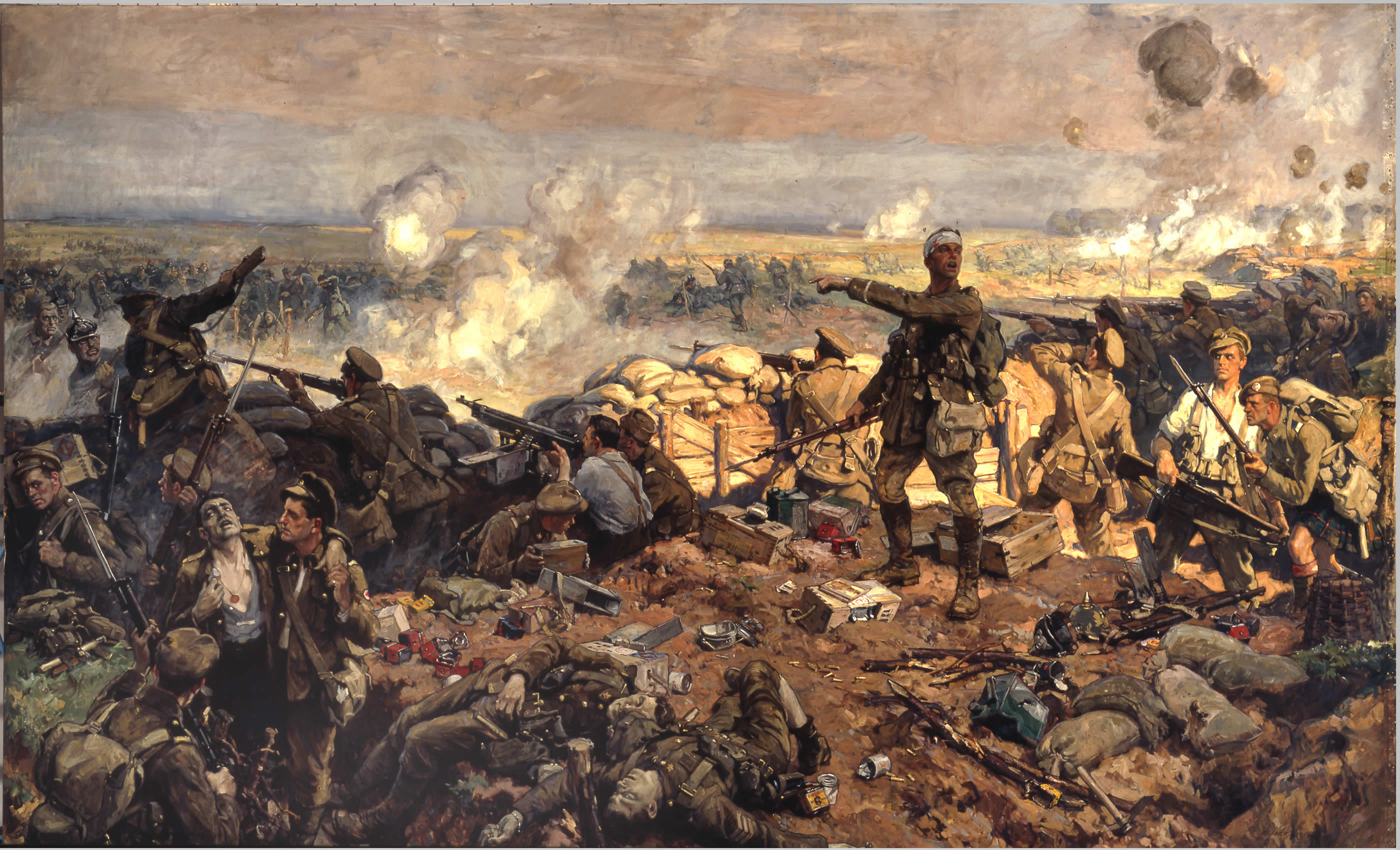
Second Battle of Ypres, 22 April to 25 May 1915label QS:Len,"Second Battle of Ypres, 22 April to 25 May 1915"

Blick durchs Scherenfernrohr auf Ypern
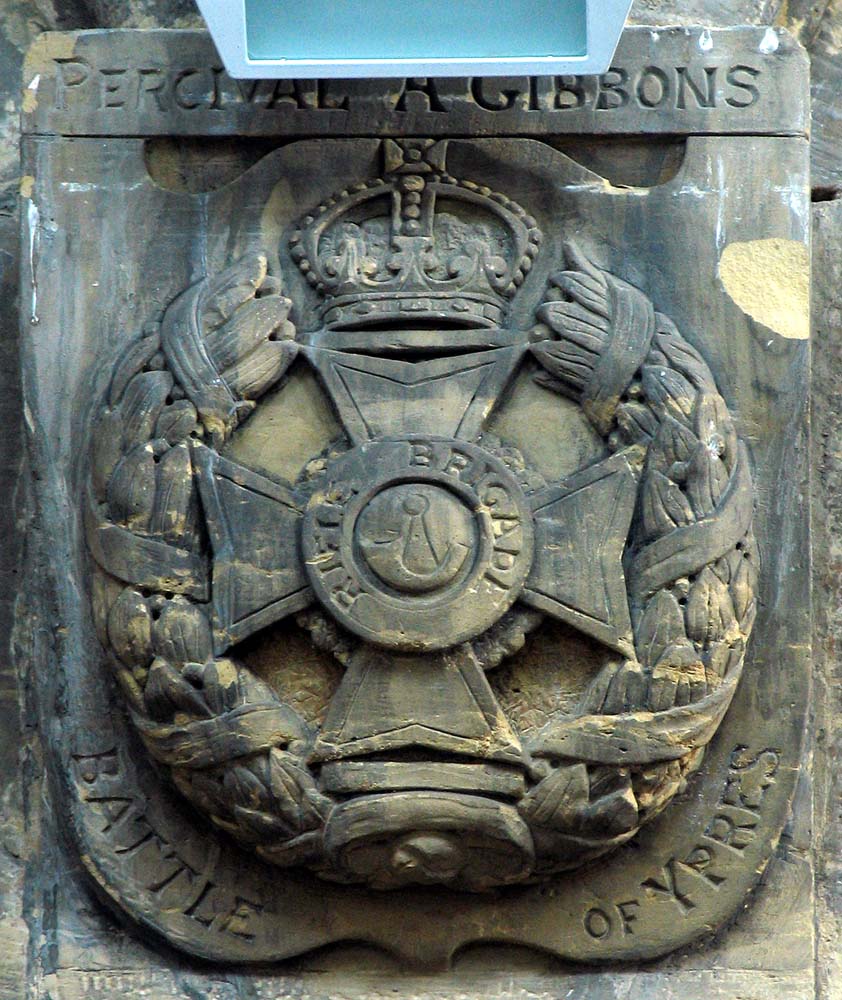
St Luke, Baxter Road, Great Ilford - Label head. Memorial to Percival Gibbons, who served in the Rifle Brigade and was killed in the Second Battle of Ypres on 10 May 1915 - http://www.cwgc.org/find-war-dead/casualty/930722/GIBBONS,%20PERCIVAL%20ANGUS.
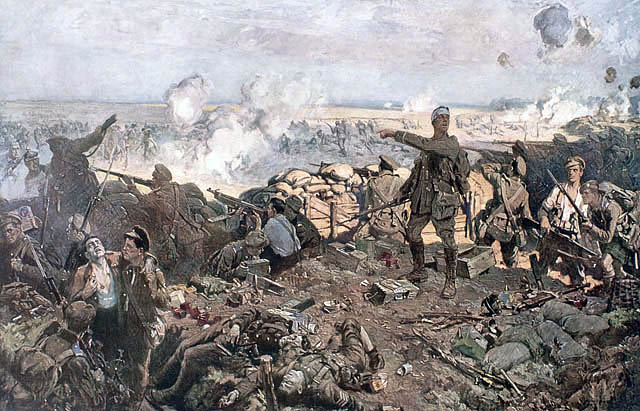
between 22 April 1915 and May 1915
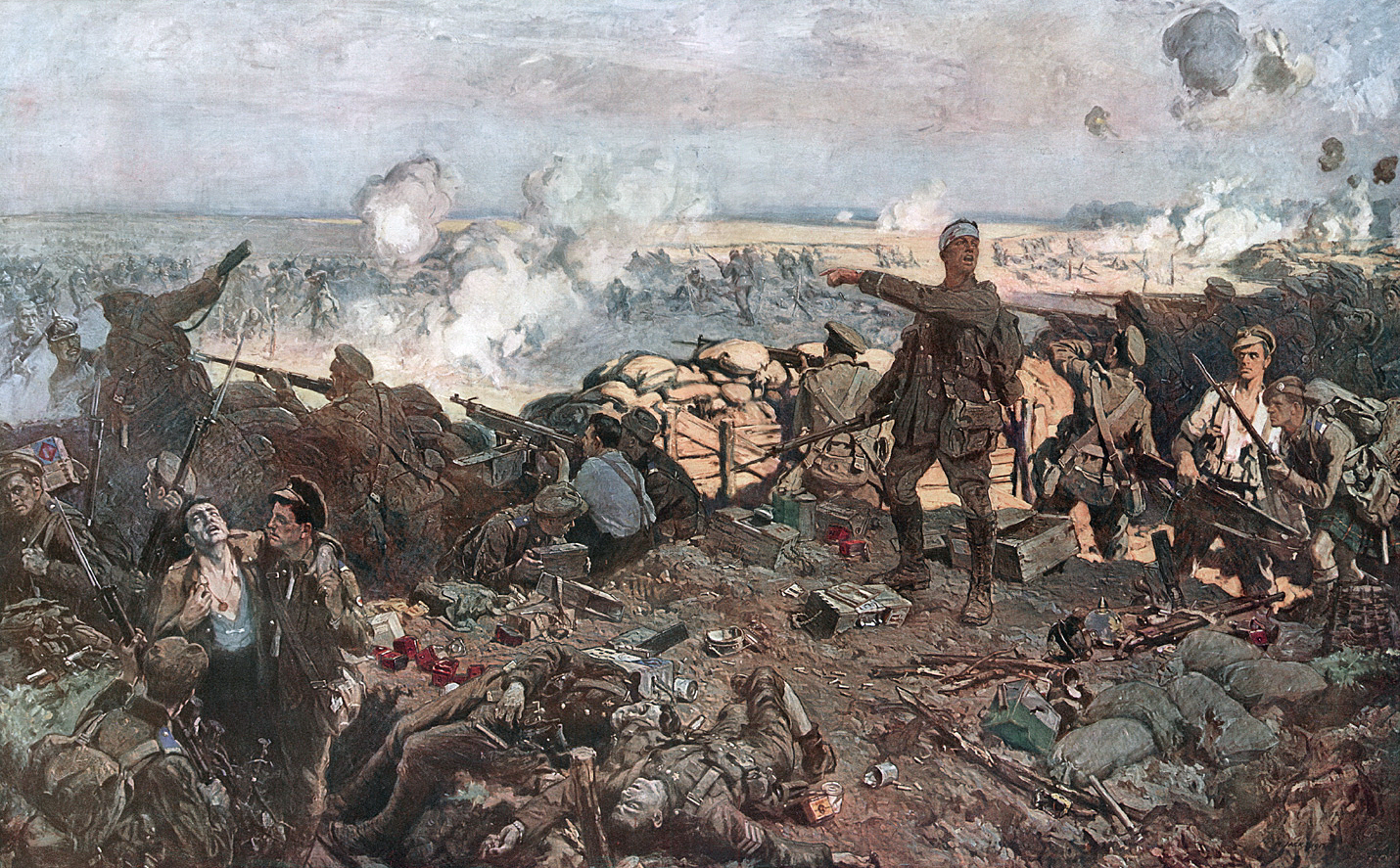
between 22 April 1915 and May 1915
Historische Übersicht
In der Zweiten Flandernschlacht – auch Zweite Ypernschlacht genannt – im Ersten Weltkrieg versuchten die deutschen Truppen am 22. April 1915 in einer erneuten Offensive die Stellungen der Alliierten an der Westfront in Flandern zu durchstoßen, um den Frontbogen bei Ypern zu beseitigen. Das deutsche Heer setzte bei dieser Offensive erstmals chemische Waffen in Form von Chlorgas ein. Der Durchbruch scheiterte an mangelnden Reserven, der Frontbogen konnte aber verkleinert werden. Die Auseinandersetzung wird zu den vier Flandernschlachten gezählt.
Fakten auf einen Blick
Deutsches Kaiserreich
- Befehlshaber: Erich v. Falkenhayn
- Truppenstärke: ca. 50.000
- Verluste: ca. 35.000
Frankreich & GB
- Befehlshaber: Smith-Dorrien
- Truppenstärke: ca. 200.000
- Verluste: ca. 70.000
Strategischer Kontext
Versuch, die Pattsituation durch neue chemische Waffen zu brechen.
Weiterführende Literatur


Red Famine: Stalin's War on Ukraine


Die Schlacht um Berlin und das Ende des Dritten Reichs 1945

Hunde, wollt ihr ewig leben: ein Stalingrad-Roman

Roter Hunger: Stalins Krieg gegen die Ukraine


Söldner ohne Sold: Die deutschen Freikorps 1918–1923

Vom Massensturm zur Stoßtrupptaktik: Die deutsche Landkriegtaktik im Spiegel von Dienstvorschriften und Publizistik 1906 bis 1918

Wir Wehr-Wölfe: Erinnerungen eines Freikorps-Führers

Zweiter Weltkrieg Erlebnisbericht Apokalypse Stalingrad: Untergang der 6. Armee 1942-1943
Walter Mönch
Rise And Fall Of The Third Reich
William Shirer
Historische Orte
Die interaktive Karte erfordert die Zustimmung zu Drittanbieter-Cookies.