Belagerung von Tsingtau
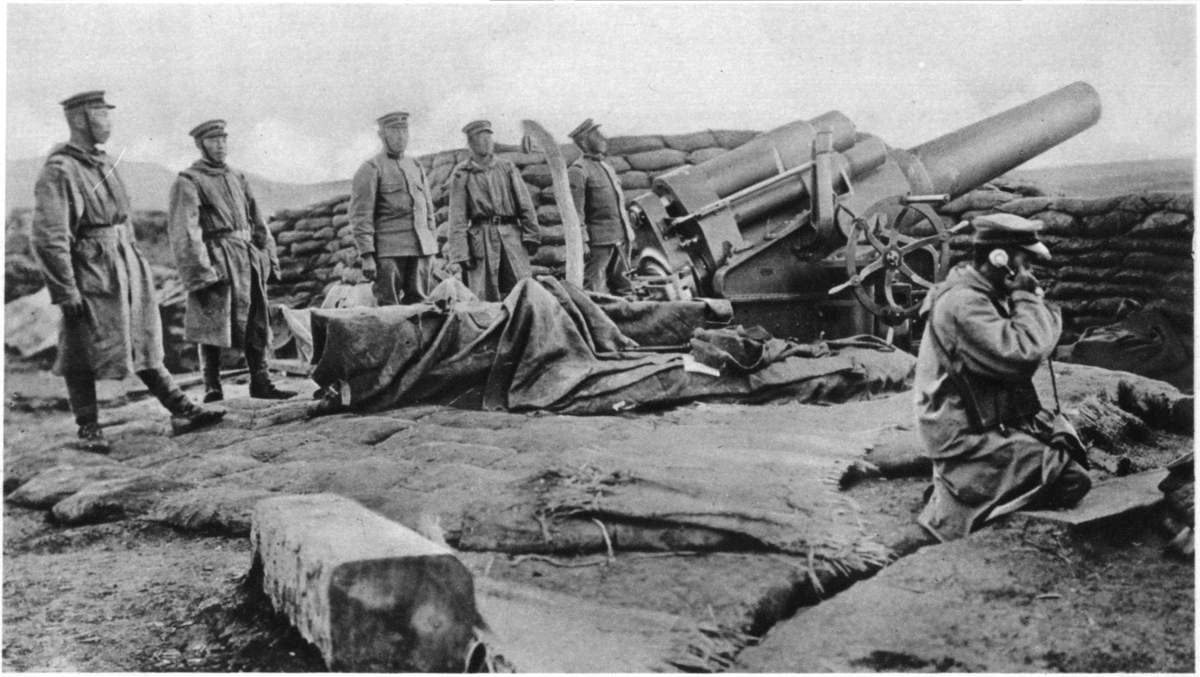
IN THE BATTERIES AGAINST TSING-TAU: A JAPANESE SIEGE-GUN GETTING THE ORDER BY TELEPHONE TO OPEN FIRE.

"The World War" ( Cigarette collection album published by Cigaret Picture Service Dresden ) - Japanese artillery watching post in Tsingtao.

“Japan captured the German base Kiachow in the East” - from the book Fighting America's fight.

malnova tombejo de Zella, Ernst Bieräugel

Arpad Schmidhammer - Tsingtau, 1914

Title: Banzai, banzai, the fall of Tsingtau Abstract/medium: 1 print : color lithograph ; sheet 40 x 54 cm, mount 51 x 61 cm.
Title: Banzai, banzai, the fall of Tsingtau Abstract/medium: 1 print : color lithograph ; sheet 40 x 54 cm, mount 51 x 61 cm.

Battle of Tsingtao German Gun

Battle of Tsingtao Germans
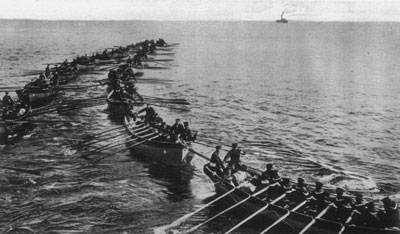
"Japanese Bluejackets Coming Ashore Near Tsing-Tau. (Photo from Paul Thompson.)"

2nd Battalion The South Wales Borderers, along with a detachment of the 36th Sikhs, formed the bulk of the British troops sent to assist the Japanese in capturing Germany's naval base at Tsingtao (Qingdao) in China.
![Photograph of British troops landing to assist Japanese troops in capturing Tsingtao from Germany, 1914.
Illustrated War News caption : "WATCHED WITH INTEREST BY THEIR "GALLANT JAPANESE COMRADES": BRITISH TROOPS LANDED TO CO-OPERATE AGAINST TSING-TAU. In his telegram to the Japanese Minister of War after the capture of Tsing-tau, Lord Kitchener said: "Please accept my warmest congratulations on the success of the operations against Tsing-tau. Will you be so kind as to express my felicitations to the Japanese forces engaged? The British Army is proud to have been associated with its gallant Japanese comrades in this enterprise." The British force, under Brigadier-General N. Barnardiston, Commanding the Forces in North China, landed in Lao-shan Bay on September 24. Some Indian troops also took part in the fighting. The Emperor of Japan sent a message to the British force saying that he "deeply appreciates the brilliant deeds of the British Army and Navy co-operating with the Japanese."—[Photo. by C.N.]"](https://upload.wikimedia.org/wikipedia/commons/4/46/BritishTroopsArriveTsingtao1914.jpg)
Photograph of British troops landing to assist Japanese troops in capturing Tsingtao from Germany, 1914. Illustrated War News caption : "WATCHED WITH INTEREST BY THEIR "GALLANT JAPANESE COMRADES": BRITISH TROOPS LANDED TO CO-OPERATE AGAINST TSING-TAU. In his telegram to the Japanese Minister of War after the capture of Tsing-tau, Lord Kitchener said: "Please accept my warmest congratulations on the success of the operations against Tsing-tau. Will you be so kind as to express my felicitations to the Japanese forces engaged? The British Army is proud to have been associated with its gallant Japanese comrades in this enterprise." The British force, under Brigadier-General N. Barnardiston, Commanding the Forces in North China, landed in Lao-shan Bay on September 24. Some Indian troops also took part in the fighting. The Emperor of Japan sent a message to the British force saying that he "deeply appreciates the brilliant deeds of the British Army and Navy co-operating with the Japanese."—[Photo. by C.N.]"

For documentary purposes the German Federal Archive often retained the original image captions, which may be erroneous, biased, obsolete or politically extreme. Eine Erinnerung an die tapfere Verteidigung der deutschen Festung Tsingtau im fernen Osten! Am 7. November 1914 fiel nach einer elfwöchigen Belagerung und nach einer neuntägigen ununterbrochenen Beschießung durch Land- und Schiffsartillerie schwerster Kaliber und nach Erschöpfung sämtlicher Verteidigungsmittel Tsingtau, das deutsche Bollwerk im fernen Osten in die Hände der Japaner. 1923 wurde das ganze Gebiet Kiautschou durch den Vertrag von Washington an China zurückgegeben und das deutsche Eigentum freigegeben. Ein Verteidigungfort von Tsingtau. Im Hintergrund ein Langrohrgeschütz. Die durchschossenen Panzerwände zeigen drastisch, welche erbitterten Kämpfe sich um die Erstürmung des Forts abgespielt haben. Herausg.Datum: Nov. 1934

For documentary purposes the German Federal Archive often retained the original image captions, which may be erroneous, biased, obsolete or politically extreme. Eine Erinnerung an die tapfere Verteidiung der deutschen Festung Tsingtau im fernen Osten! Am 7. November 1914 fiel nach einer elfwöchigen Belagerung und nach einer neuntägigen ununterbrochenen Beschießung durch Land- und Schiffsartillerie schwerster Kaliber und nach Erschöpfung sämtlicher Verteidigungsmittel Tsingtau, das deutsche Bollwerk im fernen Osten in die Hände der Japaner. 1923 wurde das ganze Gebiet Kiautschou durch den Vertrag von Washington an China zurückgegeben und das deutsche Eigentum freigegeben. Blick auf die bombensicheren Kasematten der ehemaligen deutschen Festung Tsingtau, welche bis heute noch gut erhalten sind.

For documentary purposes the German Federal Archive often retained the original image captions, which may be erroneous, biased, obsolete or politically extreme. Schutzgebiet Kiautschou Bismarck-Berg Batterie (Kampf um Tsingtau, 1914)

For documentary purposes the German Federal Archive often retained the original image captions, which may be erroneous, biased, obsolete or politically extreme. Schutzgebiet Kiautschou 1. Weltkrieg Tsingtau 1914 : Brand der Werft

For documentary purposes the German Federal Archive often retained the original image captions, which may be erroneous, biased, obsolete or politically extreme. Schutzgebiet Kiautschou Jap. Vormarsch wird durch anhaltende Regenfälle aufgehalten (gegen Tsingtau, 1914)

For documentary purposes the German Federal Archive often retained the original image captions, which may be erroneous, biased, obsolete or politically extreme. Schutzgebiet Kiautschou.- Jap. Vormarsch auf Tsingtau wird durch Regenfälle behindert (1914)

For documentary purposes the German Federal Archive often retained the original image captions, which may be erroneous, biased, obsolete or politically extreme. Schutzgebiet Kiautschou Obere Iltis-Berg Batterie (Kampf um Tsingtau 1914)

For documentary purposes the German Federal Archive often retained the original image captions, which may be erroneous, biased, obsolete or politically extreme. Schutzgebiet Kiautschou Vorderste deutsche Frontlinie (Kamp um Tsingtau, 1914)

For documentary purposes the German Federal Archive often retained the original image captions, which may be erroneous, biased, obsolete or politically extreme. Schutzgebiet Kiautschou Zerschossenes deutsches 10.5 cm Geschütz (Kampf um Tsingtau, 1914)
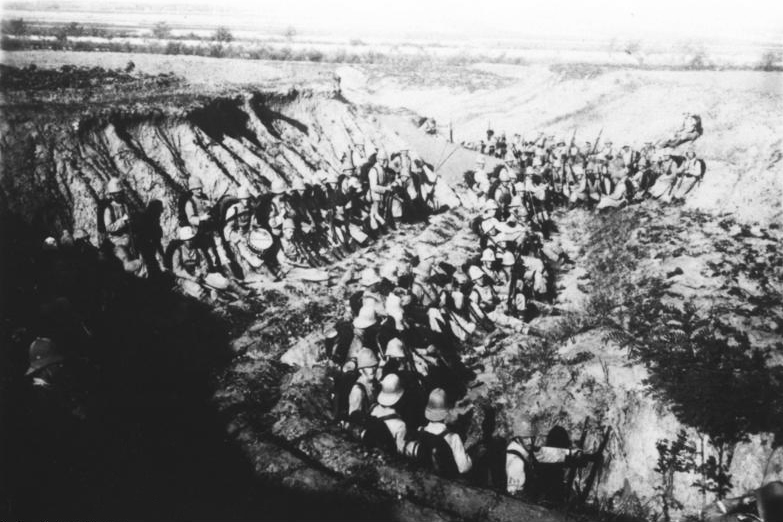
For documentary purposes the German Federal Archive often retained the original image captions, which may be erroneous, biased, obsolete or politically extreme. Schutztruppe Kiautschou Seesoldaten in Deckung

For documentary purposes the German Federal Archive often retained the original image captions, which may be erroneous, biased, obsolete or politically extreme. Schutzgebiet Kiautschou/ 1. Weltkrieg Gräber gefallener Soldaten auf dem Friedhof in Tsingtau

For documentary purposes the German Federal Archive often retained the original image captions, which may be erroneous, biased, obsolete or politically extreme. Schutzgebiet Kiautschou 1. Weltkrieg Zerschossenes Geschütz in deutscher Stellung

For documentary purposes the German Federal Archive often retained the original image captions, which may be erroneous, biased, obsolete or politically extreme. Schutzgebiet Kiautschou 1. Weltkrieg Versenkte Dampfer im Hafen von Tsingtau

For documentary purposes the German Federal Archive often retained the original image captions, which may be erroneous, biased, obsolete or politically extreme. Schutzgebiet Kiautschou 1.Weltkrieg Gesprengtes Geschütz auf dem Bismarck-Berg
Historische Übersicht
Die Belagerung von Tsingtau fand in der Anfangsphase des Ersten Weltkriegs statt. Das im Besitz des Deutschen Reiches befindliche Tsingtau in China wurde während des Ersten Weltkriegs, zwischen dem 13. September und dem 7. November 1914, von vereinigten japanischen und britischen Truppen belagert. Die Belagerung endete mit einem japanisch-britischen Sieg.
Fakten auf einen Blick
Kaiserreich Japan
- Befehlshaber: Kamio Mitsuomi
- Truppenstärke: ca. 23.000
- Verluste: ca. 2.000
Deutsches Kaiserreich
- Befehlshaber: Alfred Meyer-Waldeck
- Truppenstärke: ca. 4.000
- Verluste: ca. 700
Strategischer Kontext
Japanisches Ultimatum zur Übergabe der Pachtkolonie Kiautschou.
Weiterführende Literatur

Revolutionary Spring: Fighting for a New World 1848-1849
Christopher Clark

Spanish-American War: A Captivating Guide to the War Between the United States of America and Spain along with The Philippine–American War that Followed

The Philippine–American War

Frühling der Revolution: Europa 1848/49 und der Kampf für eine neue Welt
Christopher Clark

Risorgimento! Italiens Kampf um die Einheit im 19. Jahrhundert
Historische Orte
Genaue Lage nicht in historischen Quellen überliefert