Alle Schlachten

Operation Torch

1942 Maghreb Amphib. Op.

Operation Torch - map

Operation Torch - map

Author: UnknownLicense:PD
Source
"Staff officers of an...Air Corp Squadron near Fez, French Morocco. Left to right: Lt. Col. Benjamin O. Davis, C.O.; Capt. Hayden C. Johnson, Adjutant; Capt. E. Jones, Service Det.; Lt. Wm. R. Thompson, Armaments; Lt. Hervert E. Carter, Engineers; Lt. Erwin B. Lawrence, Operations; Lt. George R. Currie, Ordnance."

"Staff officers of an...Air Corp Squadron near Fez, French Morocco. Left to right: Lt. Col. Benjamin O. Davis, C.O.; Capt. Hayden C. Johnson, Adjutant; Capt. E. Jones, Service Det.; Lt. Wm. R. Thompson, Armaments; Lt. Hervert E. Carter, Engineers; Lt. Erwin B. Lawrence, Operations; Lt. George R. Currie, Ordnance."

Author: Unknown authorUnknown author or not providedLicense:PD
Source
After the success of the Allied landing of 8/11/1942, the Americans preferred to keep in place, hoping to rally it, the entire (opposing) Vichy civil and military administration, which was to arrest and intern until 1943 the resistance fighters then without protection, ulcerated and rebels, who launched these butterflies on the military parade of the Allies in liberated Algiers, rue d'Isly, at the end of November 1942.

After the success of the Allied landing of 8/11/1942, the Americans preferred to keep in place, hoping to rally it, the entire (opposing) Vichy civil and military administration, which was to arrest and intern until 1943 the resistance fighters then without protection, ulcerated and rebels, who launched these butterflies on the military parade of the Allies in liberated Algiers, rue d'Isly, at the end of November 1942.

Author: MogadorienLicense:CC-BY-SA-4.0
Source
80-G-19888: U.S. Army personnel on a transport during the first part of the U.S. campaign in North Africa.   Soldier is holding a carved stone head.   (4/7/2015).

80-G-19888: U.S. Army personnel on a transport during the first part of the U.S. campaign in North Africa. Soldier is holding a carved stone head. (4/7/2015).

Author: National Museum of the U.S. NavyLicense:PD
Source
80-G-19889: U.S. Army personnel on a transport during the first part of the U.S. campaign in North Africa.   U.S. Army Major is holding a carved stone head.   (4/7/2015).

80-G-19889: U.S. Army personnel on a transport during the first part of the U.S. campaign in North Africa. U.S. Army Major is holding a carved stone head. (4/7/2015).

Author: National Museum of the U.S. NavyLicense:PD
Source
80-G-19918:   Damaged ships at Casablanca Harbor, Morocco, during the first days of the U.S. campaign in North Africa.   French battleship, Jean Bart, is shown damaged.  (4/7/2015).

80-G-19918: Damaged ships at Casablanca Harbor, Morocco, during the first days of the U.S. campaign in North Africa. French battleship, Jean Bart, is shown damaged. (4/7/2015).

Author: National Museum of the U.S. NavyLicense:PD
Source
80-G-19921:   Damaged ships at Casablanca Harbor, Morocco, during the first days of the U.S. campaign in North Africa.   French ship SS Porthos is shown damaged.  (4/7/2015).

80-G-19921: Damaged ships at Casablanca Harbor, Morocco, during the first days of the U.S. campaign in North Africa. French ship SS Porthos is shown damaged. (4/7/2015).

Author: National Museum of the U.S. NavyLicense:PD
Source
80-G-19923:   Damaged ships at Casablanca Harbor, Morocco, during the first days of the U.S. campaign in North Africa.   French ship SS Porthos is shown damaged.  (4/7/2015).

80-G-19923: Damaged ships at Casablanca Harbor, Morocco, during the first days of the U.S. campaign in North Africa. French ship SS Porthos is shown damaged. (4/7/2015).
Author: National Museum of the U.S. NavyLicense:PD
Source
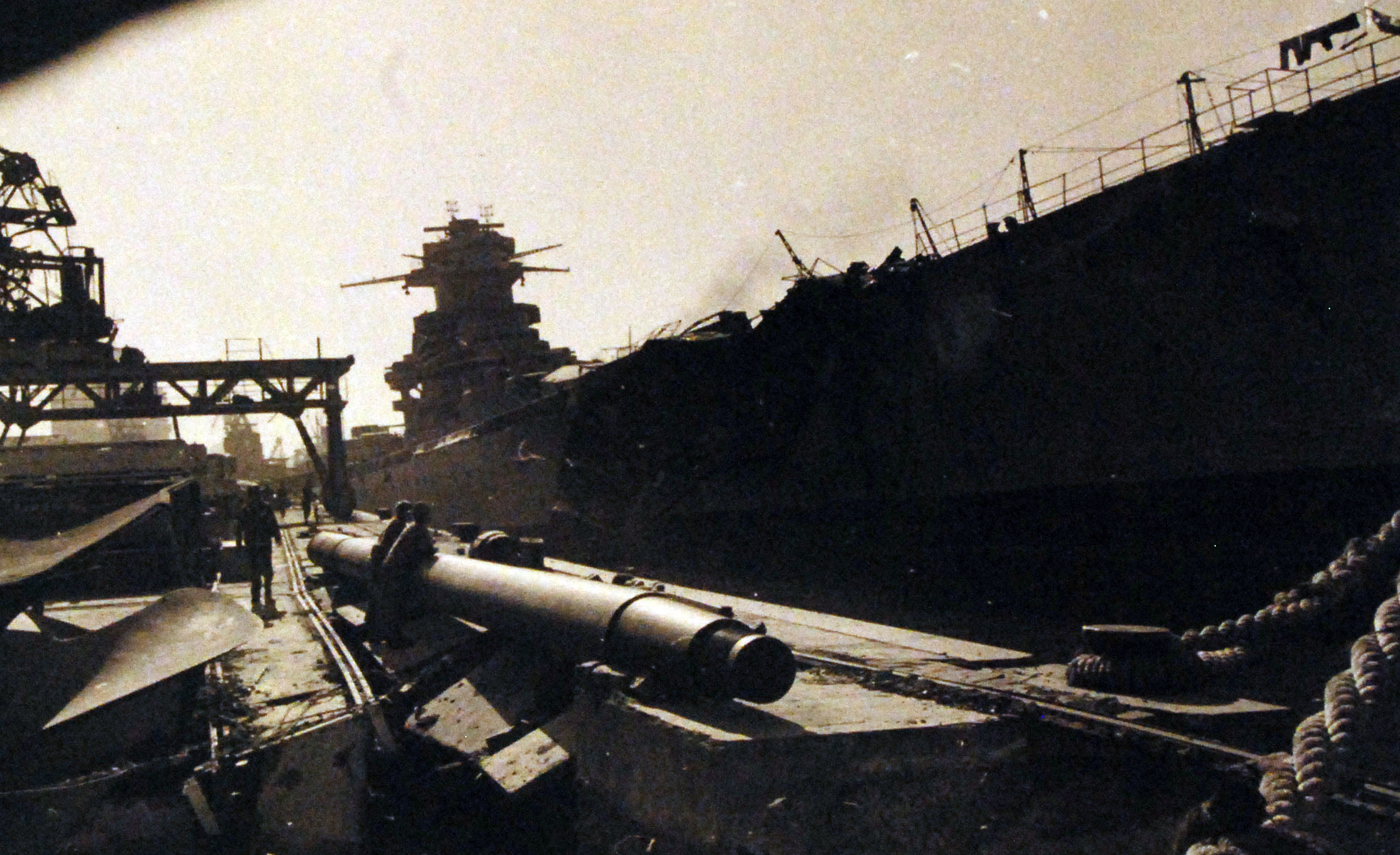
80-G-19924:   Damaged ships at Casablanca Harbor, Morocco, during the first days of the U.S. campaign in North Africa.   French battleship, Jean Bart, is shown damaged.  (4/7/2015).

80-G-19924: Damaged ships at Casablanca Harbor, Morocco, during the first days of the U.S. campaign in North Africa. French battleship, Jean Bart, is shown damaged. (4/7/2015).

Author: National Museum of the U.S. NavyLicense:PD
Source
80-G-30255:  Operation Torch, November 1942.   USS Rodman (DD-456) Official U.S. Navy Photograph, now in the collections of the National Archives.  (2017/06/06).

80-G-30255: Operation Torch, November 1942. USS Rodman (DD-456) Official U.S. Navy Photograph, now in the collections of the National Archives. (2017/06/06).

Author: National Museum of the U.S. NavyLicense:PD
Source
80-G-30210:  Operation Torch, November 1942.   Squadron commanders and intelligence officers onboard a warship (probably USS Ranger (CV-4) map out air plans for North African operations.   Official U.S. Navy Photograph, now in the collections of the National Archives.  (2017/06/06).

80-G-30210: Operation Torch, November 1942. Squadron commanders and intelligence officers onboard a warship (probably USS Ranger (CV-4) map out air plans for North African operations. Official U.S. Navy Photograph, now in the collections of the National Archives. (2017/06/06).

Author: National Museum of the U.S. NavyLicense:PD
Source
80-G-30216:  Operation Torch, November 1942.   SBD Dauntless planes from USS Ranger (CV-4) en route to invade French North Africa.  A Navy scout bomber flies on anti-submarine patrol.   Official U.S. Navy Photograph, now in the collections of the National Archives.  (2017/06/06).

80-G-30216: Operation Torch, November 1942. SBD Dauntless planes from USS Ranger (CV-4) en route to invade French North Africa. A Navy scout bomber flies on anti-submarine patrol. Official U.S. Navy Photograph, now in the collections of the National Archives. (2017/06/06).

Author: National Museum of the U.S. NavyLicense:PD
Source
80-G-30218:  Operation Torch, November 1942.   SBD Dauntless planes from USS Ranger (CV-4) en route to invade French North Africa.  A Navy scout bomber flies on anti-submarine patrol.   Official U.S. Navy Photograph, now in the collections of the National Archives.  (2017/06/06).

80-G-30218: Operation Torch, November 1942. SBD Dauntless planes from USS Ranger (CV-4) en route to invade French North Africa. A Navy scout bomber flies on anti-submarine patrol. Official U.S. Navy Photograph, now in the collections of the National Archives. (2017/06/06).

Author: National Museum of the U.S. NavyLicense:PD
Source
80-G-30221:  Operation Torch, November 1942.   USS Chenango (ACV-28) with Army pursuit planes, P-40’s, on the flight deck during the amphibious force invasion of French North Africa.   Official U.S. Navy Photograph, now in the collections of the National Archives.  (2017/06/06).

80-G-30221: Operation Torch, November 1942. USS Chenango (ACV-28) with Army pursuit planes, P-40’s, on the flight deck during the amphibious force invasion of French North Africa. Official U.S. Navy Photograph, now in the collections of the National Archives. (2017/06/06).

Author: National Museum of the U.S. NavyLicense:PD
Source
80-G-30232:  Operation Torch, November 1942.   U.S. destroyer cuts through the wake of a U.S. aircraft carrier on patrol, first day of fighting off North Africa, November 8.    Official U.S. Navy Photograph, now in the collections of the National Archives.  (2017/06/06).

80-G-30232: Operation Torch, November 1942. U.S. destroyer cuts through the wake of a U.S. aircraft carrier on patrol, first day of fighting off North Africa, November 8. Official U.S. Navy Photograph, now in the collections of the National Archives. (2017/06/06).

Author: National Museum of the U.S. NavyLicense:PD
Source
80-G-30234:  Operation Torch, November 1942.   Activities onboard USS Ranger (CV-4) during the campaign.  Shown:  Aviation Ordnancemen belted over one million rounds of 50 calibre machine guns ammunition in preparation for the Amphibious Force invasion of French North Africa.   Aviation Ordnanceman 2/C C.F. Boyette and Aviation Ordnanceman 2/C J.L. Haddigan, right, stow away a few thousand rounds already belted.      Official U.S. Navy Photograph, now in the collections of the National Archives.  (2017/06/06).

80-G-30234: Operation Torch, November 1942. Activities onboard USS Ranger (CV-4) during the campaign. Shown: Aviation Ordnancemen belted over one million rounds of 50 calibre machine guns ammunition in preparation for the Amphibious Force invasion of French North Africa. Aviation Ordnanceman 2/C C.F. Boyette and Aviation Ordnanceman 2/C J.L. Haddigan, right, stow away a few thousand rounds already belted. Official U.S. Navy Photograph, now in the collections of the National Archives. (2017/06/06).

Author: National Museum of the U.S. NavyLicense:PD
Source
80-G-30247:  Operation Torch, November 1942.   Planes of USS Ranger (CV-4) en-route to invade French North Africa, November 1942.  Aviation Machinist’s Mate 1/C R.M. Price, USNR, offered Aviation Radioman 3/C M.S. Waterson, USN, left $2340 for the latter’s rear seat in a dive bomber but was turned down.  Official U.S. Navy Photograph, now in the collections of the National Archives.  (2017/06/06).

80-G-30247: Operation Torch, November 1942. Planes of USS Ranger (CV-4) en-route to invade French North Africa, November 1942. Aviation Machinist’s Mate 1/C R.M. Price, USNR, offered Aviation Radioman 3/C M.S. Waterson, USN, left $2340 for the latter’s rear seat in a dive bomber but was turned down. Official U.S. Navy Photograph, now in the collections of the National Archives. (2017/06/06).

Author: National Museum of the U.S. NavyLicense:PD
Source
80-G-30253:  Operation Torch, November 1942.   USS Ranger (CV-4), pilots of Squadron VF-41 laughed and talked with their skipper, Lieutenant Commander C.T. Booth, USN, in the ready room on the morning of the attack on French possession in North Africa.  Official U.S. Navy Photograph, now in the collections of the National Archives.  (2017/06/06).

80-G-30253: Operation Torch, November 1942. USS Ranger (CV-4), pilots of Squadron VF-41 laughed and talked with their skipper, Lieutenant Commander C.T. Booth, USN, in the ready room on the morning of the attack on French possession in North Africa. Official U.S. Navy Photograph, now in the collections of the National Archives. (2017/06/06).
Author: National Museum of the U.S. NavyLicense:PD
Source
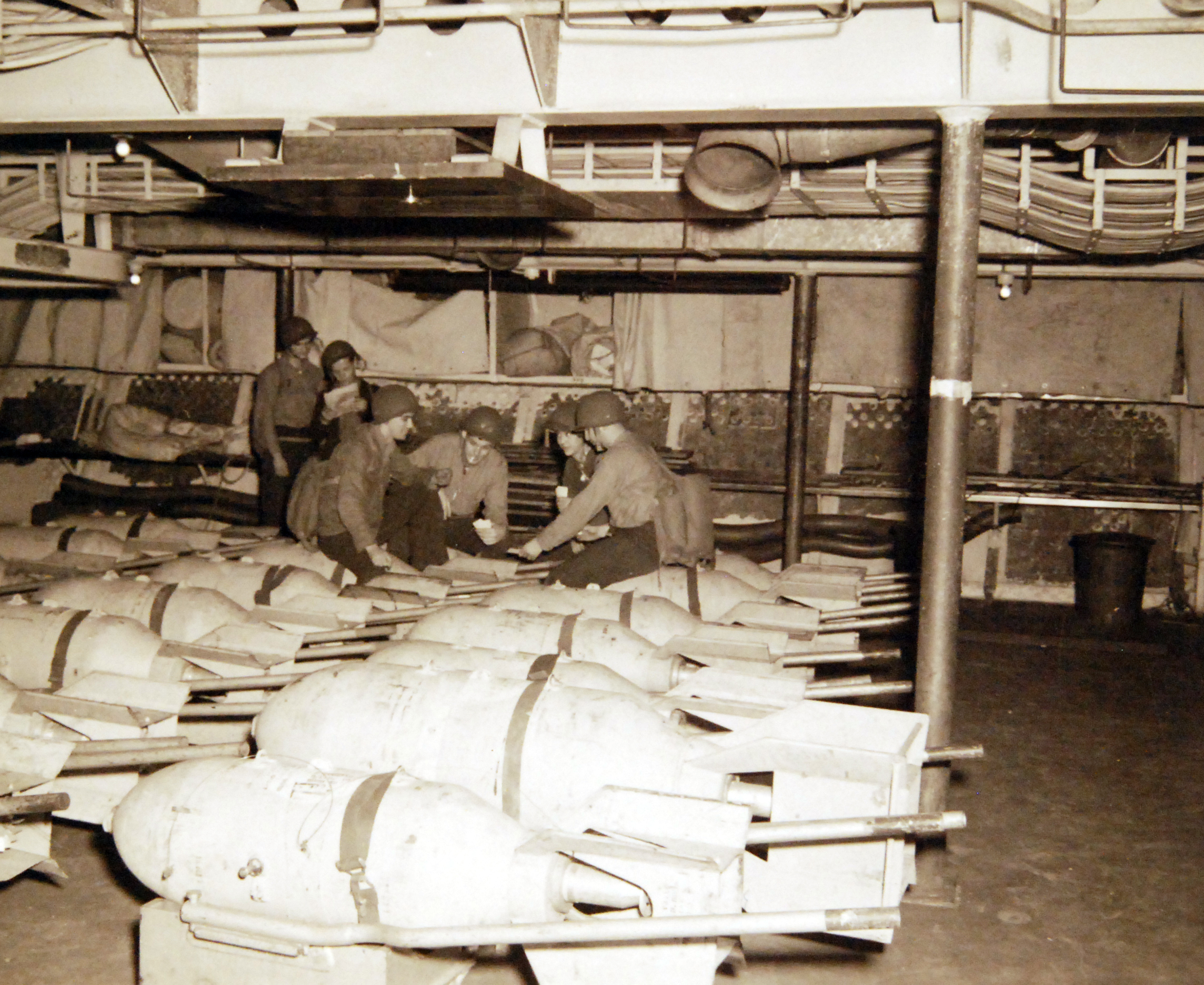
80-G-30263:  Operation Torch, November 1942.   USS Ranger (CV-4), bombs onboard during the Amphibious Force invasion.  Bluejackets are guarding bombs. Standing left to right:  Seaman First Class J.B. Williams; Aviation Machinist’s Mate Third Class M.S. Beaker.  Seated.  Seaman First Class J.A. Bagnera; Aviation Machinist’s Mate M. H. Angrist; Seaman Second Class E.M. Dembrowski; and Seaman Second Class D.G. Dinges.   Official U.S. Navy Photograph, now in the collections of the National Archives.  (2017/06/06).

80-G-30263: Operation Torch, November 1942. USS Ranger (CV-4), bombs onboard during the Amphibious Force invasion. Bluejackets are guarding bombs. Standing left to right: Seaman First Class J.B. Williams; Aviation Machinist’s Mate Third Class M.S. Beaker. Seated. Seaman First Class J.A. Bagnera; Aviation Machinist’s Mate M. H. Angrist; Seaman Second Class E.M. Dembrowski; and Seaman Second Class D.G. Dinges. Official U.S. Navy Photograph, now in the collections of the National Archives. (2017/06/06).
Author: National Museum of the U.S. NavyLicense:PD
Source
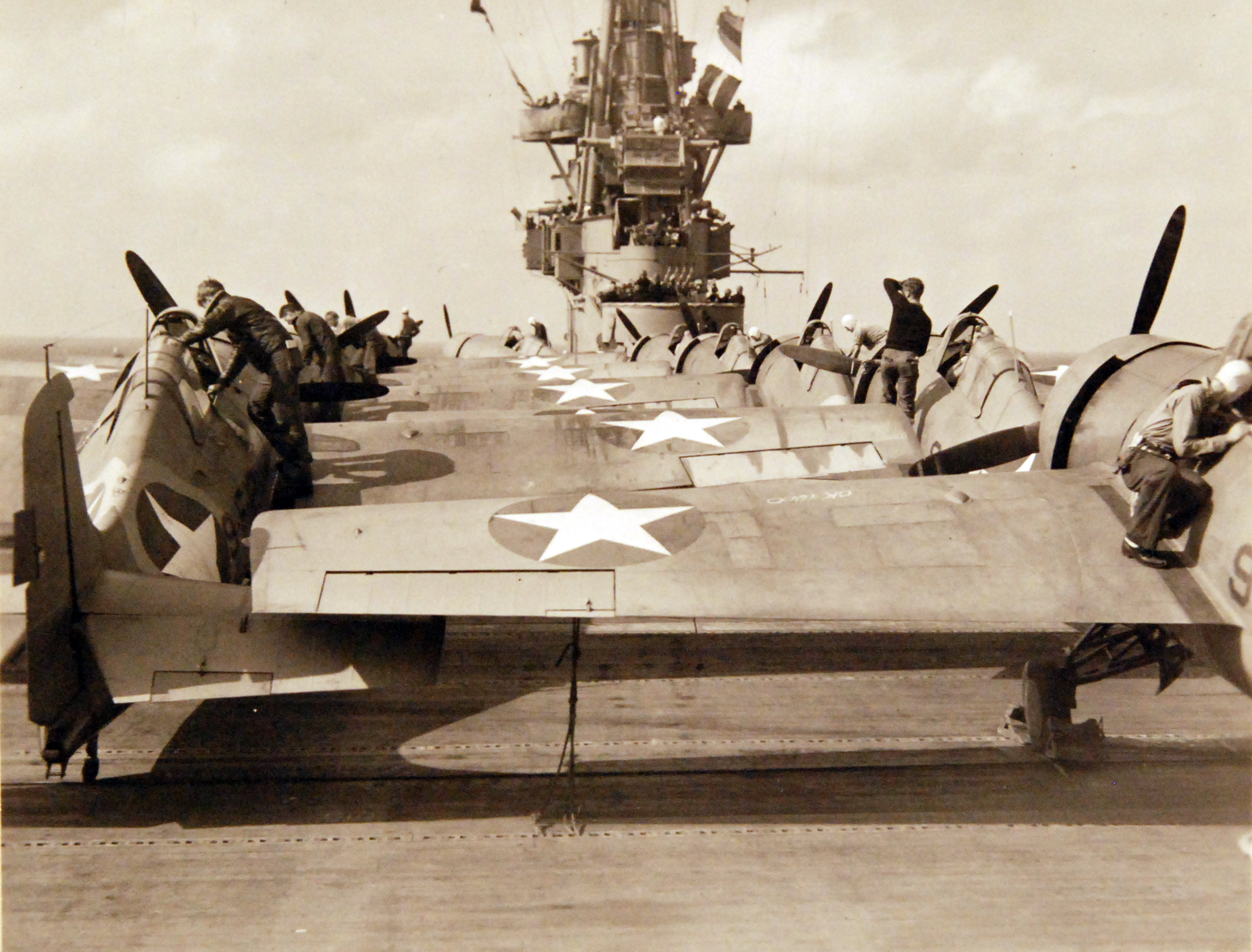
80-G-30281:  Operation Torch, November 1942.   Planes of USS Ranger (CV-4) en-route to invade French North Africa. Plane captains check over fighters, preparatory to taking off on another raid while the pilots are below being briefed by intelligence officers.   Official U.S. Navy Photograph, now in the collections of the National Archives.  (2017/06/06).

80-G-30281: Operation Torch, November 1942. Planes of USS Ranger (CV-4) en-route to invade French North Africa. Plane captains check over fighters, preparatory to taking off on another raid while the pilots are below being briefed by intelligence officers. Official U.S. Navy Photograph, now in the collections of the National Archives. (2017/06/06).

Author: National Museum of the U.S. NavyLicense:PD
Source
80-G-30302:  Operation Torch, November 1942.   A U.S. warship lays down a barrage of high explosive shells.  The ship, en-route to North Africa, fired after an enemy submarine was reported in the vicinity.   Official U.S. Navy Photograph, now in the collections of the National Archives.  (2017/06/06).

80-G-30302: Operation Torch, November 1942. A U.S. warship lays down a barrage of high explosive shells. The ship, en-route to North Africa, fired after an enemy submarine was reported in the vicinity. Official U.S. Navy Photograph, now in the collections of the National Archives. (2017/06/06).

Author: National Museum of the U.S. NavyLicense:PD
Source
80-G-30318:  Operation Torch, November 1942.   Marines man a plane detector onboard USS Ranger (CV-4) during the Amphibious Force Landing.  Official U.S. Navy Photograph, now in the collections of the National Archives.  (2017/06/06).

80-G-30318: Operation Torch, November 1942. Marines man a plane detector onboard USS Ranger (CV-4) during the Amphibious Force Landing. Official U.S. Navy Photograph, now in the collections of the National Archives. (2017/06/06).

Author: National Museum of the U.S. NavyLicense:PD
Source
80-G-30323:  Operation Torch, November 1942.   Plane captains of USS Ranger (CV04) and other carriers of the U.S. Navy have to “stand by” their planes during the daylight hours when “flight quarters” have been ordered.   This young sailor is taking advantage of a lull during the battle for French North Africa to catch up on some sleep.    Official U.S. Navy Photograph, now in the collections of the National Archives.  (2017/06/06).

80-G-30323: Operation Torch, November 1942. Plane captains of USS Ranger (CV04) and other carriers of the U.S. Navy have to “stand by” their planes during the daylight hours when “flight quarters” have been ordered. This young sailor is taking advantage of a lull during the battle for French North Africa to catch up on some sleep. Official U.S. Navy Photograph, now in the collections of the National Archives. (2017/06/06).

Author: National Museum of the U.S. NavyLicense:PD
Source
80-G-30338:  Operation Torch, November 1942.  Planes of USS Ranger (CV-4) en-route to invade French North Africa, November 1942.  A “Piper Cub” preparing to take off from Ranger.  Brought across the Atlantic on the carrier, these planes were landed on the first available landing spots seized by Amphibious Force units in their invasion of Morocco.     Official U.S. Navy Photograph, now in the collections of the National Archives.  (2017/06/06).

80-G-30338: Operation Torch, November 1942. Planes of USS Ranger (CV-4) en-route to invade French North Africa, November 1942. A “Piper Cub” preparing to take off from Ranger. Brought across the Atlantic on the carrier, these planes were landed on the first available landing spots seized by Amphibious Force units in their invasion of Morocco. Official U.S. Navy Photograph, now in the collections of the National Archives. (2017/06/06).

Author: National Museum of the U.S. NavyLicense:PD
Source
80-G-30342:  Operation Torch, November 1942.  Planes of USS Ranger (CV-4) en-route to invade French North Africa, November 1942.  A “Piper Cub” takes off from Ranger to fly to a beach head established by the troops of Amphibious Force.  Piloted by Army artillery officers, these were carried across the Atlantic and flown ashore to act as artillery spotting and reconnaissance planes.      Official U.S. Navy Photograph, now in the collections of the National Archives.  (2017/06/06).

80-G-30342: Operation Torch, November 1942. Planes of USS Ranger (CV-4) en-route to invade French North Africa, November 1942. A “Piper Cub” takes off from Ranger to fly to a beach head established by the troops of Amphibious Force. Piloted by Army artillery officers, these were carried across the Atlantic and flown ashore to act as artillery spotting and reconnaissance planes. Official U.S. Navy Photograph, now in the collections of the National Archives. (2017/06/06).

Author: National Museum of the U.S. NavyLicense:PD
Source
80-G-30356:  Operation Torch, November 1942.  Sunset over French Morocco on the evening of the day Allied forces invaded North Africa.  Dark in the gathering gloom, planes of U.S. aircraft carrier seem to rest beneath their wings on the flight deck of their ship.  Photograph released October 27, 1943.   Official U.S. Navy Photograph, now in the collections of the National Archives.  (2017/06/06).

80-G-30356: Operation Torch, November 1942. Sunset over French Morocco on the evening of the day Allied forces invaded North Africa. Dark in the gathering gloom, planes of U.S. aircraft carrier seem to rest beneath their wings on the flight deck of their ship. Photograph released October 27, 1943. Official U.S. Navy Photograph, now in the collections of the National Archives. (2017/06/06).

Author: National Museum of the U.S. NavyLicense:PD
Source

Historische Übersicht

Alliierte Landungen in Marokko und Algerien.

Fakten auf einen Blick

Ergebnis:Allierter Sieg.

Allierte (USA/UK)

  • Befehlshaber: Dwight Eisenhower
  • Truppenstärke: 107000
  • Verluste: ca. 2.200

Vichy-Frankreich

  • Befehlshaber: François Darlan
  • Truppenstärke: 60000
  • Verluste: ca. 1.300

Strategischer Kontext

Eröffnung einer zweiten Front im Rücken der Achse.

Weiterführende Literatur

Cover of Berlin: The Downfall 1945

Berlin: The Downfall 1945

Antony Beevor

SachbuchZweiter WeltkriegWW2-Ostfront

Englisch
Weltkriegs-Ära
Cover of Gulag: A History

Gulag: A History

Sachbuch20. JahrhundertSowjetunion

Englisch
Weltkriegs-Ära
Cover of Red Famine: Stalin's War on Ukraine

Red Famine: Stalin's War on Ukraine

Sachbuch20. JahrhundertSowjetunion

Englisch
Weltkriegs-Ära
Cover of Stalingrad

Stalingrad

Antony Beevor

Zweiter WeltkriegBerichtWW2-Ostfront

Englisch
Weltkriegs-Ära
Cover of The Gulag Archipelago

The Gulag Archipelago

Sachbuch20. JahrhundertSowjetunion

Englisch
Weltkriegs-Ära
Cover of Der Gulag

Der Gulag

Sachbuch20. JahrhundertSowjetunion

Deutsch
Weltkriegs-Ära
Cover of Die Schlacht um Berlin und das Ende des Dritten Reichs 1945

Die Schlacht um Berlin und das Ende des Dritten Reichs 1945

SachbuchZweiter WeltkriegWW2-Ostfront

Deutsch
Weltkriegs-Ära
Cover of Hunde, wollt ihr ewig leben: ein Stalingrad-Roman

Hunde, wollt ihr ewig leben: ein Stalingrad-Roman

Zweiter WeltkriegWW2-OstfrontHistorischer Roman

Deutsch
Weltkriegs-Ära
Cover of Roter Hunger: Stalins Krieg gegen die Ukraine

Roter Hunger: Stalins Krieg gegen die Ukraine

Sachbuch20. JahrhundertSowjetunion

Deutsch
Weltkriegs-Ära
Cover of So weit die Füße tragen

So weit die Füße tragen

20. JahrhundertSowjetunionGulag

Deutsch
Weltkriegs-Ära
Cover of Söldner ohne Sold: Die deutschen Freikorps 1918–1923

Söldner ohne Sold: Die deutschen Freikorps 1918–1923

Bericht20. JahrhundertDeutsche Geschichte

Deutsch
Weltkriegs-Ära
Cover of Vom Massensturm zur Stoßtrupptaktik: Die deutsche Landkriegtaktik im Spiegel von Dienstvorschriften und Publizistik 1906 bis 1918

Vom Massensturm zur Stoßtrupptaktik: Die deutsche Landkriegtaktik im Spiegel von Dienstvorschriften und Publizistik 1906 bis 1918

Sachbuch20. JahrhundertDeutsche Geschichte

Deutsch
Weltkriegs-Ära
Cover of Wir Wehr-Wölfe: Erinnerungen eines Freikorps-Führers

Wir Wehr-Wölfe: Erinnerungen eines Freikorps-Führers

Bericht20. JahrhundertDeutsche Geschichte

Deutsch
Weltkriegs-Ära
Cover of Zweiter Weltkrieg Erlebnisbericht Apokalypse Stalingrad: Untergang der 6. Armee 1942-1943

Zweiter Weltkrieg Erlebnisbericht Apokalypse Stalingrad: Untergang der 6. Armee 1942-1943

Walter Mönch

SachbuchZweiter WeltkriegWW2-Ostfront

Deutsch
Weltkriegs-Ära
Rise And Fall Of The Third Reich

Rise And Fall Of The Third Reich

William Shirer

20. JahrhundertDeutsche GeschichteNationalsozialismus

Weltkriegs-Ära

Historische Orte

Die interaktive Karte erfordert die Zustimmung zu Drittanbieter-Cookies.

Operation Torch (1942) | ExploreHistory