Seeschlacht von Lissa

Итальянский флот в Анконе
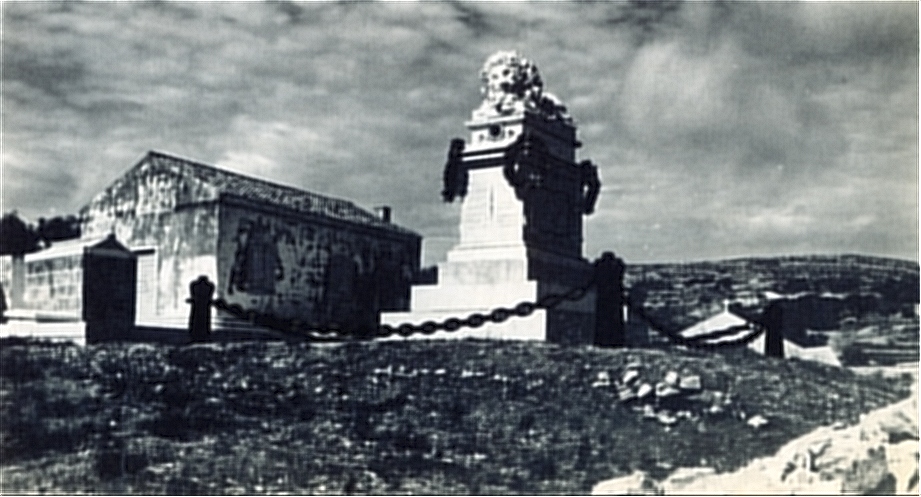
Memorial for the dead of the Battle of Lissa

Lissa naval battle, July 20th,1866; the Austrian navy against the Italian fleet. The RN Re d'Italia is sinking after being rammed by Tegetthoff's flagship, the SMS Ferdinand Max.

Affondatore, amored ram of italian navy, shortly after the batlle of Vis

Seeschlacht bei Lissa am 20. Juli 1866, signiert, datiert Alb. Rieger 1866, Öl auf Leinwand, 67 x 98 cm

German: Tegetthoff in der Seeschlacht bei Lissa I title QS:P1476,de:"Tegetthoff in der Seeschlacht bei Lissa I "label QS:Lde,"Tegetthoff in der Seeschlacht bei Lissa I "

German: Tegetthoff in der Seeschlacht bei Lissa II title QS:P1476,de:"Tegetthoff in der Seeschlacht bei Lissa II "label QS:Lde,"Tegetthoff in der Seeschlacht bei Lissa II "

German: Admiral Tegetthoff in der Seeschlacht bei Lissa IItitle QS:P1476,de:"Admiral Tegetthoff in der Seeschlacht bei Lissa II"label QS:Lde,"Admiral Tegetthoff in der Seeschlacht bei Lissa II"
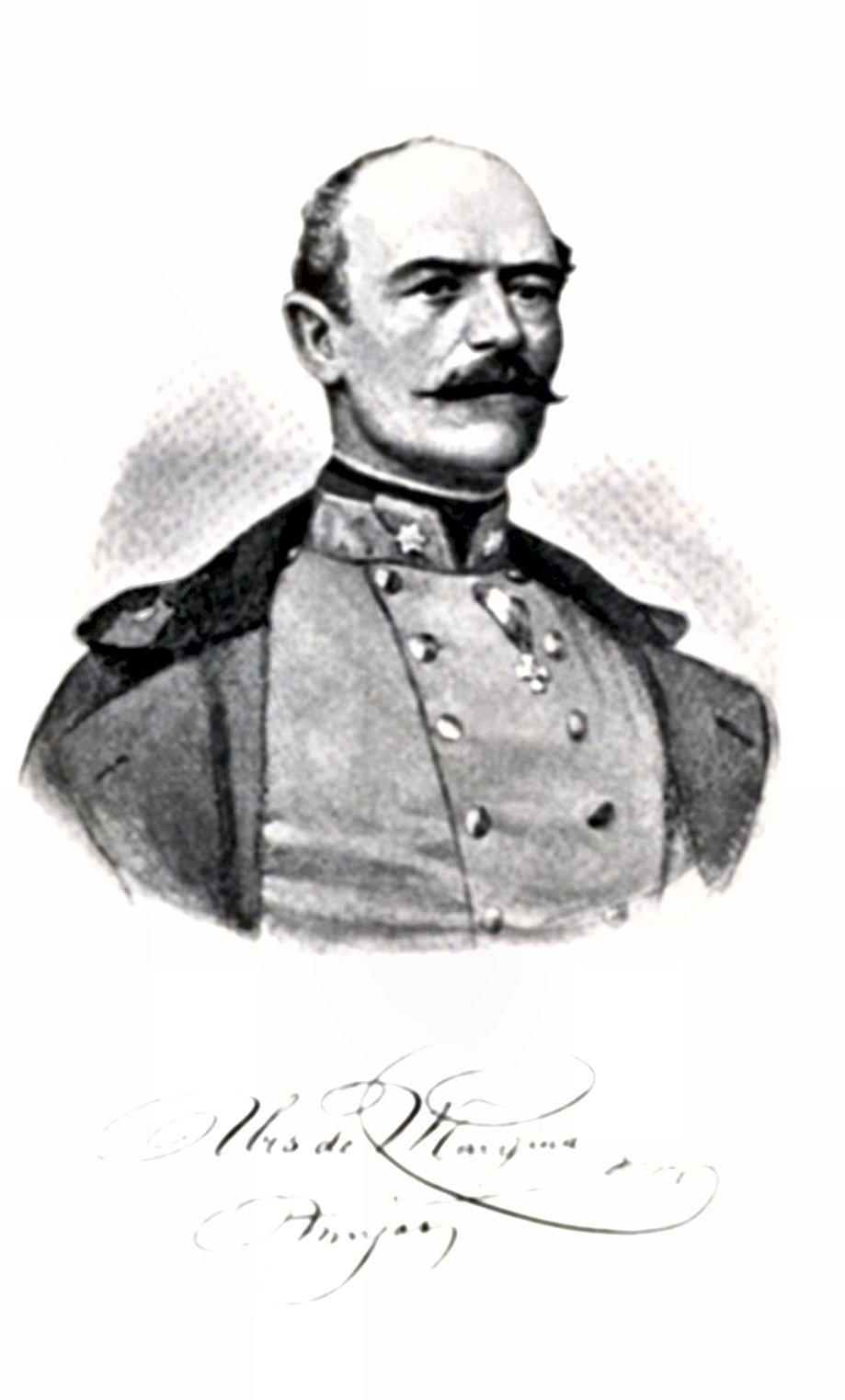
David Urs de Margina în grad de maior, cu Ordinul Maria Terezia la piept
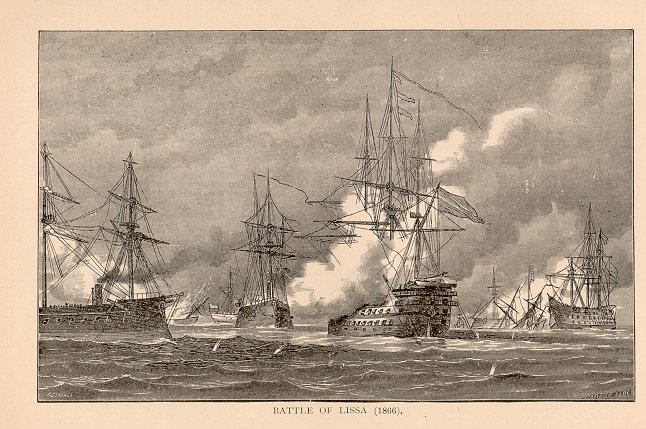
Bataille de Lissa (1866). Gravure parue dans le Harper's Weekly (New-York) du 1er septembre 1866

Initial situation at the battle of Lissa. Austrian Empire ships in red and Italian ships in blue. See also File:Battle of Lissa 1811 Map.png which is slightly different but with sources cited.

Acquarello di Ippolito Caffi raffigurante alcune navi da guerra italiane in partenza da Ancona prima della battaglia di Lissa. Da sinistra verso destra: l'avviso a ruote Sirena, l'avviso a ruote Messaggiere, la pirocorvetta a ruote Ettore Fieramosca, la cannoniera corazzata Palestro.

Naval battle at Lissalabel QS:Len,"Naval battle at Lissa"label QS:Lel,"Ναυμαχία της Ίσσας"

An image of the Austrian triple-decker wooden battleship Kaiser (centre of picture) ramming the Italian ironclad Re di Portogallo, during the battle of Lissa, 1866. Painting by Eduard Nezbeda, 1911.

Szene aus der Schlacht bei Lissa 1866

Szene aus der Schlacht bei Lissa 1866

Ironclad Ferdinand Max, admiral ship at battle of Vis, 1866

Seeschlacht von Lissa (S. M. S. Erzherzog Ferdinand Max und "Re d'Italia"). Öl auf Leinwand, monogrammiert "GS", 77 x 113 cm

Helgoland Goldmünze

Immagine da Album della guerra del 1866
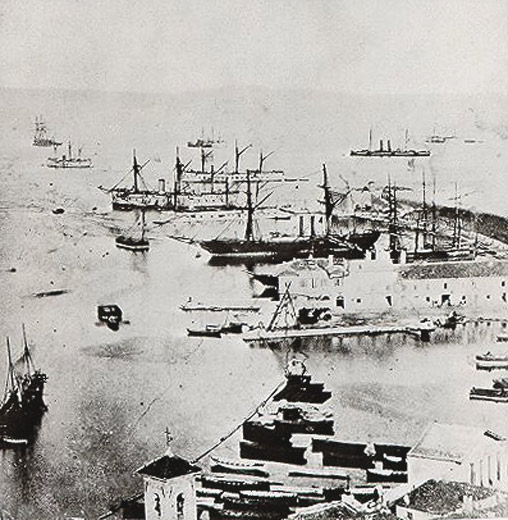
Italian fleet in Ancona after battle of Lissa (1866).

Die Seeschlacht bei Lissa (1866), signiert J. C. B. Püttner, Öl auf Leinwand, 84 x 130 cm
Historische Übersicht
Die Seeschlacht von Lissa war eine Schlacht zwischen einer italienischen und österreichischen Flotte während des dritten Italienischen Unabhängigkeitskriegs. Sie fand am 20. Juli 1866 bei der heute kroatischen Insel Vis statt. Das Königreich Italien beabsichtigte, das habsburgische Venetien zu erobern und die österreichische Seehegemonie in der Adria zu brechen. Die kaiserlich-österreichische Marine konnte aber trotz der zahlenmäßig und technischen Überlegenheit der italienischen Flotte durch die Anwendung der Rammtaktik den Kampf für sich entscheiden. Dies war das erste Seegefecht, in dem in größerem Umfang neu entwickelte Panzerschiffe eingesetzt wurden. Beide Seestreitkräfte wiesen bei Lissa ausgeprägte technische Mängel auf, bei der italienischen Marine traten zusätzlich noch schwerwiegende Rivalitäten im Kommandostab und eine schlechte Ausbildung der Schiffsbesatzungen ans Tageslicht.
Fakten auf einen Blick
Österreichische Marine
- Befehlshaber: Wilhelm v. Tegetthoff
- Truppenstärke: 27 Schiffe
- Verluste: ca. 170
Italienische Marine
- Befehlshaber: Carlo di Persano
- Truppenstärke: 28 Schiffe
- Verluste: ca. 670
Strategischer Kontext
Kampf um die Vorherrschaft in der Adria.
Weiterführende Literatur

Revolutionary Spring: Fighting for a New World 1848-1849
Christopher Clark

Spanish-American War: A Captivating Guide to the War Between the United States of America and Spain along with The Philippine–American War that Followed

The Philippine–American War

Frühling der Revolution: Europa 1848/49 und der Kampf für eine neue Welt
Christopher Clark

Risorgimento! Italiens Kampf um die Einheit im 19. Jahrhundert
Historische Orte
Die interaktive Karte erfordert die Zustimmung zu Drittanbieter-Cookies.