Seeschlacht bei Abukir

The British fleet attacks the French fleet in Aboukir.

The Cockpit, battle of the Nile The Cockpit, Battle of the Nile. Depicting Nelson and others, wounded, being attended.

HMS Majestic at the 1798 Battle of the Nile, painted by Charles Edward Dixon.Scanned image using an Epson Perfection V800.

Naval battle at Abukirlabel QS:Lde,"Seeschlacht bei Abukir"label QS:Len,"Naval battle at Abukir"
'Dresses a la Nile respectfully dedicated to the Fashion Mongers of the day' Hand-coloured caricature 'Dresses a la Nile respectfully dedicated to the Fashion Mongers of the day'. A gentle lampoon against British fashionable society, making facetious suggestions for ways to incorporate the topical news of Nelson’s victory over the French fleet at the Battle of the Nile on 1 August into the latest fashions. It was commonplace for people to display patriotic sentiment or political opinions (for example, for the campaign for the abolition of the slave trade) through dress or other accoutrements, but this satire takes this trend to ridiculous extremes, with its overabundant and absurd Egyptian references. It also maintains a staple iconography of satirical prints, treating the excesses of fashion. On the left, the woman is virtually mummified in her white dress decorated with crocodiles. Opposite her, the man’s costume is even more extravagant, consisting of crocodile skin coat, waistcoat and reptilian boots. His hat also sports a bright yellow crocodile. They stare at each other in mutual astonishment at the other’s appearance. To complete the topical references, and by way of explanation of the outfits, both wear hats with the motto ‘Nelson and Victory’. 'Dresses a la Nile respectfully dedicated to the Fashion Mongers of the day'

'Lord Nelson engaging the Toulon Fleet off the Mouth of the Nile' This vignette aerial view of the Battle of the Nile, 1 August 1798, was published in the first issue of the 'Naval Chronicle' in 1799, effectively as plate III (f. p 42) although numbering did not start until plate V. A brief note on p. 42 states that the view is taken from the south-east looking west, with Rosetta in the distance beyond the Aboukir Fort. Later in the year, facing p. 521, the same journal published a 'Chart of the Bay of Aboukir', with a battle plan related to this illustration. This was also drawn up by Pocock from information supplied by both a French and British officer present.
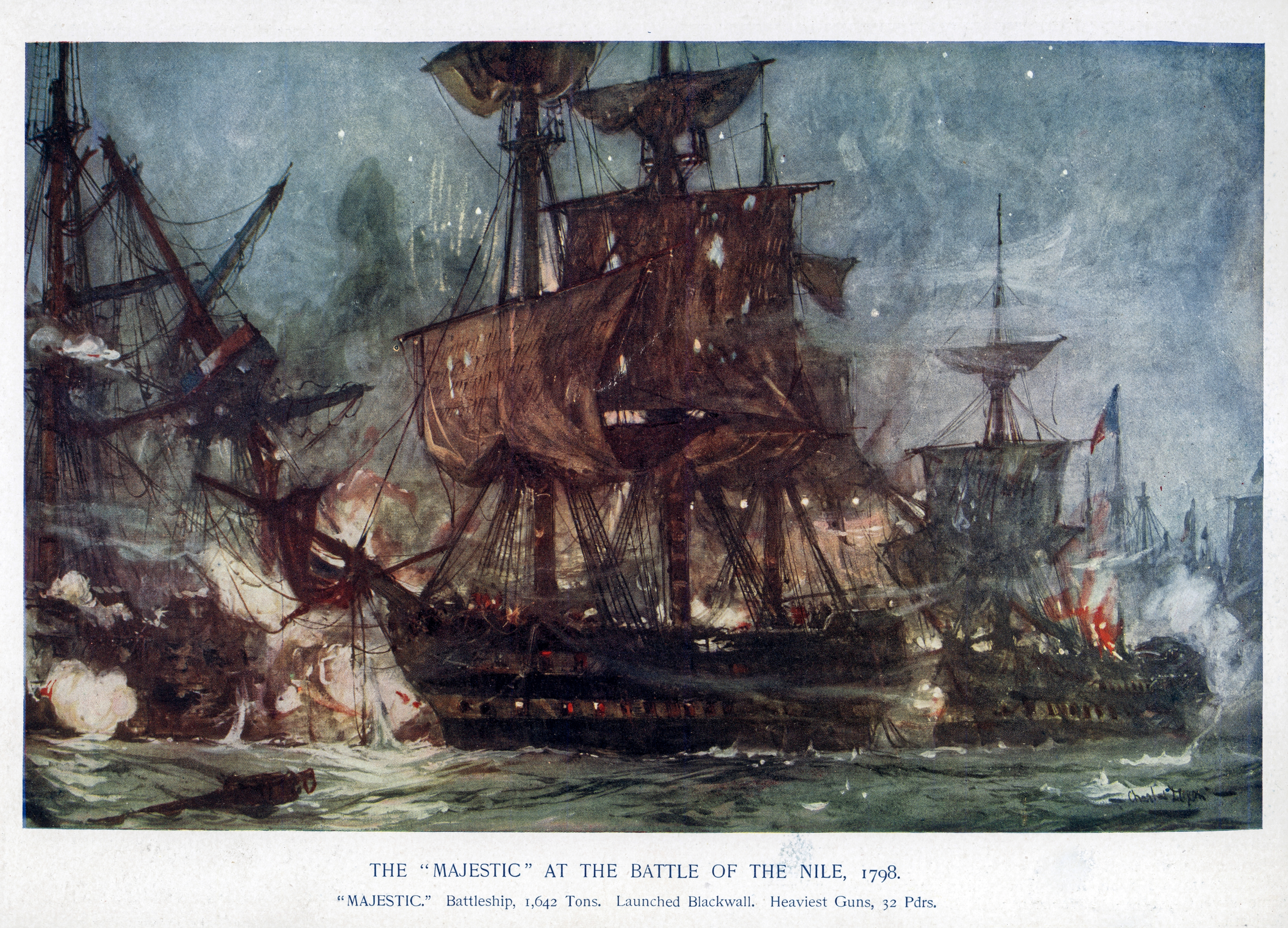
HMS Majestic at the 1798 Battle of the Nile, painted by Charles Edward Dixon.Scanned image using an Epson Perfection V800.
Admiral Nelson recreating with his Brave Tars after the Glorious Battle of the Nile (caricature) Hand-coloured.; Text in English below image.
Admiral Nelson recreating with his Brave Tars after the Glorious Battle of the Nile (caricature) Text in English below image.; No.25. Bound in album PAG8512 with prints PAG8513-PAG8647; PAG8649- PAG8666.
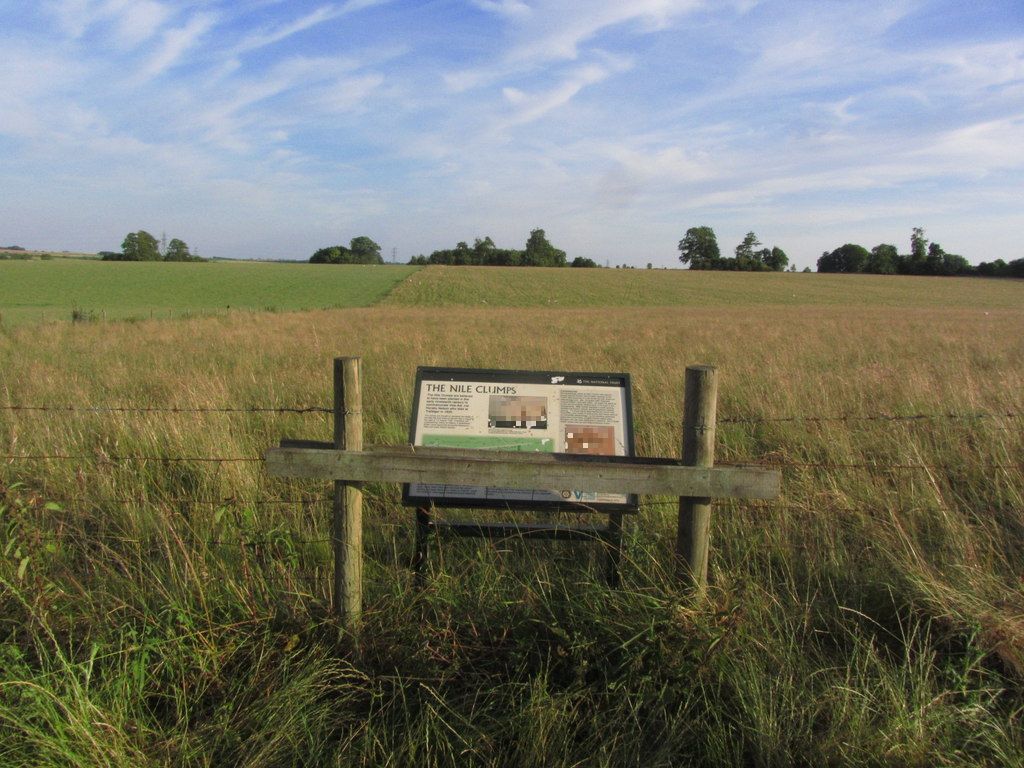
Amesbury - The Nile Clumps Plantation & information board (with artwork pixelised)

A cropped image, focusing on the French flagship, from The Destruction of 'L'Orient' at the Battle of the Nile, 1 August 1798

Orient explodes at the Battle of the Nile. Franklin is the ship in the extreme left of the picture, and was almost set on fire herself by falling debris.
Fought on the 1st and 2d of August, 1798 between the British fleet, commanded by Rear Admiral Sir Horatio Nelson, K.B. and the French fleet, commanded by Vice-admiral Brueys, in Bequires Bay, on the Coast of Egypt
Under the command of Rear-Admiral Sir Horatio Nelson, from its sailing to Gibraltar, to the conclusion of the glorious Battle of the Nile; drawn up from the minutes of an officer of rank in the Squadron. (London?) Printed for the booksellers., (1800?). Anonymous author: Edward Berry

Battle of the Nile - English Squadron, Bay of Shoals, engraved by Thomas Hellyer, after Captain James Weir Government Art Collection GAC number 2156

Battle of the Nile - Morning of 2nd August 1798, engraved by Thomas Hellyer, after Captain James Weir Government Art Collection GAC number 2155

Battle of the Nile - Night of 1st August 1798, engraved by Thomas Hellyer, after Captain James Weir Government Art Collection GAC number 2154

Battle of the Nile

United Kingdom: Davison's Medal for the Battle of the Nile 1798 Ribbon: No official ribbon, normally worn from a wide blue ribbon. Instituted: In 1799 by Admiral Nelson's prize agent, Alexander Davison. Awarded: For participation in the Battle of the Nile on 1 August 1798. Grades: 4, awarded by rank. -Gold, awarded to Nelson and his captains. -Silver, awarded to lieutenants and warrant officers. -Copper-Gilt, awarded to petty officers. -Bronzed copper, awarded to ratings, marines, etc.

Commemorative mug commissioned by Alexander Davison in circa 1798, to be awarded to Lord Nelson in honor of his victory in the Battle of the Nile. Usher Art Gallery, Lincoln.
Battle of the Nile, Augt. 1st 1798 Plate I. After a long and anxious search through the Mediterranean, Nelson's fleet discovered the French warships covering Napoleon's invasion of Egypt at anchor in Aboukir Bay, near Alexandria at the mouth of the River Nile. With a perfect application of the initiative that comes from exactly knowing their admiral's wishes and intentions, the British captains attacked without hesitation, some ships taking the French on the unprotected landward side, where the French thought no ship could pass. Only two major French ships escaped capture or destruction in the night-long battle. Nelson had set a new standard by which to judge a victory. Battle of the Nile, Augt. 1st 1798
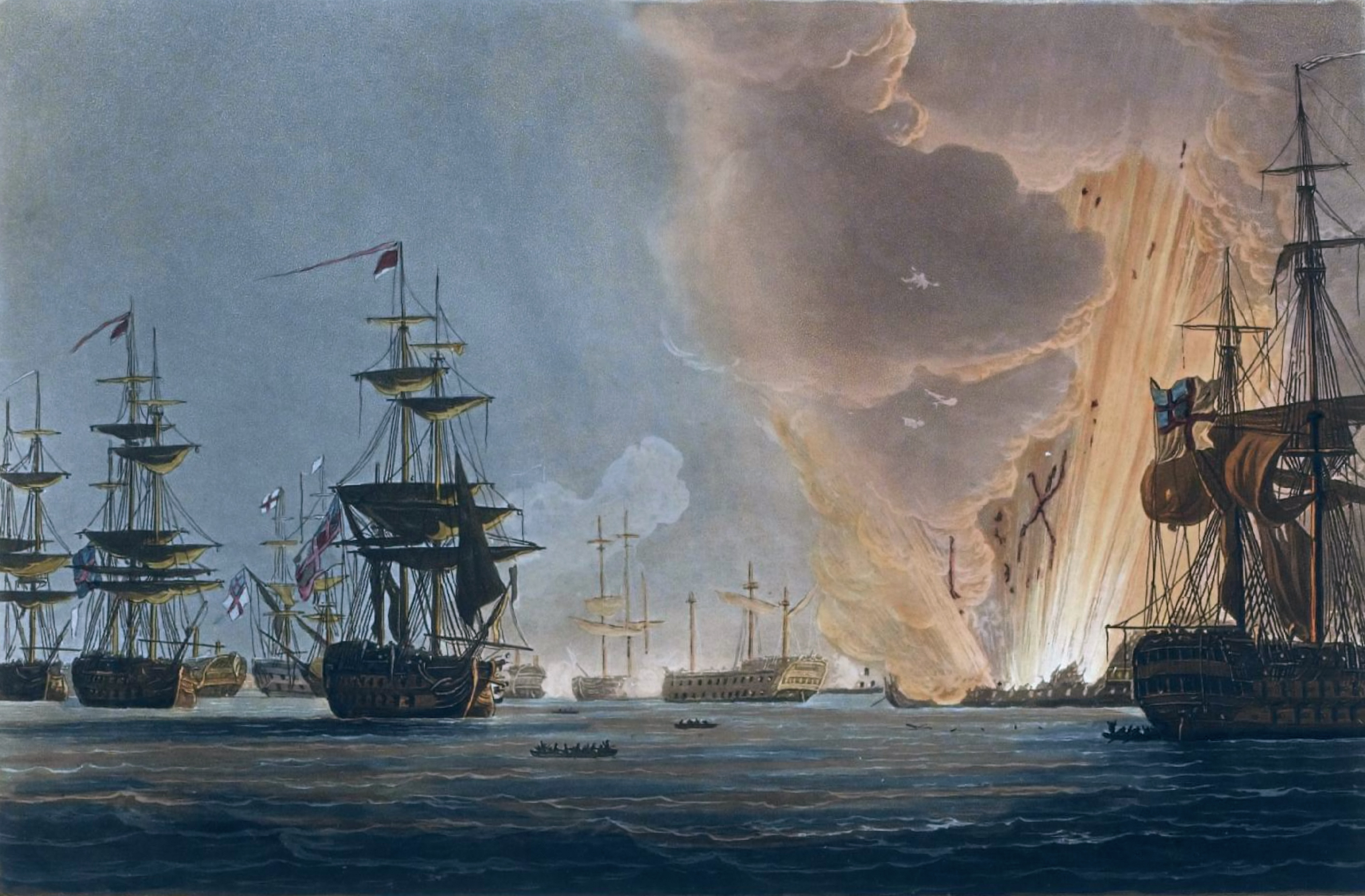
Battle of the Nile, Augt. 1st 1798

Battle of the Nile, Augt. 1st 1798: The British fleet bears down on the anchored French.

Battle off the Mouth of the Nile Lee was on HMS Swiftsure during the battle Original lithograph drawn on stone by Sir Theophilus Lee Trives & Maynard Printers &c. Portsea
A selection of amusing and instructive pamphlets ; No. VI.
Historische Übersicht
Die Seeschlacht bei Abukir war eine Seeschlacht zwischen Großbritannien und Frankreich. Sie fand vom 1. bis zum 2. August 1798 vor der Küste von Abukir statt. Dabei besiegte die britische Mittelmeerflotte unter dem Kommando von Konteradmiral Horatio Nelson die französische Mittelmeerflotte, die zuvor das Expeditionsheer Napoleons nach Ägypten gebracht hatte. Die Schlacht führte zu einer wesentlich besseren Position der Royal Navy im Mittelmeer und war ein entscheidender Faktor für die Entstehung der Zweiten Koalition gegen Frankreich.
Fakten auf einen Blick
Royal Navy (GB)
- Befehlshaber: Horatio Nelson
- Truppenstärke: 14 Linienschiffe
- Verluste: ca. 900
Französische Marine
- Befehlshaber: Brueys d'Aigalliers †
- Truppenstärke: 13 Linienschiffe
- Verluste: ca. 3.000
Strategischer Kontext
Kampf um die maritime Verbindung nach Frankreich und die Seeherrschaft.
Weiterführende Literatur

Trafalgar: Great Battles and Sieges

Historische Orte
Die interaktive Karte erfordert die Zustimmung zu Drittanbieter-Cookies.