Alle Schlachten

Schlacht bei Saint-Quentin

1557 Picardie Feldschlacht

Kaart van de Slag bij Sint-Quentin (1557). Vertaling van San Quintin.png.

Kaart van de Slag bij Sint-Quentin (1557). Vertaling van San Quintin.png.

Author: en:User:Catalan (translation by me, nl:Gebruiker:Nederlandse Leeuw)License:CC-BY-SA-4.0
Source
Siege of Saint Quentin

Siege of Saint Quentin

Author: Niccoló GranelloLicense:PD
Source
Fresque de la salle des batailles du palais de l'Escurial représentant la prise de Saint-Quentin par les Espagnols en 1557

Fresque de la salle des batailles du palais de l'Escurial représentant la prise de Saint-Quentin par les Espagnols en 1557

Author: Fabrizio CastelloLicense:PD
Source
Mapa de la Batalla de San Quintín

Mapa de la Batalla de San Quintín

Author: CarlosVdeHabsburgoLicense:CC-BY-SA-4.0
Source
quadro raffigurante la battaglia di san quintino

quadro raffigurante la battaglia di san quintino

Author: Palma il GiovaneLicense:PD
Source
The Siege of San Quentin, copy of a painting by Luca Giordano

The Siege of San Quentin, copy of a painting by Luca Giordano

Author: copy of Luca GiordanoLicense:PD
Source
Il Duca di Savoia Emanuele Filiberto vince i francesi nei campi di S. Quintino

Il Duca di Savoia Emanuele Filiberto vince i francesi nei campi di S. Quintino

Author: Massimo d'AzeglioLicense:PD
Source
Battle of San Quintín, copy of Luca Giordano

Battle of San Quintín, copy of Luca Giordano

Author: copy of Luca GiordanoLicense:PD
Source
Esbós per a les pintures murals del fris de l’escala de l’Escorial, de format apaïsat amb soldats a cavall lluitant a primer pla i al fons més soldats, ferits, morts i molt de fum

Esbós per a les pintures murals del fris de l’escala de l’Escorial, de format apaïsat amb soldats a cavall lluitant a primer pla i al fons més soldats, ferits, morts i molt de fum
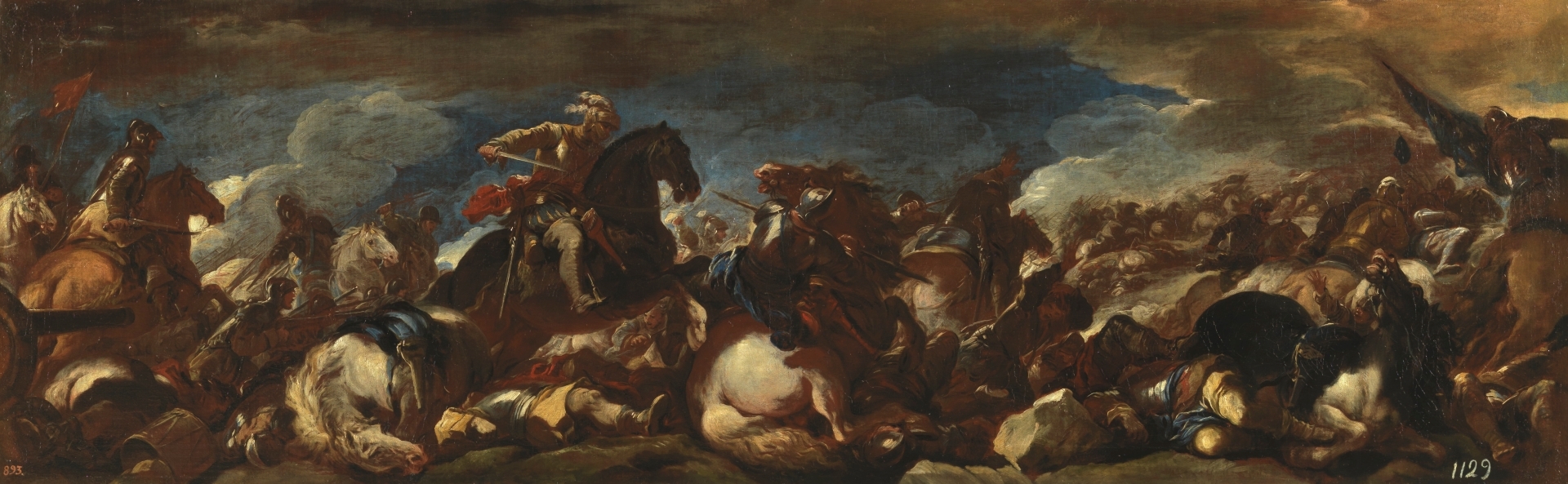
Author: Luca GiordanoLicense:PD
Source
Esbós per a les pintures murals del fris de l’escala de l’Escorial, de format apaïsat amb soldats a cavall lluitant a primer pla i al fons més soldats, ferits, morts i molt de fum

Esbós per a les pintures murals del fris de l’escala de l’Escorial, de format apaïsat amb soldats a cavall lluitant a primer pla i al fons més soldats, ferits, morts i molt de fum

Author: Luca GiordanoLicense:PD
Source
Esbós per a les pintures murals del fris de l’escala de l’Escorial, de format apaïsat amb soldats a cavall lluitant a primer pla i al fons més soldats, ferits, morts i molt de fum

Esbós per a les pintures murals del fris de l’escala de l’Escorial, de format apaïsat amb soldats a cavall lluitant a primer pla i al fons més soldats, ferits, morts i molt de fum

Author: Luca GiordanoLicense:PD
Source
Esbós per a les pintures murals del fris de l’escala de l’Escorial, de format apaïsat amb soldats a cavall lluitant a primer pla i al fons més soldats, ferits, morts i molt de fum

Esbós per a les pintures murals del fris de l’escala de l’Escorial, de format apaïsat amb soldats a cavall lluitant a primer pla i al fons més soldats, ferits, morts i molt de fum

Author: Luca GiordanoLicense:PD
Source
Monument commémoratif du lieu de la Bataille de Saint-Quentin situé sur la D1 près de Montescourt-Lizerolles.
Monument commémoratif du lieu de la Bataille de Saint-Quentin situé sur la D1 près de Montescourt-Lizerolles.

Author: René HourdryLicense:CC-BY-SA-4.0
Source
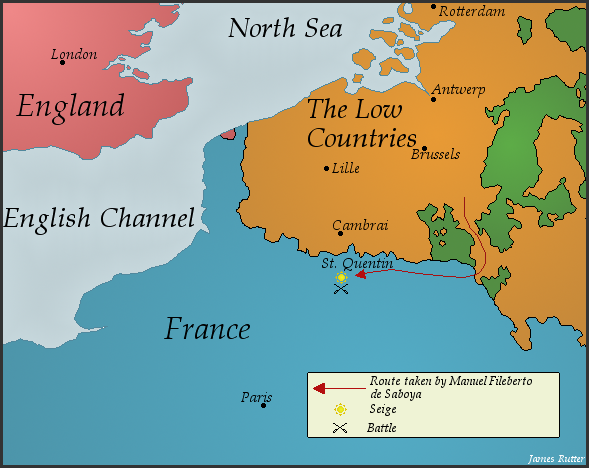
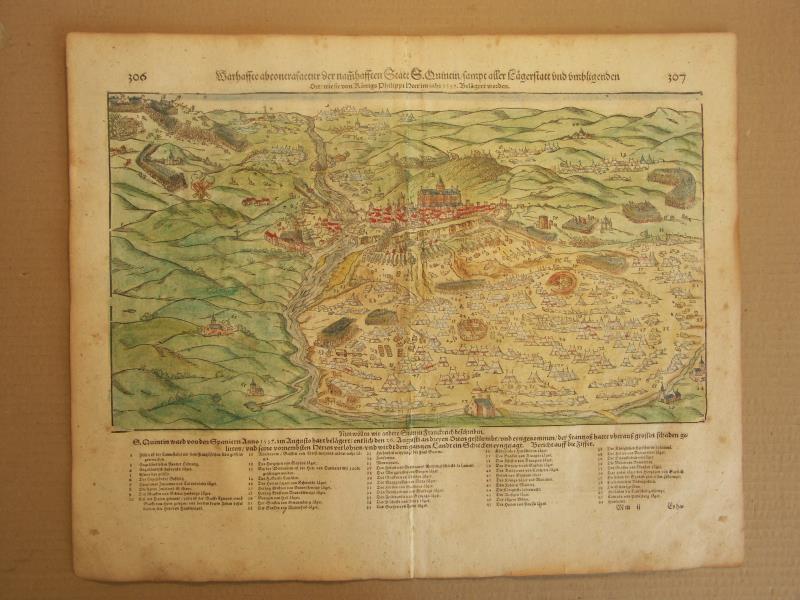
gravure sur bois publiée dans la Cosmographie de Sebastian Munster, édition de 1598.

gravure sur bois publiée dans la Cosmographie de Sebastian Munster, édition de 1598.

Author: HeribertusLicense:PD
Source
Pintura de la serie sobre la batalla de San Quintín en 1692 por Luca Giordano

Pintura de la serie sobre la batalla de San Quintín en 1692 por Luca Giordano

Author: Luca GiordanoLicense:CC-BY-SA-4.0
Source
Surrender of the French army at the Battle of San Quentin, copy of Luca Giordano
Surrender of the French army at the Battle of San Quentin, copy of Luca Giordano

Author: copy of Luca GiordanoLicense:PD
Source
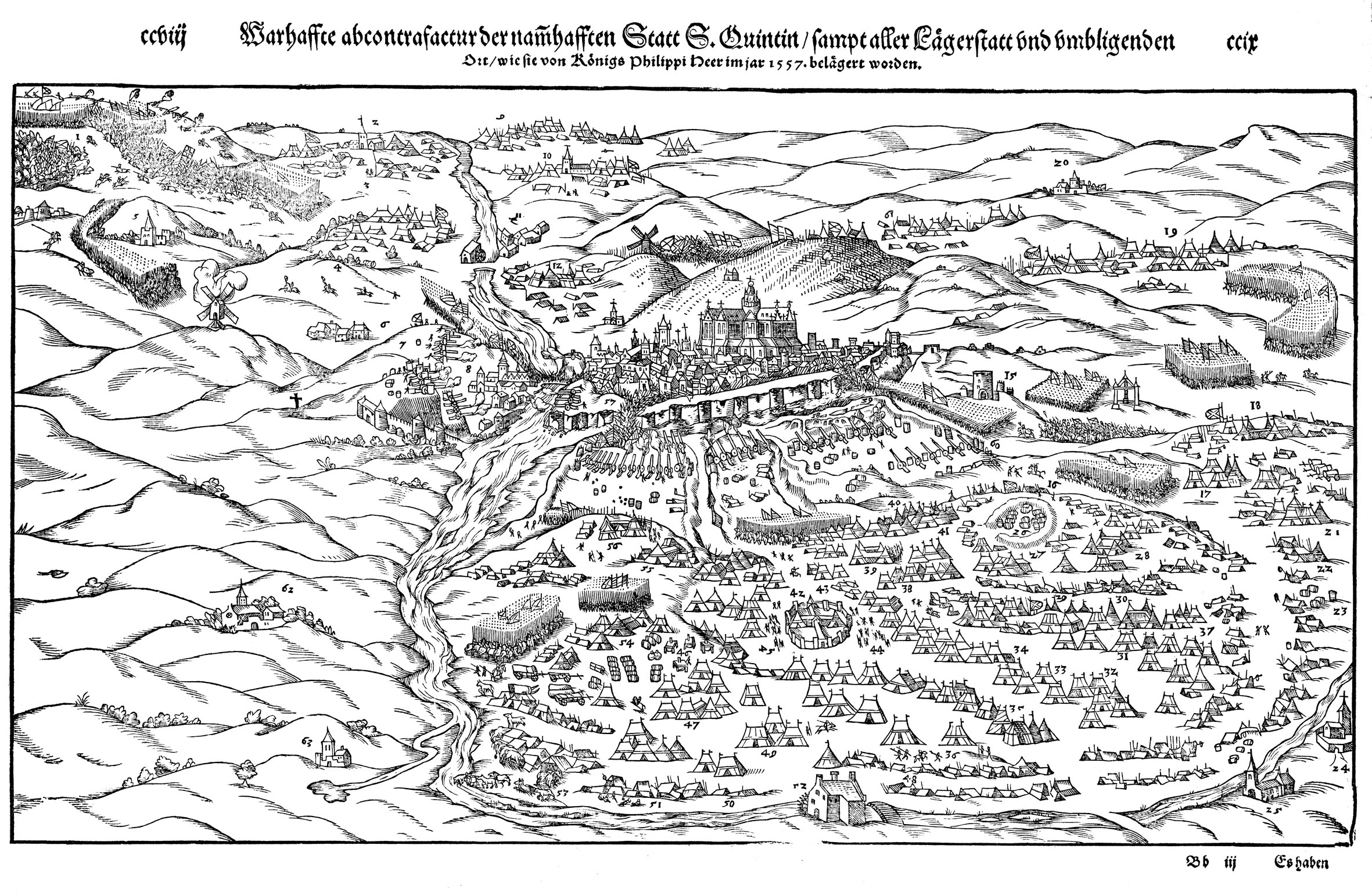
map of situation of the Battle of San Quintin

map of situation of the Battle of San Quintin

Author: en:User:CatalanLicense:CC-BY-SA-4.0
Source
Sebastian Münster (1488-1552) was a German cartographer, cosmographer, and Hebrew scholar whose Cosmographia (1544; "Cosmography") was the earliest German description of the world and a major work in the revival of geographic thought in 16th-century Europe. Altogether, about 40 editions of the Cosmographia appeared between 1544 and 1628; Münster was a major influence on his subject for over 200 years.
Münster acquired the material for his book in three ways. He used all available literary sources. He tried to obtain original manuscript material for description of the countryside and of villages and towns. Finally, he obtained further material on his travels (primarily in south-west Germany, Switzerland, and Alsace). Cosmographia not only contained the latest maps and views of many well-known cities, but also included an encyclopaedic amount of detail about the known -- and unknown -- world, and was undoubtedly one of the most widely read books of its time.

Aside from the well-known maps present in the Cosmographia, the text is thickly sprinkled with vigorous views: portraits of kings and princes, costumes and occupations, habits and customs, flora and fauna, monsters, wonders, and horrors.
Sebastian Münster (1488-1552) was a German cartographer, cosmographer, and Hebrew scholar whose Cosmographia (1544; "Cosmography") was the earliest German description of the world and a major work in the revival of geographic thought in 16th-century Europe. Altogether, about 40 editions of the Cosmographia appeared between 1544 and 1628; Münster was a major influence on his subject for over 200 years. Münster acquired the material for his book in three ways. He used all available literary sources. He tried to obtain original manuscript material for description of the countryside and of villages and towns. Finally, he obtained further material on his travels (primarily in south-west Germany, Switzerland, and Alsace). Cosmographia not only contained the latest maps and views of many well-known cities, but also included an encyclopaedic amount of detail about the known -- and unknown -- world, and was undoubtedly one of the most widely read books of its time. Aside from the well-known maps present in the Cosmographia, the text is thickly sprinkled with vigorous views: portraits of kings and princes, costumes and occupations, habits and customs, flora and fauna, monsters, wonders, and horrors.

Author: Sebastian MünsterLicense:PD
Source
Sebastian Münster (1488-1552) was a German cartographer, cosmographer, and Hebrew scholar whose Cosmographia (1544; "Cosmography") was the earliest German description of the world and a major work in the revival of geographic thought in 16th-century Europe. Altogether, about 40 editions of the Cosmographia appeared between 1544 and 1628; Münster was a major influence on his subject for over 200 years.
Münster acquired the material for his book in three ways. He used all available literary sources. He tried to obtain original manuscript material for description of the countryside and of villages and towns. Finally, he obtained further material on his travels (primarily in south-west Germany, Switzerland, and Alsace). Cosmographia not only contained the latest maps and views of many well-known cities, but also included an encyclopaedic amount of detail about the known -- and unknown -- world, and was undoubtedly one of the most widely read books of its time.

Aside from the well-known maps present in the Cosmographia, the text is thickly sprinkled with vigorous views: portraits of kings and princes, costumes and occupations, habits and customs, flora and fauna, monsters, wonders, and horrors.

Sebastian Münster (1488-1552) was a German cartographer, cosmographer, and Hebrew scholar whose Cosmographia (1544; "Cosmography") was the earliest German description of the world and a major work in the revival of geographic thought in 16th-century Europe. Altogether, about 40 editions of the Cosmographia appeared between 1544 and 1628; Münster was a major influence on his subject for over 200 years. Münster acquired the material for his book in three ways. He used all available literary sources. He tried to obtain original manuscript material for description of the countryside and of villages and towns. Finally, he obtained further material on his travels (primarily in south-west Germany, Switzerland, and Alsace). Cosmographia not only contained the latest maps and views of many well-known cities, but also included an encyclopaedic amount of detail about the known -- and unknown -- world, and was undoubtedly one of the most widely read books of its time. Aside from the well-known maps present in the Cosmographia, the text is thickly sprinkled with vigorous views: portraits of kings and princes, costumes and occupations, habits and customs, flora and fauna, monsters, wonders, and horrors.

Author: Sebastian MünsterLicense:PD
Source
Sebastian Münster (1488-1552) was a German cartographer, cosmographer, and Hebrew scholar whose Cosmographia (1544; "Cosmography") was the earliest German description of the world and a major work in the revival of geographic thought in 16th-century Europe. Altogether, about 40 editions of the Cosmographia appeared between 1544 and 1628; Münster was a major influence on his subject for over 200 years.
Münster acquired the material for his book in three ways. He used all available literary sources. He tried to obtain original manuscript material for description of the countryside and of villages and towns. Finally, he obtained further material on his travels (primarily in south-west Germany, Switzerland, and Alsace). Cosmographia not only contained the latest maps and views of many well-known cities, but also included an encyclopaedic amount of detail about the known -- and unknown -- world, and was undoubtedly one of the most widely read books of its time.

Aside from the well-known maps present in the Cosmographia, the text is thickly sprinkled with vigorous views: portraits of kings and princes, costumes and occupations, habits and customs, flora and fauna, monsters, wonders, and horrors.

Sebastian Münster (1488-1552) was a German cartographer, cosmographer, and Hebrew scholar whose Cosmographia (1544; "Cosmography") was the earliest German description of the world and a major work in the revival of geographic thought in 16th-century Europe. Altogether, about 40 editions of the Cosmographia appeared between 1544 and 1628; Münster was a major influence on his subject for over 200 years. Münster acquired the material for his book in three ways. He used all available literary sources. He tried to obtain original manuscript material for description of the countryside and of villages and towns. Finally, he obtained further material on his travels (primarily in south-west Germany, Switzerland, and Alsace). Cosmographia not only contained the latest maps and views of many well-known cities, but also included an encyclopaedic amount of detail about the known -- and unknown -- world, and was undoubtedly one of the most widely read books of its time. Aside from the well-known maps present in the Cosmographia, the text is thickly sprinkled with vigorous views: portraits of kings and princes, costumes and occupations, habits and customs, flora and fauna, monsters, wonders, and horrors.
Author: Sebastian MünsterLicense:PD
Source
Sebastian Münster (1488-1552) was a German cartographer, cosmographer, and Hebrew scholar whose Cosmographia (1544; "Cosmography") was the earliest German description of the world and a major work in the revival of geographic thought in 16th-century Europe. Altogether, about 40 editions of the Cosmographia appeared between 1544 and 1628; Münster was a major influence on his subject for over 200 years.
Münster acquired the material for his book in three ways. He used all available literary sources. He tried to obtain original manuscript material for description of the countryside and of villages and towns. Finally, he obtained further material on his travels (primarily in south-west Germany, Switzerland, and Alsace). Cosmographia not only contained the latest maps and views of many well-known cities, but also included an encyclopaedic amount of detail about the known -- and unknown -- world, and was undoubtedly one of the most widely read books of its time.

Aside from the well-known maps present in the Cosmographia, the text is thickly sprinkled with vigorous views: portraits of kings and princes, costumes and occupations, habits and customs, flora and fauna, monsters, wonders, and horrors.

Sebastian Münster (1488-1552) was a German cartographer, cosmographer, and Hebrew scholar whose Cosmographia (1544; "Cosmography") was the earliest German description of the world and a major work in the revival of geographic thought in 16th-century Europe. Altogether, about 40 editions of the Cosmographia appeared between 1544 and 1628; Münster was a major influence on his subject for over 200 years. Münster acquired the material for his book in three ways. He used all available literary sources. He tried to obtain original manuscript material for description of the countryside and of villages and towns. Finally, he obtained further material on his travels (primarily in south-west Germany, Switzerland, and Alsace). Cosmographia not only contained the latest maps and views of many well-known cities, but also included an encyclopaedic amount of detail about the known -- and unknown -- world, and was undoubtedly one of the most widely read books of its time. Aside from the well-known maps present in the Cosmographia, the text is thickly sprinkled with vigorous views: portraits of kings and princes, costumes and occupations, habits and customs, flora and fauna, monsters, wonders, and horrors.

Author: Sebastian MünsterLicense:PD
Source
Sebastian Münster (1488-1552) was a German cartographer, cosmographer, and Hebrew scholar whose Cosmographia (1544; "Cosmography") was the earliest German description of the world and a major work in the revival of geographic thought in 16th-century Europe. Altogether, about 40 editions of the Cosmographia appeared between 1544 and 1628; Münster was a major influence on his subject for over 200 years.
Münster acquired the material for his book in three ways. He used all available literary sources. He tried to obtain original manuscript material for description of the countryside and of villages and towns. Finally, he obtained further material on his travels (primarily in south-west Germany, Switzerland, and Alsace). Cosmographia not only contained the latest maps and views of many well-known cities, but also included an encyclopaedic amount of detail about the known -- and unknown -- world, and was undoubtedly one of the most widely read books of its time.

Aside from the well-known maps present in the Cosmographia, the text is thickly sprinkled with vigorous views: portraits of kings and princes, costumes and occupations, habits and customs, flora and fauna, monsters, wonders, and horrors.

Sebastian Münster (1488-1552) was a German cartographer, cosmographer, and Hebrew scholar whose Cosmographia (1544; "Cosmography") was the earliest German description of the world and a major work in the revival of geographic thought in 16th-century Europe. Altogether, about 40 editions of the Cosmographia appeared between 1544 and 1628; Münster was a major influence on his subject for over 200 years. Münster acquired the material for his book in three ways. He used all available literary sources. He tried to obtain original manuscript material for description of the countryside and of villages and towns. Finally, he obtained further material on his travels (primarily in south-west Germany, Switzerland, and Alsace). Cosmographia not only contained the latest maps and views of many well-known cities, but also included an encyclopaedic amount of detail about the known -- and unknown -- world, and was undoubtedly one of the most widely read books of its time. Aside from the well-known maps present in the Cosmographia, the text is thickly sprinkled with vigorous views: portraits of kings and princes, costumes and occupations, habits and customs, flora and fauna, monsters, wonders, and horrors.

Author: Sebastian MünsterLicense:PD
Source
Sebastian Münster (1488-1552) was a German cartographer, cosmographer, and Hebrew scholar whose Cosmographia (1544; "Cosmography") was the earliest German description of the world and a major work in the revival of geographic thought in 16th-century Europe. Altogether, about 40 editions of the Cosmographia appeared between 1544 and 1628; Münster was a major influence on his subject for over 200 years.
Münster acquired the material for his book in three ways. He used all available literary sources. He tried to obtain original manuscript material for description of the countryside and of villages and towns. Finally, he obtained further material on his travels (primarily in south-west Germany, Switzerland, and Alsace). Cosmographia not only contained the latest maps and views of many well-known cities, but also included an encyclopaedic amount of detail about the known -- and unknown -- world, and was undoubtedly one of the most widely read books of its time.

Aside from the well-known maps present in the Cosmographia, the text is thickly sprinkled with vigorous views: portraits of kings and princes, costumes and occupations, habits and customs, flora and fauna, monsters, wonders, and horrors.

Sebastian Münster (1488-1552) was a German cartographer, cosmographer, and Hebrew scholar whose Cosmographia (1544; "Cosmography") was the earliest German description of the world and a major work in the revival of geographic thought in 16th-century Europe. Altogether, about 40 editions of the Cosmographia appeared between 1544 and 1628; Münster was a major influence on his subject for over 200 years. Münster acquired the material for his book in three ways. He used all available literary sources. He tried to obtain original manuscript material for description of the countryside and of villages and towns. Finally, he obtained further material on his travels (primarily in south-west Germany, Switzerland, and Alsace). Cosmographia not only contained the latest maps and views of many well-known cities, but also included an encyclopaedic amount of detail about the known -- and unknown -- world, and was undoubtedly one of the most widely read books of its time. Aside from the well-known maps present in the Cosmographia, the text is thickly sprinkled with vigorous views: portraits of kings and princes, costumes and occupations, habits and customs, flora and fauna, monsters, wonders, and horrors.

Author: Sebastian MünsterLicense:PD
Source
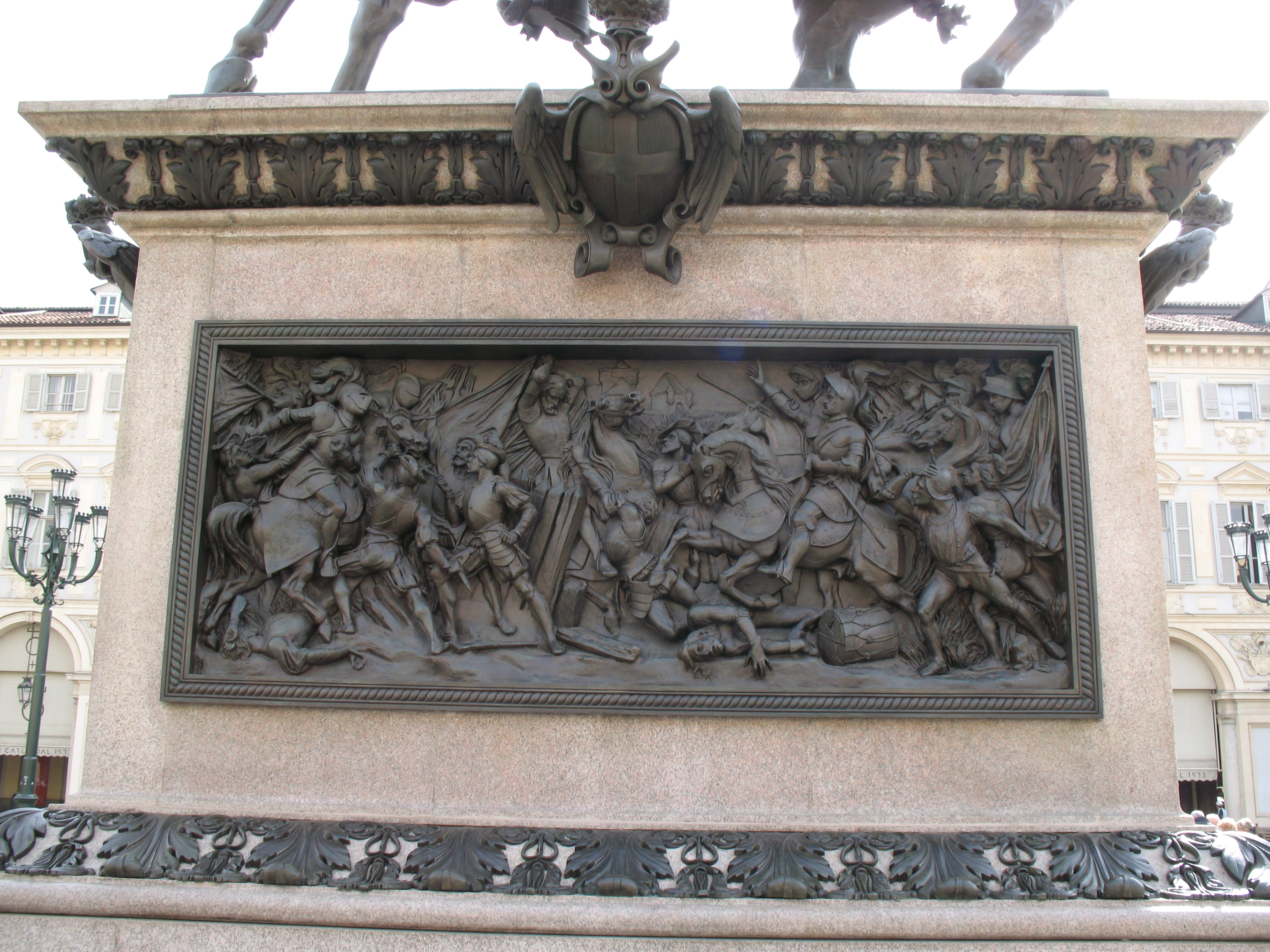
Statua equestre ad Emanuele Filiberto di Savoia - Piazza san Carlo - Torino - Italy

Statua equestre ad Emanuele Filiberto di Savoia - Piazza san Carlo - Torino - Italy

Author: GJoLicense:CC-BY-4.0
Source

Historische Übersicht

Ein massiver spanischer Sieg in Nordfrankreich, der den Weg zum Frieden von Cateau-Cambrésis ebnete.

Fakten auf einen Blick

Ergebnis:Entscheidender spanischer Sieg.

Kgr. Spanien (Habsburg)

  • Befehlshaber: Emmanuel Philibert
  • Truppenstärke: ca. 50.000
  • Verluste: Gering

Königreich Frankreich

  • Befehlshaber: Anne de Montmorency
  • Truppenstärke: ca. 25.000
  • Verluste: ca. 10.000

Strategischer Kontext

Habsburgischer Angriff auf das französische Kernland zur Beendigung des Krieges.

Konflikt / Krieg

Italienische Kriege

Taktisches Unentschieden; strategischer Erfolg Frankreichs (Rückzug gelang).

Weiterführende Literatur

Cover of Der Bauernkrieg: Deutschlands großer Volksaufstand

Der Bauernkrieg: Deutschlands großer Volksaufstand

Bauernkrieg16. JahrhundertMittelalter

Deutsch
Renaissance & Reformation
Cover of Lexikon der Renaissance

Lexikon der Renaissance

RenaissanceSachbuchEuropäische Geschichte

Deutsch
Renaissance & Reformation

Historische Orte

Die interaktive Karte erfordert die Zustimmung zu Drittanbieter-Cookies.