Schlacht von Chinkiang
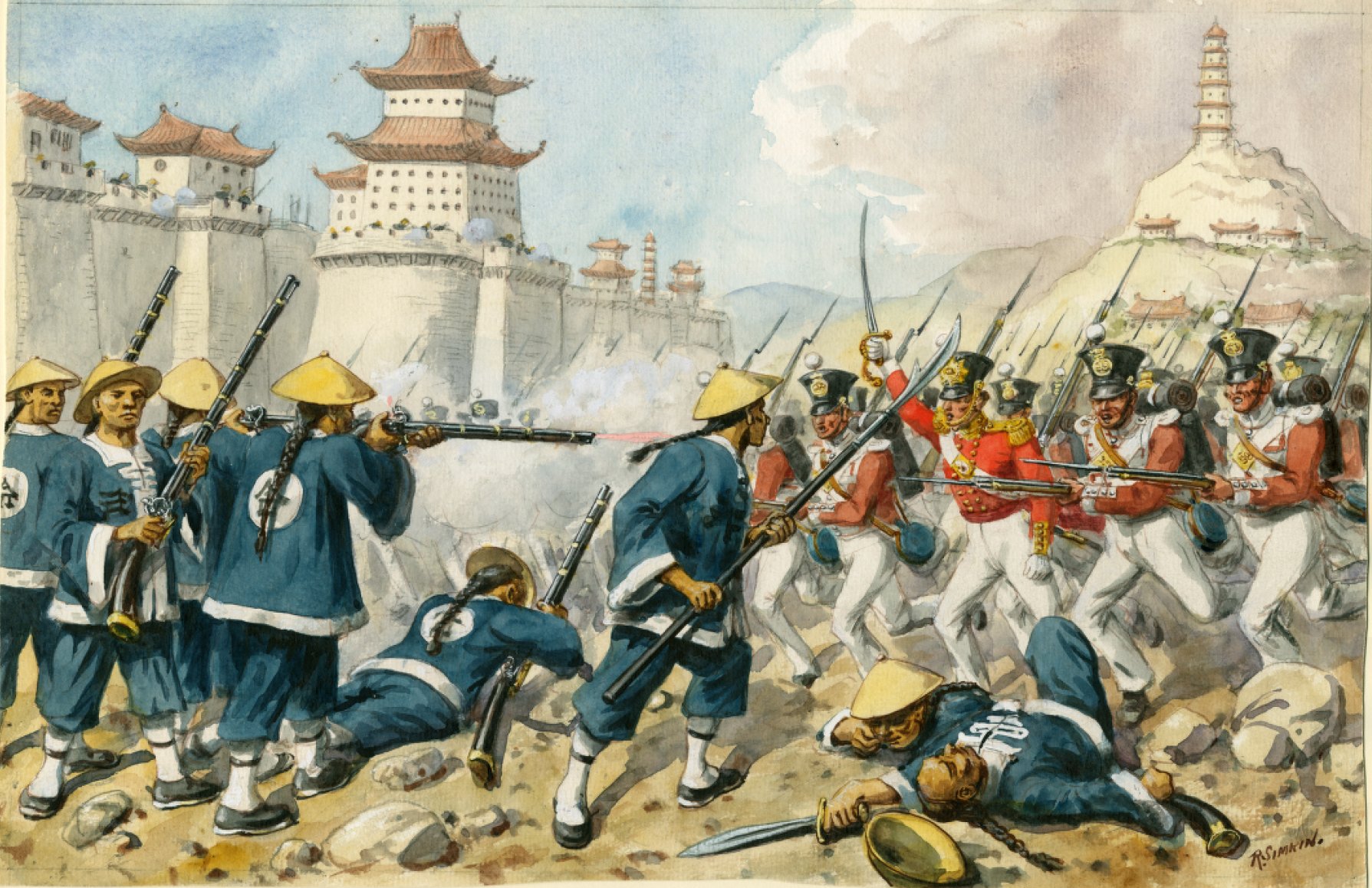
The 98th Regiment of Foot at the attack on Chin-Kiang-Foo, 21 July 1842.
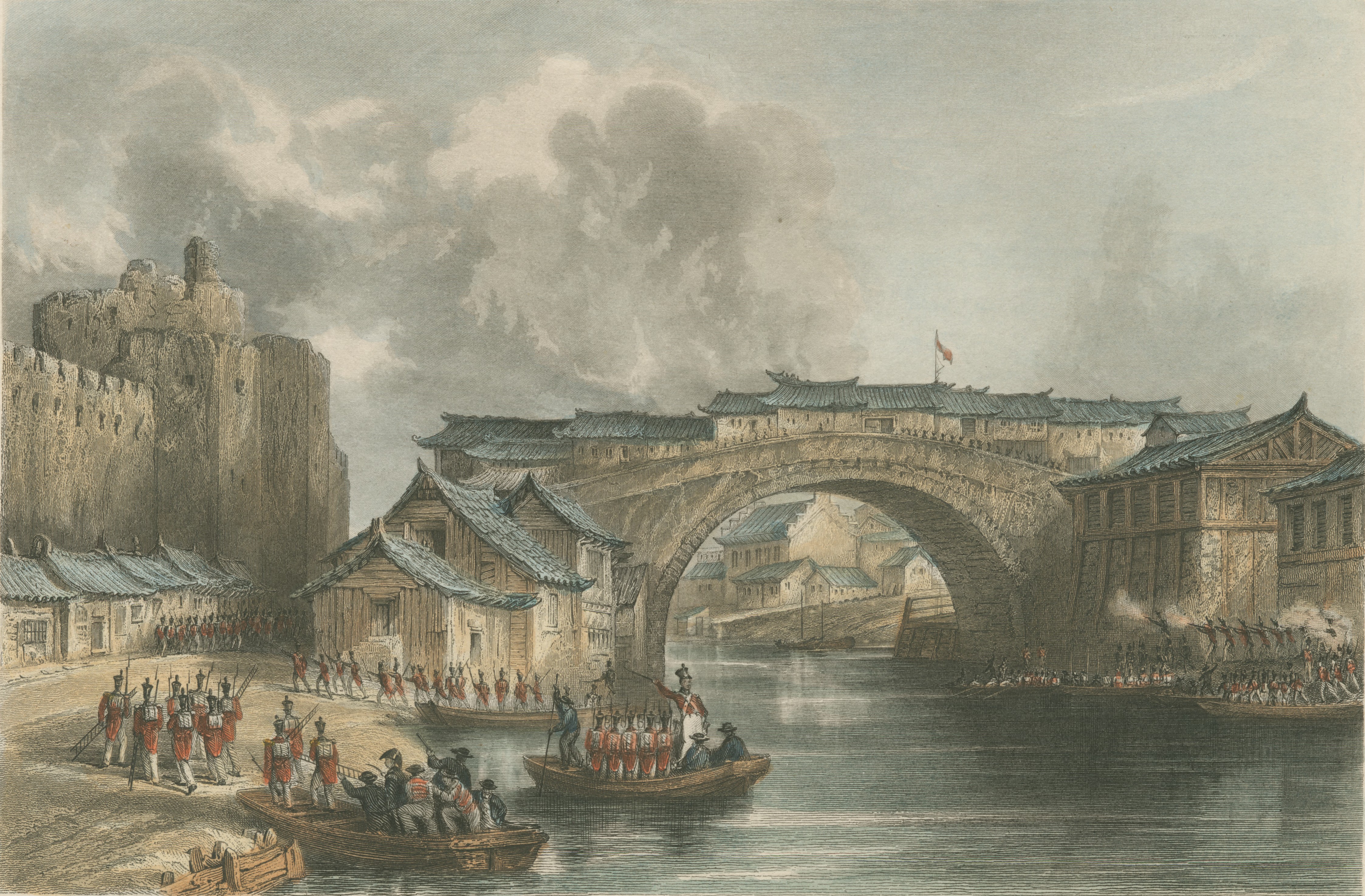
West gate of Ching-Keang-Foo, 21 July 1842.

Battle of Chinkiang Memorial at the St. George's Cathedral, Madras
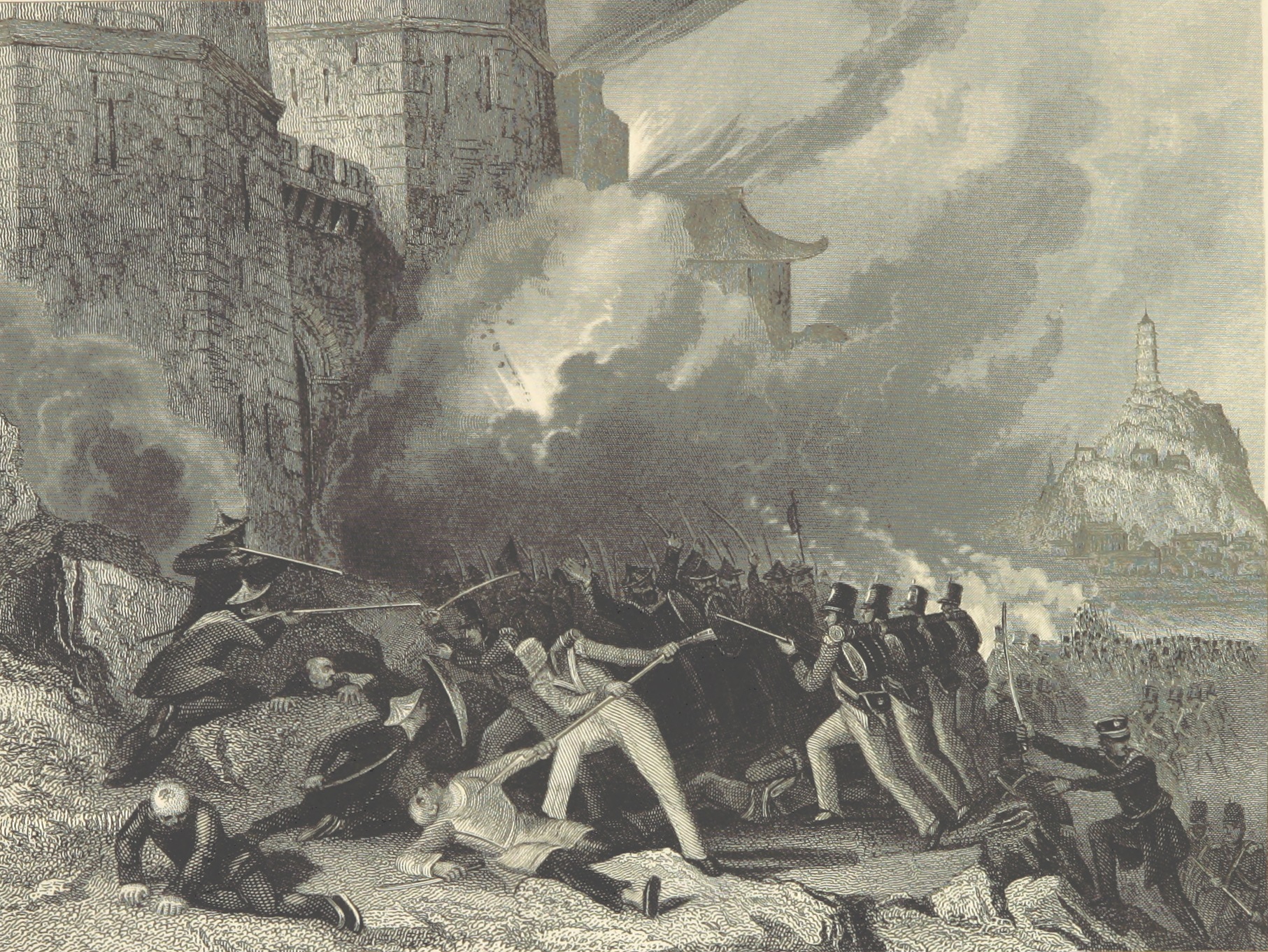
British troops capture Chin-Keang-Foo.
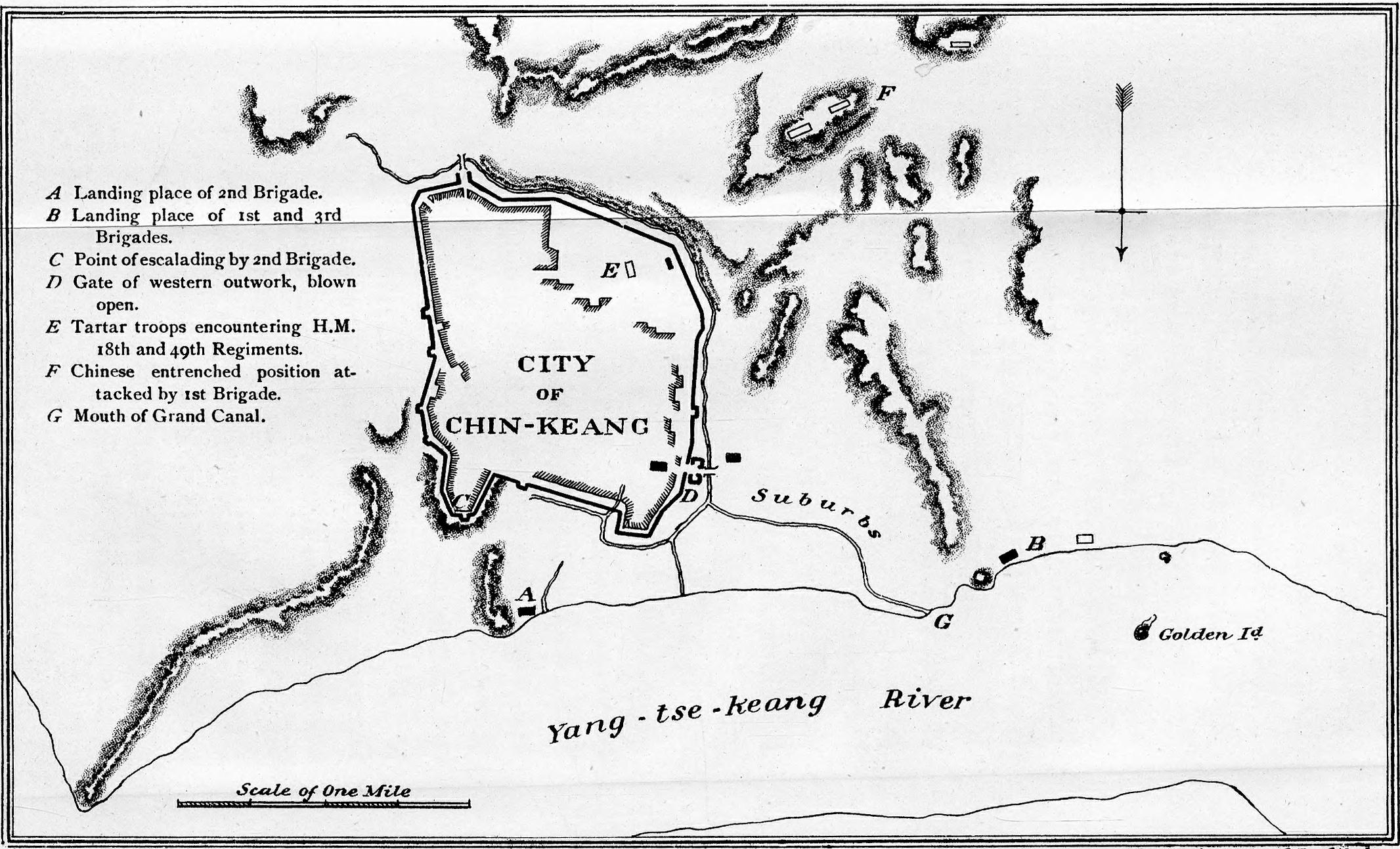
Map of the capture of Chinkeangfoo

Position of the Chinese forces near Chin-keang-foo.

Escalade of Chin-keang-foo.

Blowing open the gates of Chin-keang-foo.
![Portrait drawing of General Hai ling (?-1842) Manchu Bannerman the unhinged defender of Zhenjiang against the British attack in spring 1842 (First Opium War). (From the "The Opium War: Drugs, Dreams, and the Making of Modern China" by Julia Lovell].](https://upload.wikimedia.org/wikipedia/commons/3/34/Hailing.jpg)
Portrait drawing of General Hai ling (?-1842) Manchu Bannerman the unhinged defender of Zhenjiang against the British attack in spring 1842 (First Opium War). (From the "The Opium War: Drugs, Dreams, and the Making of Modern China" by Julia Lovell].

Sketch of the operations in Chin-keang-foo.

Rallying of the Tartars at Chin-keang-foo.

West gate of Ching-Keang-Foo. British troops land at Ching-Keang-Foo (Chin-kiang) during the First Opium War.

West gate of Ching-Keang-Foo.
Historische Übersicht
Bei der Schlacht von Zhenjiang eroberten britische Truppen während des Ersten Opiumkriegs die strategisch wichtig gelegene südchinesische Stadt Zhenjiang am 21. Juli 1842. Die Niederlage markiert das Ende der Bestrebungen des Kaisers Daoguang, den Krieg zu eigenen Friedensbedingungen zu Ende zu bringen. Für die britische Seite eröffnete sie den Weg zum weiteren Vormarsch auf Nanjing.
Fakten auf einen Blick
Königreich Großbritannien
- Befehlshaber: Hugh Gough
- Truppenstärke: ca. 7.000
- Verluste: ca. 35
Qing-Dynastie
- Befehlshaber: Hailiang †
- Truppenstärke: ca. 3.000
- Verluste: ca. 500 (Massenselbstm.)
Strategischer Kontext
Blockade des Kaiserkanals, um die Getreidezufuhr nach Peking zu kappen.
Weiterführende Literatur

Revolutionary Spring: Fighting for a New World 1848-1849
Christopher Clark

Spanish-American War: A Captivating Guide to the War Between the United States of America and Spain along with The Philippine–American War that Followed

The Philippine–American War

Frühling der Revolution: Europa 1848/49 und der Kampf für eine neue Welt
Christopher Clark

Risorgimento! Italiens Kampf um die Einheit im 19. Jahrhundert
Historische Orte
Genaue Lage nicht in historischen Quellen überliefert