Schlacht von Bizani

Greek lithograph of the Surrender of Ioannina by Esad Pasha to the Greek Crown Prince Constantine during the First Balkan War.

Destroyed Ottoman Emplacements at Bizani. Postcard published by Aspiotis, in 1913.

Destroyed Ottoman Emplacements at Bizani. Postcard published by Aspiotis, in 1913.

Cement Emplacements at Bizani. Postcard published by Aspiotis, in 1913.

Postcard showing the captured Ottoman guns at Bizani, after the Battle of Bizani in 1913
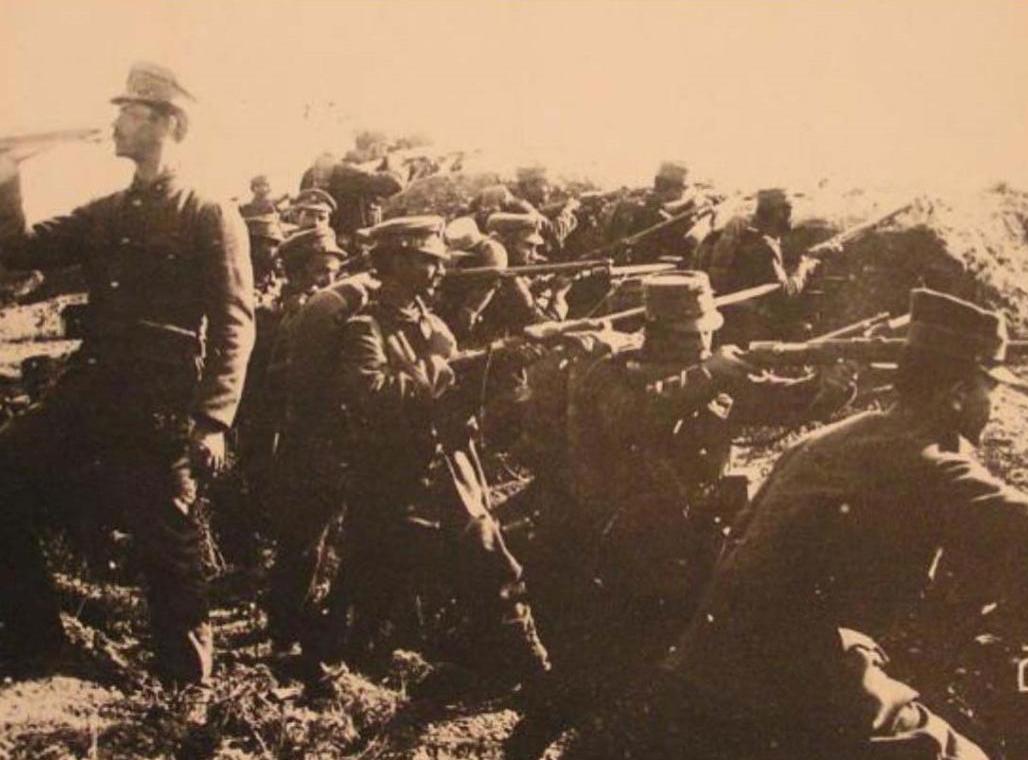
Greek infantry unit ready to charge in the Battla of Bizani, 1st Balkan War, 1913.

War trophies of the Greek Army during the battle of Bizani.

Crown Prince Constantine of Greece watches heavy artillery during the Battle of Bizani in the First Balkan War

Crown Prince Constantine attends a ceremony led by the Mufti of Janina

Cut-away scheme of the Ottoman gun emplacements at Janina

Greek staff officers on the road to Janina, observing the effect of artillery fire on the Ottoman fortifications

Σπάνια φωτογραφία από την περίοδο των Βαλκανικών Πολέμων

Λάφυρα από το Μπιζάνι. Εθνικό Ιστορικό Μουσείο. Αθήνα.

Map of the Ottoman fortifications around Ioannina

Ottoman artillery destroyed at Bizani, 1913
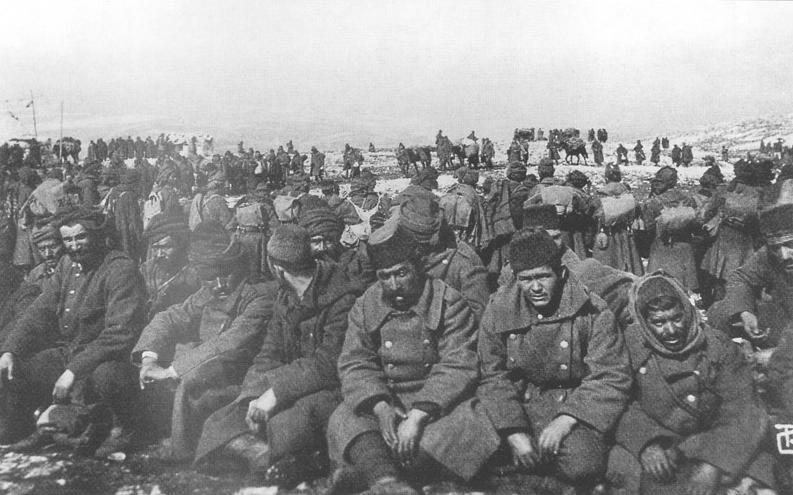
Ottoman prisoners of war in Greek hands. After the battle of Bizani, the Greek Army took 8,600 Ottoman POWs.

Greek (Battle of Bizani, 1913) and Russian (World War I and Russian Civil War) pilot Nikolay Sakov (1889-1930).

Sketch of General Essad Pasha, 1913

Sketch of Colonel Vehib Bey, 1913
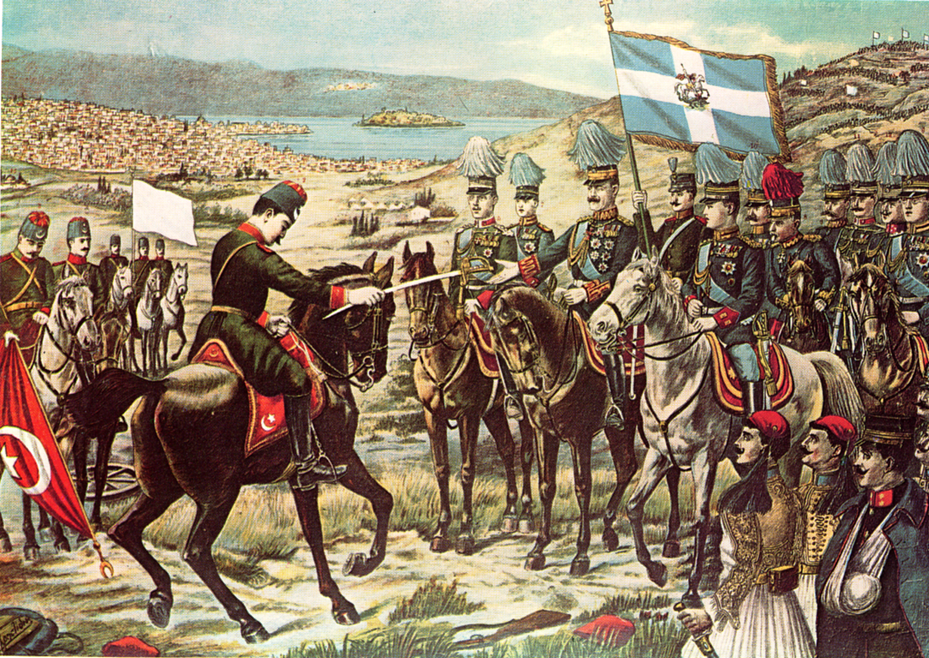
Fanciful depiction of the surrender of Ioannina by Esad pasha to Greek Crown Prince Constantine during the First Balkan War.

Illustration of the surrender of Yanina to the Greek Army after the Battle of Bizani. Pictured are Greek Cavalry General Alexandros Soutsos (center left) shaking hands with the Ottoman representative, Major Vehib Bey.

The Greek aviator Michael Moutousis, after an overflight of Bizani

The Greek commander in Epirus, Konstantinos Sapountzakis, and his officers examine a 105mm siege cannon
Historische Übersicht
Griechischer Sieg; führte zur Kapitulation von Janina und Epirus.
Fakten auf einen Blick
Königreich Griechenland
- Befehlshaber: Kronprinz Konstantin
- Truppenstärke: ca. 40.000
- Verluste: ca. 500
Osmanisches Reich
- Befehlshaber: Esad Pascha
- Truppenstärke: ca. 30.000
- Verluste: ca. 2.800
Strategischer Kontext
Griechische Expansion nach Nordwesten.
Weiterführende Literatur

Revolutionary Spring: Fighting for a New World 1848-1849
Christopher Clark

Spanish-American War: A Captivating Guide to the War Between the United States of America and Spain along with The Philippine–American War that Followed

The Philippine–American War

Frühling der Revolution: Europa 1848/49 und der Kampf für eine neue Welt
Christopher Clark

Risorgimento! Italiens Kampf um die Einheit im 19. Jahrhundert
Historische Orte
Die interaktive Karte erfordert die Zustimmung zu Drittanbieter-Cookies.