1. Schlacht von El Alamein
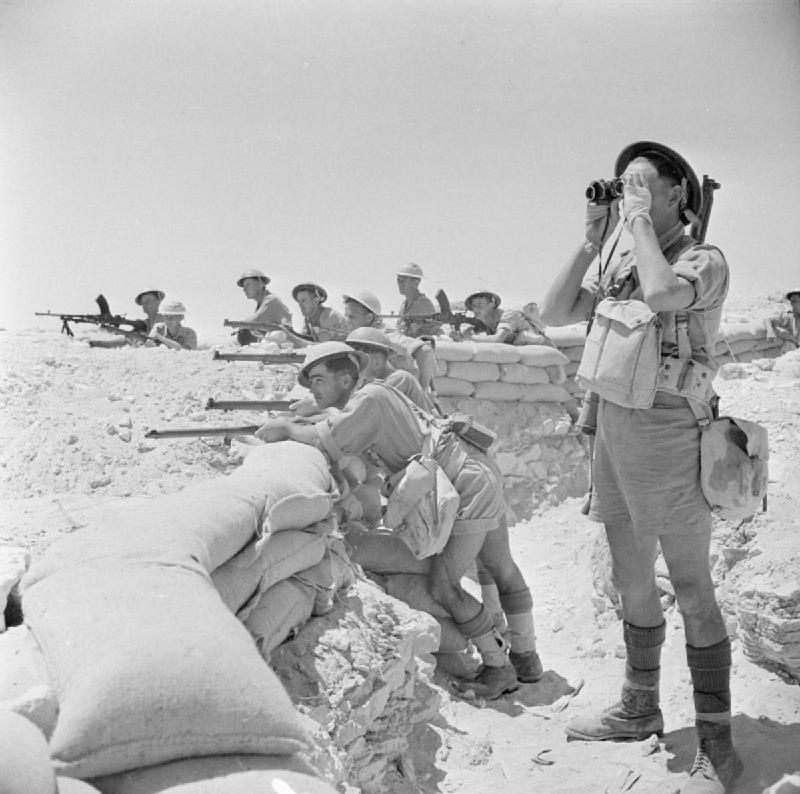
IWM caption : THE BRITISH ARMY IN NORTH AFRICA 1942. Infantry manning a sandbagged defensive position near El Alamein.

IWM caption : El Alamein 1942: British troops dig in at El Alamein during the first battle.

AWM Caption: 25-pounder guns of the 2/8th Field Regiment, Royal Australian Artillery, in action on the coastal sector near El Alamein, Egypt. They are being fired at a range of 9,800 yards on to enemy positions. As a reprisal shoot this troop fired 1,250 rounds in one and a half hours at rapidly changing ranges in reply to German artillery which fired 700 rounds in one hour. A pile of empty shell cases is seen in foreground.

A Humber Mk II armoured car of the 12th Royal Lancers on patrol south of El Alamein, July 1942. A Humber Mk II armoured car of the 12th Royal Lancers on patrol south of El Alamein, July 1942.

המערכה במדבר המערבי, יולי 1942.

ميدان المعارك في الصحراء الغربيَّة خلال شهر تمُّوز (يوليو) سنة 1942م.

Western Desert Battle Area (Egypt) July 1942
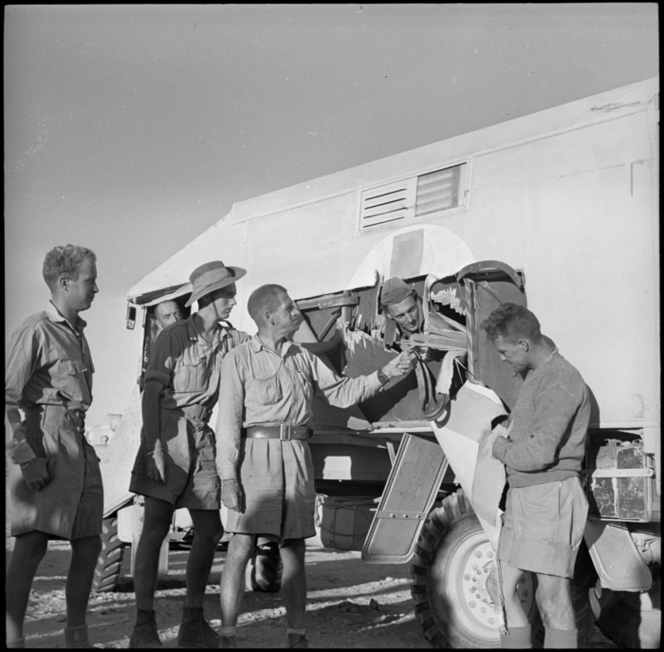
Ambulance damaged by a shell the during breakout at Minqar Qaim, June 1942. Photograph taken by Harold Paton, an official photographer of the 2nd New Zealand Expeditionary Force Shell hole in side of American Field Service ambulance in withdrawal from Minqar Qaim, Egypt - Photograph taken by H Paton. New Zealand. Department of Internal Affairs. War History Branch :Photographs relating to World War 1914-1918, World War 1939-1945, occupation of Japan, Korean War, and Malayan Emergency. Ref: DA-02550-F. Alexander Turnbull Library, Wellington, New Zealand.

Italian anti-aircraft battery at Marsa Matrouh in the summer of 1942

The German Africa Corps halted. Desert fighting in the Alamein area.Picture shows infantry taking whatever cover there is as they approach enemy positions.British official photograph no. BM.15966(XT)

rilievo delle postazioni del fronte della battaglia di El Alamein

For documentary purposes the German Federal Archive often retained the original image captions, which may be erroneous, biased, obsolete or politically extreme. Die Kämpfe um die El-Alamein-Stellung
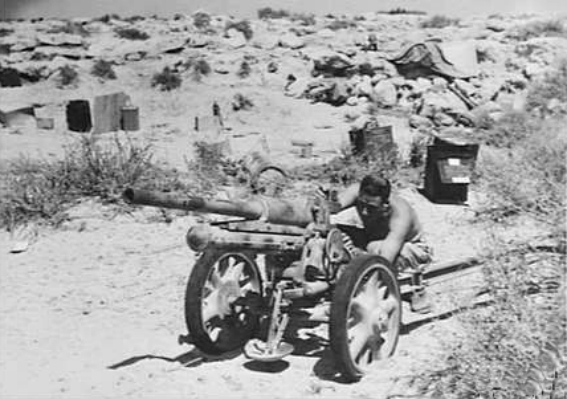
A German "47.32 millimetre choke-bore anti-tank gun" being inspected by regimental Sergeant-Major P. Lawson, of 2/32nd Australian Infantry Battalion near El Alamein in 1942.

Western Desert, Egypt, 14 August 1942: A captured German Messerschmitt Me 109F ("yellow 5") of 6/JG27 (6th Squadron, 27th Fighter Wing) piloted by Lieutenant Gert Mix which made a forced landing in the rear of the Australian lines near El Alamein is loaded on to a transport to be taken to RAF workashops for examination by experts. Other German planes had tried to destroy this plane after landing in order to prevent expert examination.

A captured German Panzerkampfwagen II near El Alamein, Egypt, 1 August 1942.

A Supermarine Spitfire Mk.Vb from No. 92 Squadron (QJ-E), Royal Air Force, which made a forced landing near El Alamein, just off the main Alexandria-Mersa Matruh road.
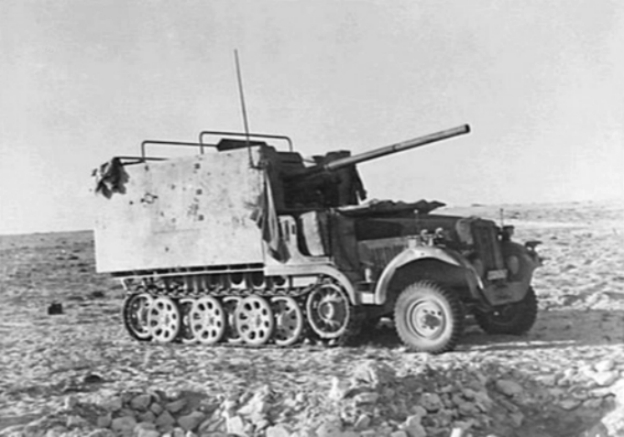
A damaged German SdKfz 6/3 (7,62 cm captured Russian F-22 gun 296(r) mounted on a SdKfz 6 half track) of the 605th Panzerjäger-Abteilung near El Alamein, Egypt, in August 1942.

A damaged German SdKfz 6/3 (7,62 cm captured Russian F-22 gun 296(r) mounted on a SdKfz 6 half track) of the 605th Panzerjäger-Abteilung near El Alamein, Egypt, in August 1942.

El Alamein refuge built by the 51st Highland Division, The Royal Regiment of Scotland (SCOTS) to remember the battle of El-Alamein

Guns of the 11th Field Regiment in Action With Robcol, Ruweisat Ridge, El Alamein July 1942 image: British field artillery firing on German tanks in the desert. In the distance there are columns of smoke filling the sky. On the left one man is attending to a wounded soldier who lies on the ground. The foreground is filled with bags, shell cases, food containers and rations scattered across the sand.
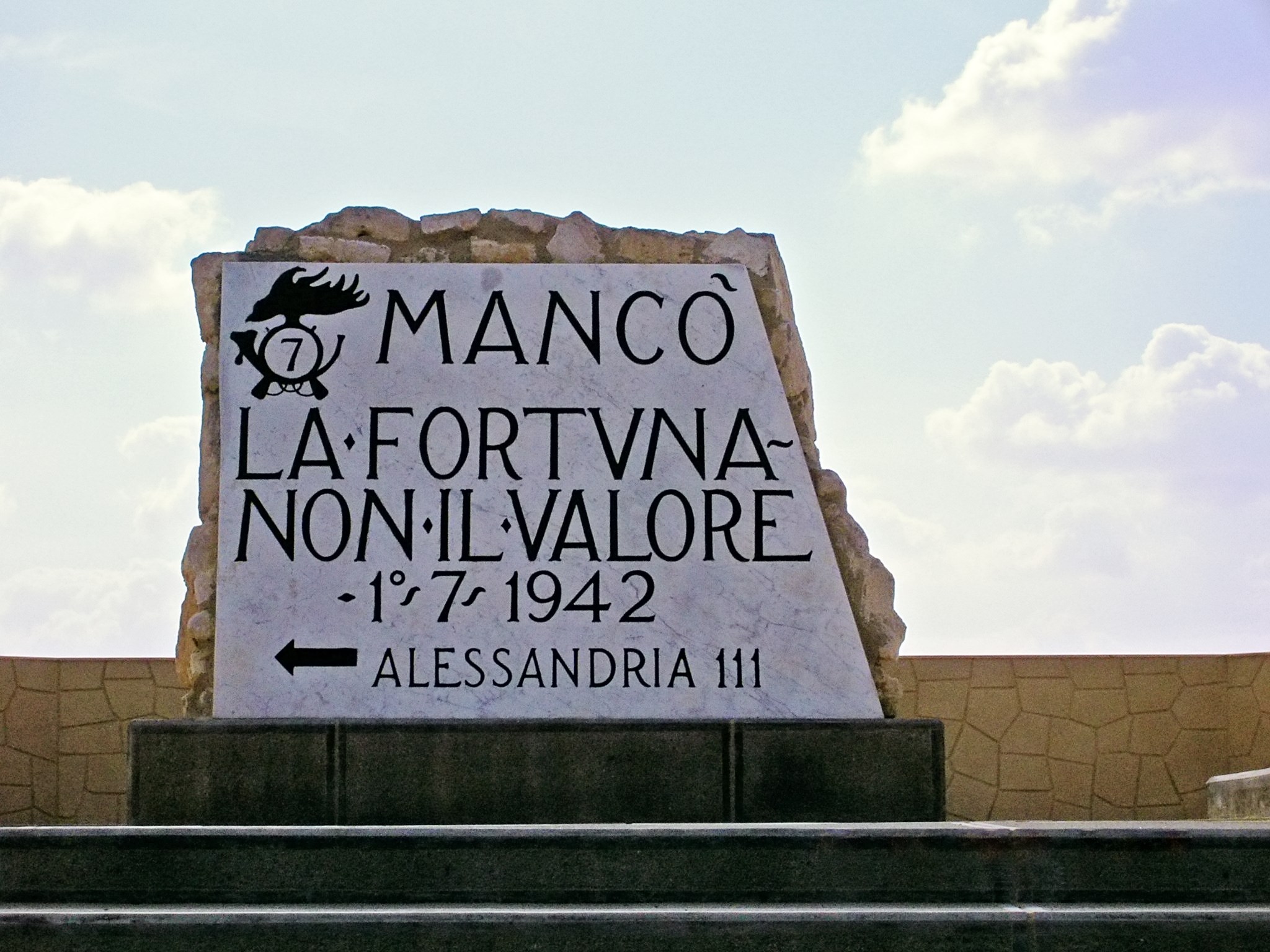
Picture on the way back from a visit to the El Alamein battlefield cemetery and museum.
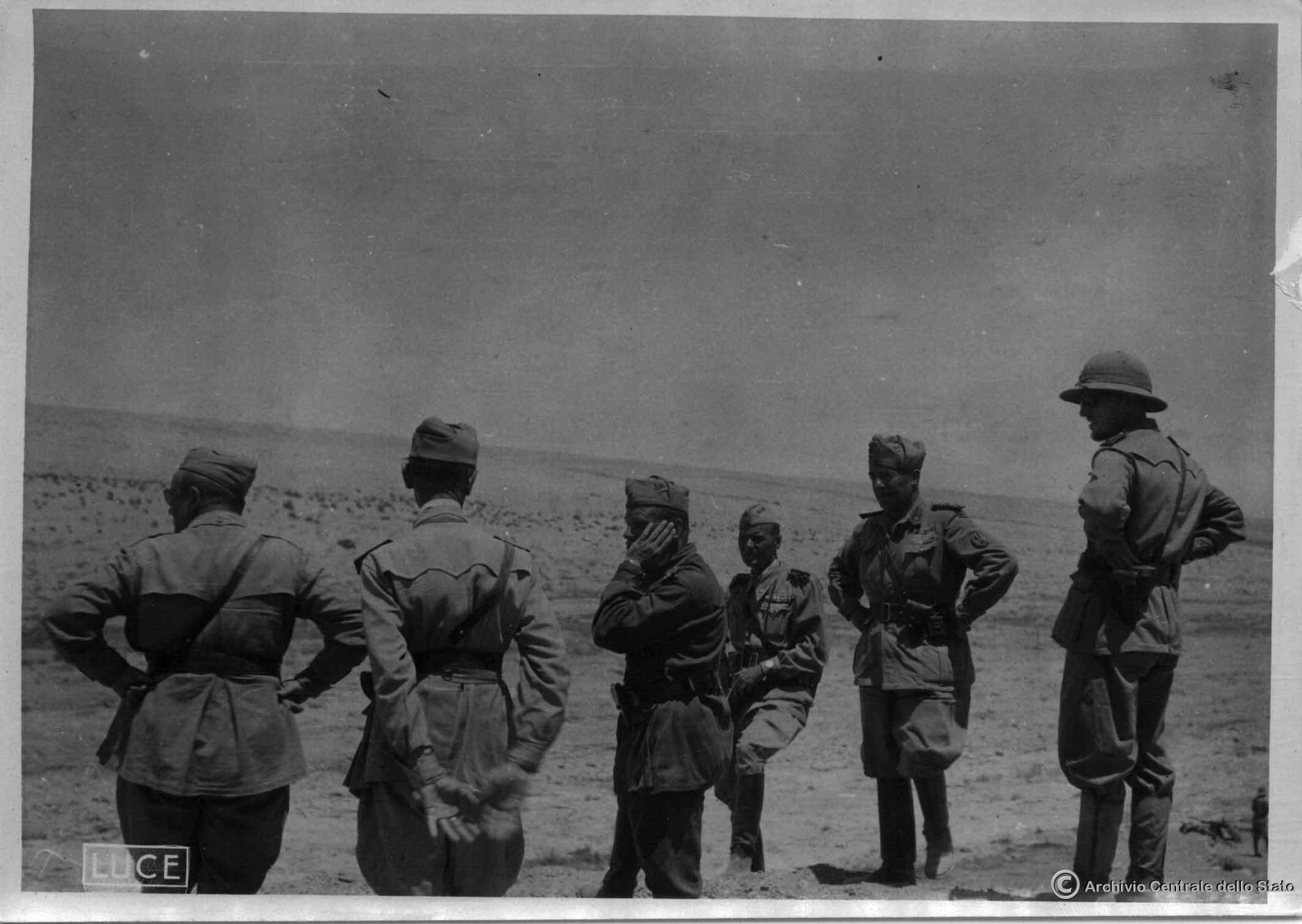
Italian officers surveying the scene at El Alamein.

Italian officers survey the terrain at Al Alamein

A German Panzer III Ausf.L that was knocked out by Australian anti-tank gunners at El Alamein in August 1942. A small hole slightly above and between the 2nd and 3rd wheels from the right was where the effective shell entered.
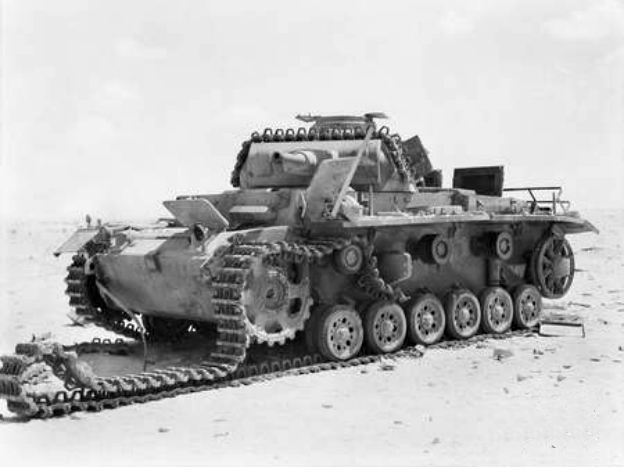
A knocked out German Panzer III in the Western Desert.
Historische Übersicht
Als erste Schlacht von El Alamein werden die Gefechte im Zeitraum vom 1. bis 31. Juli 1942 während des Afrikafeldzugs im Zweiten Weltkrieg bei El Alamein in Ägypten zwischen der deutsch-italienischen Panzerarmee Afrika, befehligt von Generalfeldmarschall Erwin Rommel, und der britischen 8. Armee, unter Claude Auchinleck, bezeichnet. Die Schlacht führte zur Beendigung des Vormarschs Rommels durch Ägypten und markiert zusammen mit der folgenden Schlacht bei Alam Halfa und schließlich der zweiten Schlacht von El Alamein das Scheitern der Expansionsbemühungen der Achsenmächte in Nordafrika.
Fakten auf einen Blick
Großbritannien
- Befehlshaber: Claude Auchinleck
- Truppenstärke: 150000
- Verluste: 13000
Deutsches Afrikakorps
- Befehlshaber: Erwin Rommel
- Truppenstärke: 96000
- Verluste: 10000
Strategischer Kontext
Rettung des Suezkanals vor dem Zugriff der Achse.
Weiterführende Literatur


Red Famine: Stalin's War on Ukraine


Die Schlacht um Berlin und das Ende des Dritten Reichs 1945

Hunde, wollt ihr ewig leben: ein Stalingrad-Roman

Roter Hunger: Stalins Krieg gegen die Ukraine


Söldner ohne Sold: Die deutschen Freikorps 1918–1923

Vom Massensturm zur Stoßtrupptaktik: Die deutsche Landkriegtaktik im Spiegel von Dienstvorschriften und Publizistik 1906 bis 1918

Wir Wehr-Wölfe: Erinnerungen eines Freikorps-Führers

Zweiter Weltkrieg Erlebnisbericht Apokalypse Stalingrad: Untergang der 6. Armee 1942-1943
Walter Mönch
Rise And Fall Of The Third Reich
William Shirer
Historische Orte
Die interaktive Karte erfordert die Zustimmung zu Drittanbieter-Cookies.