Schlacht von Dünkirchen
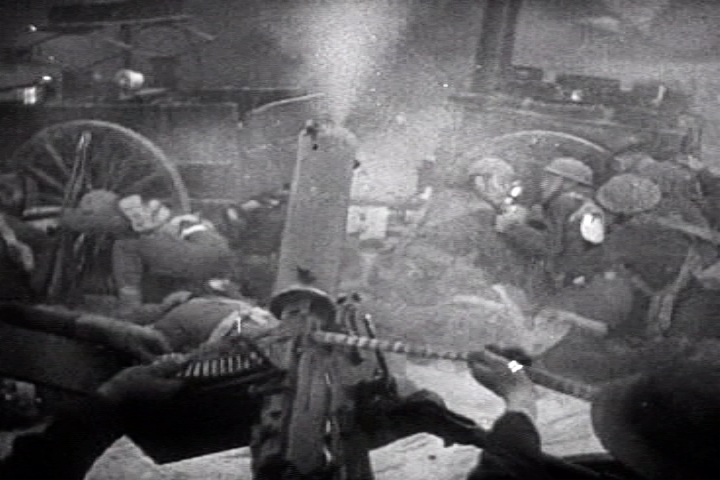
British infantry taking cover at Dunkirk beach (France, 1940). Screenshot taken from the 1943 United States Army propaganda film Divide and Conquer (Why We Fight #3) directed by Frank Capra and partially based on, news archives, animations, re-staged scenes and captured propaganda material from both sides.

National Historic Ships Photographic Competition 2013

First part of “Dunkirk” series: Prelude British troops in the sand dunes at Dunkirk, 1940. Without telling the French, the British began planning on 20 May for Operation Dynamo, the evacuation of the British Expeditionary Forces, as the German troops advanced into further mainland territory. Ships began gathering at Dover for the evacuation. On 20 May, the British Army started to evacuate unnecessary personnel. Then was when the shortage of food and water was noticed, with chaos starting to run among the soldiers. Two days later, BEF was ordered to attack southward to reconnect with the remainder of the French forces. This operation was impossible to carry out and the British and French forces withdrew to Dunkirk as fast as they could. By 24 May, the Germans had captured the port of Boulogne and surrounded Calais. Two days later, Hitler ordered the panzer groups to continue their advance, although most units took another 16 hours to attack, giving the Allies time to prepare defences and prevent the Germans from stopping the retreat. #historiansunion #colored #colorized #colourised #colorization #colourisation #color #colour #history #ww1 #wwi #worldwarone #greatwar #thegreatwar #ww2 #wwii #worldwartwo #military #war #allies #axis #evacuation #sand #dunkirkmovie #dunkirk

For documentary purposes the German Federal Archive often retained the original image captions, which may be erroneous, biased, obsolete or politically extreme. Französische Tanks und Geschütz

CWGC gravestone in Hamilton Road Cemetery, Deal, Kent of Stoker 1st Class William Caisley, from the W class destroyer HMS Wessex (D43), who died 25 May 1940, aged 39
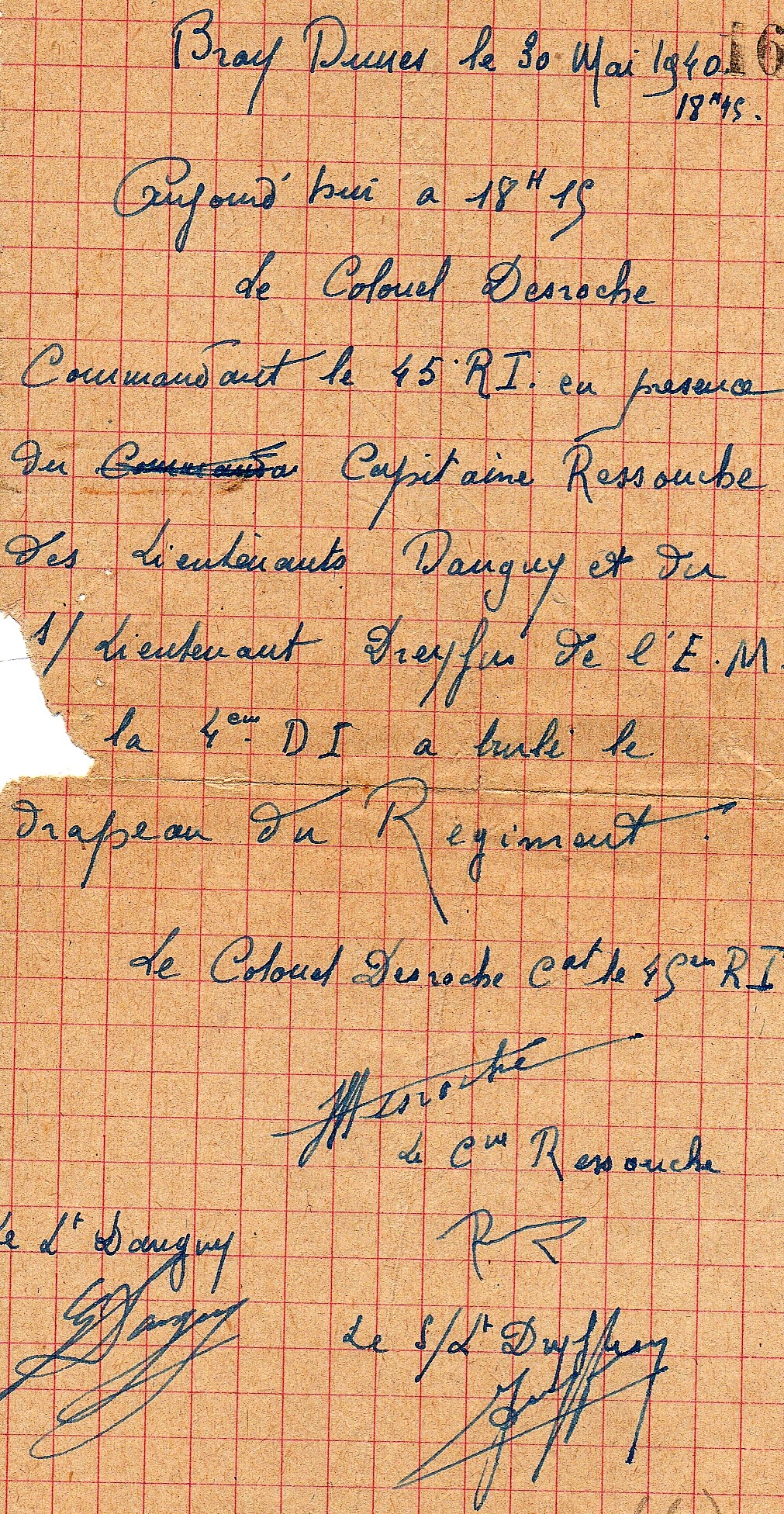
Compte rendu de destruction du drapeau du 45e RI

Third part of “Dunkirk” series: “Aftermath” French soldier who felt in the beaches of Dunkirk, taken by a German photographer after his advanced through the area. During the whole operation, the BEF lost 68,000 soldiers. Left behind in France were 2,472 guns, 500 tanks, 20,000 motorcycles, and almost 65,000 other vehicles, and a larger amount of stores and fuel. 48,000 French were captured or killed, like the man in this picture. If you look closer to his finger, you can see how a shy ring gleams on his finger. As in every war, the casualties are not just numbered on the front, but also on the homes of the soldiers that fought what lead their deaths. After all, he Battle of Dunkirk was an Allied success, a “miracle”, but a bigger one for the Axis. Hitlerbelieved that once Britain's troops left continental Europe, they would never return. But they did. --- This picture has a very interesting caption; not only for the man who gave his life for brave ideals, but for the huge number of daily objects displayed on the sand. This picture had not left the Imperial War Museum Archives before, and since today you couldn’t find it on the internet. #historiansunion #colored #colorized #colourised #colorization #colourisation #color #colour #history #ww1 #wwi #worldwarone #greatwar #thegreatwar #ww2 #wwii #worldwartwo #military #war #allies #axis #evacuation #sand #dunkirkmovie #dunkirk

German troops inspect an improvised pier made from lorries and other abandoned vehicles on the beach at Dunkirk, 1940.

Lot-2787-2: WWII: German Activities: Retreat of the British at Dunkirk, France, June 1940. Photographed by war reporter: Boesig. Courtesy of the Library of Congress. (2017/04/14).

Fundstücke der Schlacht von Dünkirchen und der Operation Dynamo in einer Vitrine im Mémorial du Souvenir, Dünkirchen

Der Plan zeigt die Evakuierungspunkte Devonia und Crested Eagle im Bereich der Ortschaft Bray-Dunes, die im Rahmen der Operation Dynamo 1940 zur Evakuierung des englischen Truppen genutzt wurden. Karten im Militätmuseum Mémorial du Souvenir, Dünkirchen

The British Evacuation From Dunkirk in 1940 British anti-aircraft guns lie abandoned at Dunkirk in 1940.
Historische Übersicht
Die Schlacht von Dünkirchen fand im Mai und Juni 1940 im Zuge des Westfeldzugs während des Zweiten Weltkrieges statt. Während des deutschen Westfeldzugs war die nordfranzösische Stadt Dünkirchen der letzte Evakuierungshafen der British Expeditionary Force, die 1939/1940 in Frankreich als Teil der zunächst defensiven Strategie der Westalliierten eingesetzt worden war. Es gelang den Briten und Franzosen, den Brückenkopf so lange zu verteidigen, bis sie über 330.000 von etwa 370.000 ihrer Soldaten in der Operation Dynamo evakuiert hatten. Die Einnahme der Stadt durch die deutsche Wehrmacht erfolgte am 4. Juni.
Fakten auf einen Blick
Deutsches Reich (Heer)
- Befehlshaber: Gerd v. Rundstedt
- Truppenstärke: ca. 800.000
- Verluste: ca. 10.000
Alliierten (UK/FR)
- Befehlshaber: Lord Gort
- Truppenstärke: ca. 400.000
- Verluste: ca. 60.000 (Gef.)
Strategischer Kontext
Rettung der britischen Armee vor der totalen Vernichtung.
Weiterführende Literatur


Red Famine: Stalin's War on Ukraine


Die Schlacht um Berlin und das Ende des Dritten Reichs 1945

Hunde, wollt ihr ewig leben: ein Stalingrad-Roman

Roter Hunger: Stalins Krieg gegen die Ukraine


Söldner ohne Sold: Die deutschen Freikorps 1918–1923

Vom Massensturm zur Stoßtrupptaktik: Die deutsche Landkriegtaktik im Spiegel von Dienstvorschriften und Publizistik 1906 bis 1918

Wir Wehr-Wölfe: Erinnerungen eines Freikorps-Führers

Zweiter Weltkrieg Erlebnisbericht Apokalypse Stalingrad: Untergang der 6. Armee 1942-1943
Walter Mönch
Rise And Fall Of The Third Reich
William Shirer
Historische Orte
Die interaktive Karte erfordert die Zustimmung zu Drittanbieter-Cookies.